

The ResMed AirFit N30i solved a real problem when it moved the hose connection to the top of the head, and if you sleep on your side, you have probably noticed the difference compared to older front mounted nasal masks. But the N30i is still a headgear mask at its core. The under the nose cradle cushion still depends on a strap wrapped around the back of your head to stay seated, and that strap can still loosen, shift, or leave marks the same way any elastic headgear can.
The Bleep Eclipse takes headgear out of the picture completely. Instead of a cradle cushion held by tension, it uses a magnetic seal and an adhesive interface that stays in place through skin contact. Here is how the two compare for the things that actually matter at three in the morning: comfort, leaks, and side sleeping.
What the Bleep Eclipse Is and How It Works
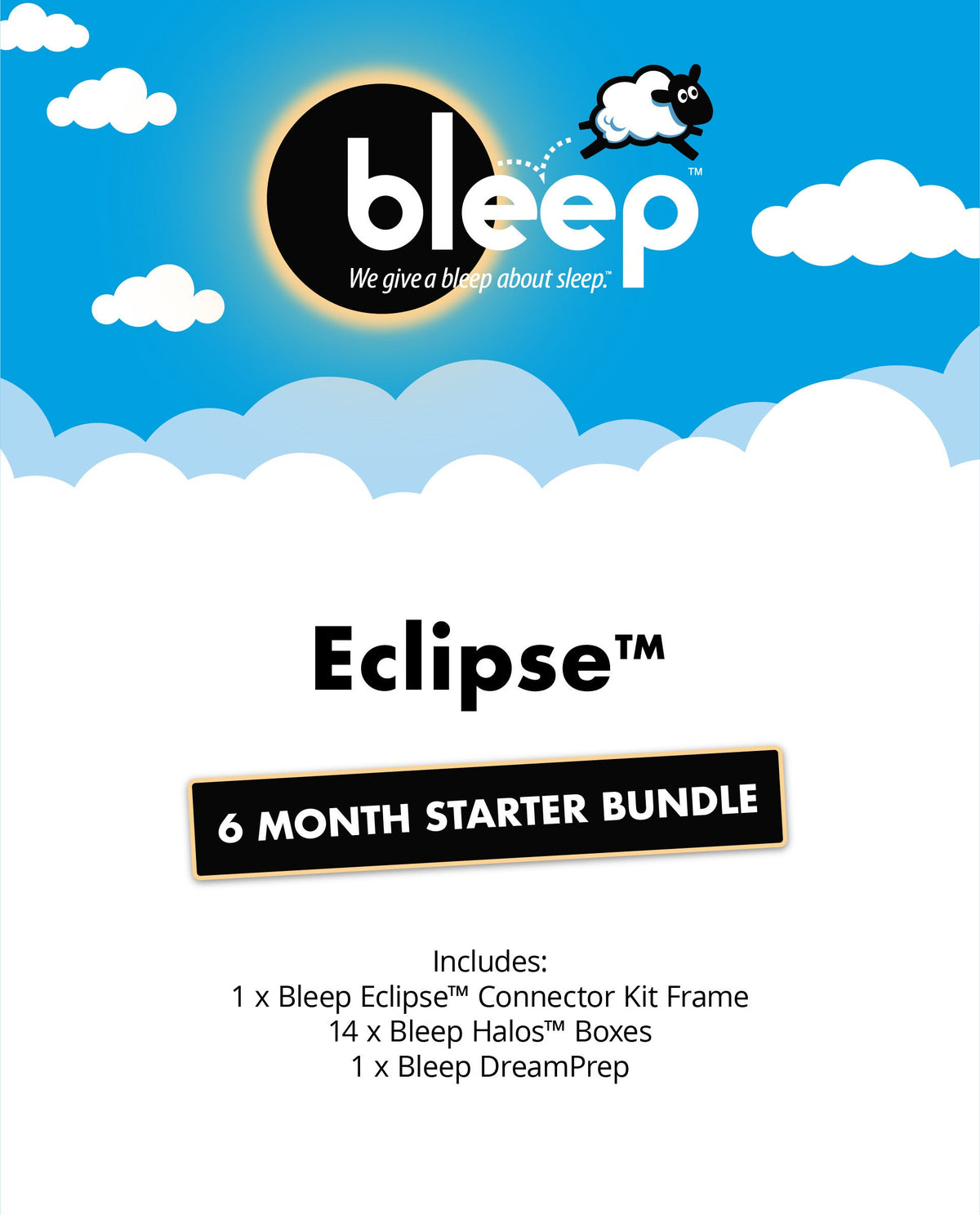
The Eclipse is a headgear free CPAP interface developed with a grant from the National Institutes of Health. It uses MagSeal technology, a magnetic frame connector that clicks onto a disposable adhesive interface called Halos in under a second, with no elastic band, no strap lines, and no headgear to adjust in the dark.
Independent testing on SleepHQ ranked Bleep interfaces including the Eclipse number one overall for leak stability, with a measured leak rate of 1.68 liters per minute. Bleep states the Eclipse is over 35 percent smaller than other leading nasal pillow and nasal mask designs. The Eclipse is FDA cleared under 510(k) number K172335 and is covered by Medicare and most private insurance plans.
What the ResMed AirFit N30i Is and How It Works
The N30i uses an under the nose nasal cradle cushion rather than pillows that insert into the nostrils, which ResMed positions as gentler for users who find nasal pillows uncomfortable. The signature feature is the top of the head tube connection with a 360 degree swivel, which lets the hose and headgear move with you as you change position, rather than pulling from the side or front of the face.
The headgear uses a single strap design with soft Velcro adjustment at the back of the head and is magnet free, which ResMed markets as simpler to adjust without guesswork. The mask runs at roughly 21 to 24 decibels and comes with multiple cushion sizes to help with initial fit.
Headgear Dependency vs No Headgear at All
This is where the two designs fundamentally differ. The N30i headgear is genuinely well engineered within the category of strap based masks, with a single strap design and top of head swivel that reduces some of the common headgear complaints. But it is still headgear, and the cradle cushion still needs consistent tension to stay seated under your nose.
The Eclipse removes that entire mechanism. The Halos adhesive holds the seal through direct skin contact, not tension, so there is no strap to loosen overnight and no elastic band making repeated contact with your scalp. For users who have specifically struggled with headgear tension, rather than hose interference, this is the difference that matters most.
Comfort for Side Sleepers
ResMed designed the N30i under the nose cradle and top of head hose routing specifically with side and stomach sleepers in mind, and it is a genuine improvement over older nasal masks that mount the tube at the front of the face. The reduced bulk under the nose and the 360 degree swivel connector do meaningfully cut down on hose interference for side sleepers.
Bleep designed the Eclipse with the same population in mind but solves the problem differently, by removing the headgear body that would otherwise press into a pillow when you turn. Bleep specifically lists side and stomach sleepers, along with patients who have abandoned CPAP due to discomfort, as good candidates for the Eclipse. Without any strap encircling the head, there is simply less hardware to displace no matter which direction you roll.
Leak Performance
Leaks in the N30i typically stem from the same source as most headgear based masks: tension loss over the course of the night or slight cushion shift during movement, even with the improved top of head routing. The single strap Velcro design is easy to readjust, but readjustment mid sleep still means a partial wake up.
The Eclipse addresses seal stability from a different angle entirely, since the Halos adhesive conforms directly to the skin rather than depending on strap pressure. The SleepHQ leak rate data cited above reflects that stability. Because the interface does not rely on tension, movement during the night is far less likely to break the seal compared to a headgear dependent design like the N30i.
Skin Contact and Facial Marks
The N30i under the nose cradle is designed to reduce bulk and red marks compared to older nasal mask designs, and ResMed specifically markets it as leaving the face clear for reading or wearing glasses. Still, the strap itself makes contact with the scalp and the sides of the head, and some users continue to experience light pressure marks after a full night, particularly side sleepers whose head rests directly against the headgear.
The Eclipse uses hypoallergenic, surgical grade, latex free adhesive, and Bleep lists sensitive skin and nasal bridge breakdown as conditions the Eclipse is designed to accommodate. Without a strap making repeated contact with the scalp, there is no elastic to cause hair breakage or pressure indentation over time.
Noise Level
ResMed rates the N30i at roughly 21 to 24 decibels, which is genuinely quiet and a real consideration if you share a bed. Bleep does not publish a specific decibel figure for the Eclipse, though because both designs vent exhaled air away from the face, noise is unlikely to be a deciding factor between the two for most users.
Which Mask Fits Your Actual Problem
If your main frustration with nasal masks has been hose interference or a tube that gets in the way when you read or watch television, the N30i top of head design genuinely solves that problem well. If your frustration has been headgear itself, whether that is tension loss, strap marks, or the mask shifting when you move, the Bleep Eclipse removes headgear from the equation rather than repositioning it.
You can browse the current Eclipse product line and compare it against the DreamPort if your nostril shape is better suited to a different fit profile.
Cost and Insurance Coverage
Both masks are typically covered by Medicare and most private insurance plans when prescribed for diagnosed obstructive sleep apnea. The N30i follows a standard nasal mask cushion and headgear replacement schedule. The Eclipse frame is generally replaced every 90 days, with the disposable Halos adhesive used nightly, billed under HCPCS codes A7034 for nasal mask and A7033 for nasal pillow cushions. You can verify your specific coverage directly with Bleep before switching.
Frequently Asked Questions
Is the Bleep Eclipse more comfortable for side sleepers than the ResMed N30i?
Both are designed with side sleepers in mind, but they solve the problem differently. The N30i reduces hose interference through top of head routing, while the Eclipse removes headgear entirely, so there is no strap body to press into a pillow when you turn.
Does removing headgear on the Eclipse mean a worse seal than the N30i?
No. Independent SleepHQ testing measured the Eclipse leak rate at 1.68 liters per minute, among the lowest recorded for a nasal interface, reflecting a seal that does not depend on strap tension the way the N30i does.
Can I use the Eclipse with my current CPAP machine if I am switching from a ResMed device?
Yes. The Eclipse ships with a universal 16 inch connecting tube that fits standard machines. If you use a ResMed mini or travel device, you may need a small adapter, commonly sold through CPAP retailers.
Will the Halos adhesive cause skin problems the way strap marks did with my N30i headgear?
Most users do not experience irritation, since the Halos use surgical grade, latex free adhesive. About 2 percent of users report tape sensitivity, so Bleep recommends testing a small patch on your arm before your first full use.
Is the Eclipse covered by insurance the same way the N30i is?
Yes. The Eclipse is billed under standard nasal mask and nasal pillow HCPCS codes and is covered by Medicare and most private insurance plans, the same general category as the N30i.
How often do I need to replace parts of the Eclipse compared to N30i headgear and cushions?
The Eclipse frame is typically replaced every 90 days, while the Halos adhesive is disposed of nightly. This differs from the N30i, which follows a standard nasal cushion and headgear replacement schedule set by Medicare.
The Bottom Line
The ResMed AirFit N30i is a well engineered mask for anyone whose main complaint is hose interference, but it is still a headgear dependent design at its core. The Bleep Eclipse removes headgear entirely, addressing the mechanical cause of leaks, strap marks, and tension related discomfort directly.
Talk with your sleep physician about whether a headgear free interface fits your prescribed pressure, then explore the Eclipse product line and check your insurance eligibility before making the switch.
Written by Stuart Heatherington, founder of Bleep Sleep. Stuart works directly with the Bleep product and clinical team to help side sleepers find CPAP interfaces that do not depend on headgear tension.


