

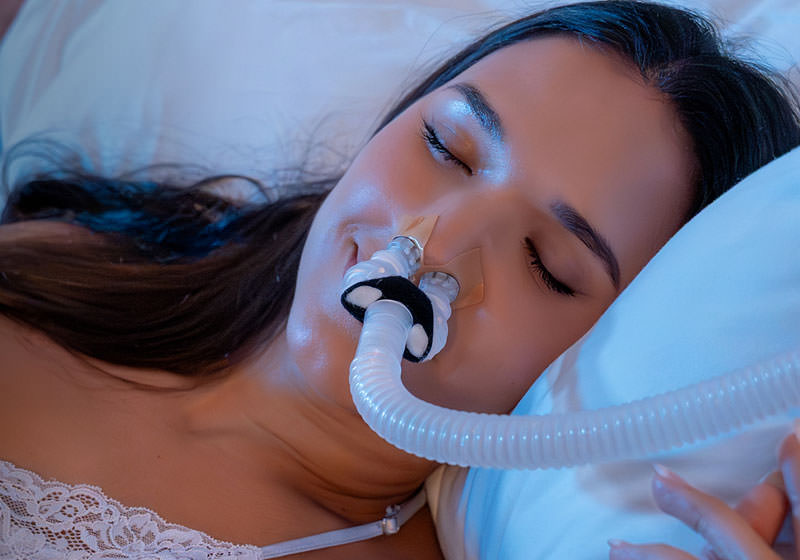
For millions of people with sleep apnea, the CPAP machine is not the problem. The mask is. More specifically, the headgear, those straps that wrap around your head, dig into your scalp, leave red marks on your cheeks, and make it feel like you are strapping into a piece of equipment rather than going to sleep.
If that sounds familiar, you are in good company. Research published in Sleep Medicine Reviews estimates that around 50% of CPAP users either fail to reach minimum adherence criteria or discontinue therapy entirely. Discomfort with the mask, particularly the headgear, is one of the most frequently cited reasons.
A cpap mask without straps addresses this directly. This guide covers how strapless CPAP masks work, who benefits most from them, and how to choose the right option for your sleep style and therapy needs.
Why CPAP Headgear Creates So Many Problems
Traditional CPAP masks rely on a system of straps, frames, and cushions to hold the mask against your face. The headgear does one job: apply enough tension to keep the mask seated so a seal is maintained throughout the night.
The problem is that tension is difficult to get right and even harder to keep consistent.
Too tight, and the straps cut into your face, leave pressure marks, and can cause skin breakdown over time. Too loose, and the mask shifts during the night, creating leaks that reduce your therapy's effectiveness. And even when the fit feels right at bedtime, movement during sleep changes everything.
Beyond the mechanics, there's the sensory experience. A 2015 study published in the Journal of Sleep Research found that 63% of CPAP users have claustrophobic tendencies, and that claustrophobia was more than twice as likely in people with poor CPAP adherence. The feeling of wearing a strapped mask something physically confining your face is a major contributor to that claustrophobia response.
For long-term therapy, this matters. Every night the headgear causes discomfort, disrupts sleep, or creates enough frustration to make you consider taking it off is a night your sleep apnea goes untreated.
Who Benefits Most from a Strapless CPAP Mask
A no-strap CPAP isn't the right choice for everyone, but for certain groups, it makes a significant difference.
Active sleepers and side sleepers. If you move a lot during the night, traditional headgear works against you. Straps shift, the mask rotates, and you wake up to leaks or facial soreness. A strapless mask stays in place without depending on tension held across the back of your head.
People with claustrophobia or sensory sensitivity. Removing the straps removes the "cage" sensation that many users describe. With nothing wrapped around your head and minimal contact on your face, the mask experience feels significantly less confining.
People with facial hair. Traditional CPAP cushions rely on a skin seal that beards and mustaches interfere with. Some strapless mask designs sit at the nostrils rather than pressing against the skin of the nose and cheeks, which makes them more compatible with facial hair.
People with long hair, natural hair, or protective styles. Headgear catches in braids, flattens curls, damages extensions, and makes it impossible to wear a silk wrap or bonnet overnight. A strapless mask eliminates all of that.
Post-surgical patients. People recovering from facial surgery or procedures may be unable to wear anything that applies pressure to the face or head. Strapless masks provide an alternative for patients who still need CPAP therapy during recovery.
Anyone who has given up on CPAP before. If mask discomfort was the main reason you stopped using CPAP, a strapless option gives you a reason to try again.
How Strapless CPAP Masks Work
There are two primary approaches to a strapless CPAP mask design. Understanding the difference helps you choose the right one.
Adhesive-based strapless masks use medical-grade adhesive to attach a small interface directly to the skin around your nostrils. The adhesive creates a seal, the interface connects to your CPAP tubing, and no straps are needed at all. The adhesive tabs are disposable and replaced nightly, which also means you always start with a clean, fresh seal.
Magnetic-based strapless masks use a magnetic closure to hold the interface in place. Rather than pressing material against your face with strap tension, the magnetic connection maintains the seal through attraction between components. This approach removes straps while also eliminating the need for adhesive on the skin.
Both designs eliminate headgear entirely. The difference comes down to how the interface maintains its position and seal, and which works better for your skin type, sleep style, and comfort preferences.
BleepSleep's Strapless CPAP Solutions
BleepSleep makes both types of strapless CPAP interfaces, and they serve slightly different users.
The Eclipse™ with MagSeal™ Technology
The Eclipse™ uses a patented magnetic seal system to create a consistent, leak-resistant connection at the nostrils without any headgear. The MagSeal™ closure holds the interface in position whether you're on your back, side, or stomach, without straps shifting during the night.
Because the seal is maintained magnetically rather than through compression, there are no cushions wearing out and no tension to recalibrate. The Eclipse™ is FDA cleared (clearance #K172335) and compatible with standard CPAP tubing and machines. Halos™ adhesive interfaces work with the Eclipse™ to provide the sealing surface at the nostrils.
The DreamPort® Sleep Solution
The DreamPort® is an adhesive-based interface that attaches to the outside of the nostrils using hypoallergenic surgical-grade adhesive. DreamPort® is headgear-free and frame-free, just a small, lightweight connector that links directly to your CPAP hose.
Because the only contact point is the outside of your nostrils, there's nothing pressing against your cheeks, nose bridge, or forehead. At under an ounce, it's one of the lightest CPAP interfaces available. DreamPort® adhesive tabs are replaced daily, so you start each night with a fresh seal.
For a full view of BleepSleep's strapless options, you can browse the complete product range here.
Adhesive or Magnetic: How to Choose
Both the DreamPort® and Eclipse™ eliminate straps and headgear. The decision between them comes down to a few practical factors.
Choose adhesive (DreamPort®) if:
-
You want the simplest possible interface with minimal parts
-
You prefer starting each night with a fresh seal
-
Your skin tolerates medical adhesive well
-
You're new to strapless CPAP and want to start with a lower-cost entry point
Choose magnetic (Eclipse™) if:
-
You have sensitive skin or adhesive sensitivities
-
You want a reusable frame component with replaceable seal interfaces
-
You want the consistency of a magnetic seal that doesn't depend on adhesive bond strength
-
You've tried adhesive-based interfaces before and found them inconsistent
If you're unsure, BleepSleep's support team can help you understand which interface tends to work better for different skin types, pressure settings, and sleep positions.
Getting Started with a Strapless CPAP Mask
Switching from a traditional headgear-based mask to a strapless interface takes a short adjustment period. A few things help the transition go smoothly.
Clean and dry your skin before applying the interface. Skin oils and moisture affect both adhesive and magnetic seals, so a quick wash with a gentle cleanser before bed makes a real difference.
Give yourself a few nights. Any CPAP mask change involves an adjustment period. If the first night feels different, that's normal, don't judge the interface on the first attempt alone.
Check your pressure settings. Some users find that different interfaces perform slightly differently at various pressure levels. If you notice more leaks than expected after switching, it's worth checking whether your pressure settings need a small adjustment.
For more on reducing the common friction points in CPAP therapy, this guide on making CPAP easier to use is worth reading before you start.
Frequently Asked Questions
Are strapless CPAP masks as effective as traditional masks?
Yes, when properly fitted and used at the right pressure settings. Both adhesive and magnetic strapless interfaces are designed to maintain the seal necessary for effective CPAP therapy. FDA clearance for the Eclipse™ (clearance #K172335) confirms it meets the same safety and efficacy standards as conventional CPAP masks.
Can I use a strapless CPAP mask if I'm a mouth breather?
Strapless nasal interfaces work best for people who breathe through their nose during sleep. If you regularly breathe through your mouth, you may need a chin strap as a supplement, or you may want to discuss full-face mask alternatives with your doctor.
How long do the adhesive tabs last?
DreamPort® adhesive tabs are designed for single-use and are replaced nightly. Eclipse™ Halos™ are also disposable interfaces replaced regularly. This ensures a consistent seal and reduces hygiene concerns from repeated use.
Will a strapless mask work with my existing CPAP machine?
Both DreamPort® and Eclipse™ use standard CPAP tubing connections and are compatible with most CPAP and APAP machines. You don't need to replace your machine to use either interface.
Is a strapless CPAP mask covered by insurance?
Coverage depends on your insurance plan and provider. BleepSleep products are available direct-to-consumer, and many users with Medicare or private insurance have used their benefits for CPAP supplies. Checking with your insurer is the best first step.
The Simplest CPAP Experience You've Had
Headgear doesn't have to be part of CPAP therapy. The discomfort, the strap marks, the mask-on-face claustrophobia, those are all consequences of a design that was built around mechanical tension. There's a different way.
Consistent sleep apnea treatment has effects that go well beyond feeling rested. Research shows the impact untreated sleep apnea has on long-term heart health, which makes finding an interface you'll actually use every night one of the most important choices you can make.
If you're ready to try CPAP without straps, browse BleepSleep's full range of strapless CPAP solutions and find the right fit for your sleep.


