
The link between sleep apnea and anxiety is a complex, bidirectional cycle that affects millions of people, yet it remains one of the most overlooked connections in modern sleep medicine. If you find yourself waking up with a racing heart, a sense of impending doom, or a mind that refuses to shut down at 3:00 AM, you aren’t just “stressed.” You may be experiencing the physiological fallout of Intermittent Hypoxia—a condition where your brain is starved of oxygen during sleep, triggering a persistent “fight-or-flight” response that manifests as daytime anxiety.
At BleepSleep, we understand that treating sleep-disordered breathing isn’t just about stopping a snore; it’s about restoring your mental health and reclaiming your peace of mind.
Understanding the Connection Between OSA and Panic Attacks
When your airway collapses during sleep—the hallmark of Obstructive Sleep Apnea (OSA)—your body undergoes a traumatic event. As oxygen levels drop, your brain sends an emergency signal to your adrenal glands to release cortisol and adrenaline. Consequently, you wake up gasping. While you might not remember these micro-awakenings, your nervous system does.
This repeated nocturnal trauma keeps your sympathetic nervous system in a state of hyper-arousal. Over time, this chemical imbalance spills over into your waking life, making you feel jittery, irritable, and prone to panic attacks. In fact, clinical research suggests that patients with untreated sleep apnea are significantly more likely to be diagnosed with Generalized Anxiety Disorder (GAD) than the general population.
How Sleep Fragmentation Triggers Emotional Dysregulation
The psychological impact of sleep apnea extends beyond chemical spikes; it fundamentally alters how your brain processes emotions. During healthy REM (Rapid Eye Movement) sleep, the brain’s “emotional thermostat”—the amygdala—is recalibrated. However, when sleep apnea interrupts these cycles, your emotional resilience is compromised.
Furthermore, sleep fragmentation prevents the prefrontal cortex from communicating effectively with the amygdala. This “disconnection” means that minor daily stressors feel like major catastrophes. If you feel like you are “on edge” or unable to handle routine tasks, your lack of deep, restorative sleep may be the silent culprit.
Is Your CPAP Therapy Causing “Mask Anxiety”?
For many patients, the solution to sleep apnea—the CPAP machine—becomes a new source of stress. Traditional masks with heavy headgear, bulky straps, and constant air leaks can trigger claustrophobia. This “mask anxiety” often leads to non-compliance, where the patient abandons therapy altogether, leaving their sleep apnea and mental health to worsen.
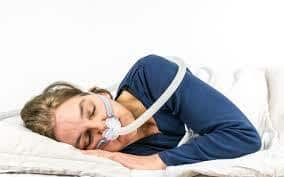
This is where the Bleep DreamPort Sleep Solution changes the narrative. By eliminating the headgear entirely and using a patented adhesive seal, we remove the physical triggers of anxiety. When you don’t feel “strapped in,” your nervous system can finally relax, allowing the therapy to work as intended.
Step-by-Step: Managing Sleep Apnea and Anxiety Tonight
If you are struggling with the intersection of these two conditions, you can take immediate action to improve your outcomes. Follow these steps to calm your nervous system and prepare for a better night:
Optimize Your Interface: Switch to a headgear-free solution like Bleep DreamPort. Removing the sensation of straps on your face reduces the “trapped” feeling that fuels nocturnal panic.
Practice 4-7-8 Breathing: Before putting on your device, inhale for 4 seconds, hold for 7, and exhale for 8. This signals your vagus nerve to switch from “fight-or-flight” to “rest-and-digest.“
Ensure a Perfect Seal: Use adhesive ports to eliminate air leaks. The “hissing” sound of a traditional mask leaking is a common sensory trigger for anxiety.
Limit Blue Light: Stop using screens two hours before bed. Blue light suppresses melatonin, making it harder for your already-stressed brain to transition into sleep.
Addressing Cognitive Distortions in Sleep-Deprived Patients
A common cognitive distortion among those with sleep apnea is the belief that they just “aren’t good at sleeping.” In reality, the physiological blockage in your throat is a mechanical issue, not a personal failure. Recognizing this distinction is a vital part of Cognitive Behavioral Therapy for Insomnia (CBT-I). When you stop blaming yourself for your fatigue, your baseline anxiety levels often begin to drop.
The Long-Term Mental Health Benefits of Effective PAP Therapy
Stabilizing your breathing does more than just stop the snoring; it allows your brain to flush out metabolic waste through the glymphatic system. Consistent therapy has been shown to:
Lower Morning Cortisol: Reducing that “alarm clock anxiety.“
Improve Serotonin Production: Enhancing your overall mood and outlook.
Enhance Cognitive Function: Reducing the “brain fog” that contributes to work-related stress.
Why Choice of Equipment is the Ultimate Anxiety Hack
At BleepSleep, we believe the best medical technology is the one that disappears. Traditional CPAP masks are a constant reminder of a medical condition. In contrast, our DreamPort solution is designed to be so lightweight and unobtrusive that you forget you are wearing it.
By removing the bulk, we remove the psychological barrier to therapy. This leads to higher compliance, better oxygenation, and—most importantly—a significant reduction in the physiological symptoms of anxiety.
Final Verdict: Healing the Mind by Fixing the Breath
The link between sleep apnea and anxiety is undeniable, but it is also treatable. You do not have to choose between gasping for air and feeling claustrophobic in a mask. By addressing the mechanical causes of your sleep apnea with a comfortable, headgear-free solution, you can finally break the cycle of stress and exhaustion.