
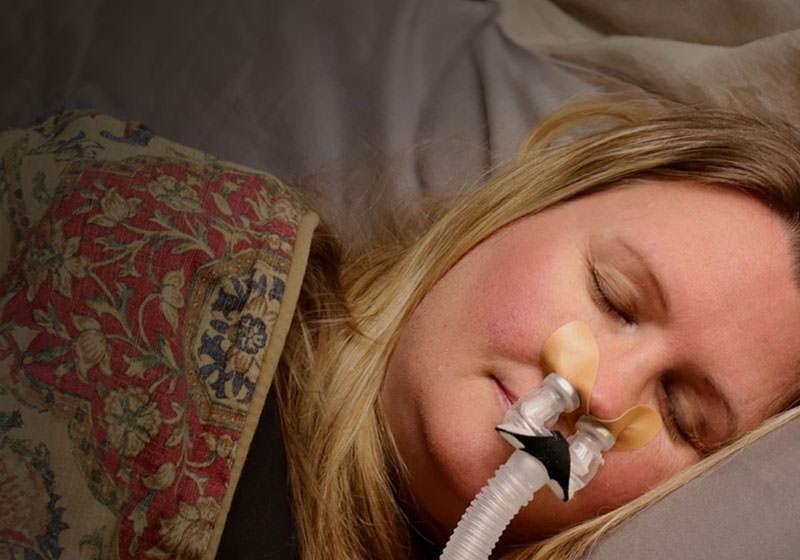
If you wake up most mornings to find your CPAP mask hanging off, dangling from one strap, or completely off the bed you're dealing with one of the most common CPAP complaints there is. Side sleeping and traditional CPAP masks were never designed with each other in mind, and the result is a cycle familiar to a lot of patients: mask shifts, air leaks, pressure drops, you wake up, you readjust, and it happens again an hour later. This exact issue is covered in The Best CPAP Mask Styles for Side Sleepers and Mouth Breathers, which breaks down why certain mask shapes fail specifically for this sleep position.
Why Traditional Masks Fail Side Sleepers Specifically
Most CPAP masks and their headgear are built around the assumption of sleeping on your back. When you turn on your side, the mask cushion presses directly into the pillow, which pushes it out of position and breaks the seal. The tubing can also get pinned under your body or pulled at an angle, adding extra tension that drags the whole mask off-center. For committed side sleepers, this happens every single night, multiple times, and it's one of the most common reasons patients cite when discussing what breaks their seal, as detailed in Common CPAP Leaks and What They Reveal About Your Mask Fit. Stomach sleepers face a related, though slightly different, version of the same problem, covered separately in Can You Sleep on Your Stomach with a CPAP Mask?
Every time you shift position or roll toward your dominant side, the cushion edge nearest your pillow bears direct force it was never designed to withstand for hours at a stretch. Traditional mask engineering assumes a relatively stationary sleeper, and side sleepers are, almost by definition, the opposite of that.
What Actually Solves This Problem
The fix isn't a firmer strap or a different pillow it's removing the parts of the interface that have bulk to displace in the first place.
Low-profile, nostril-level interfaces. BleepSleep's DreamPort® Sleep Solution sits directly at the nostrils with no cushion body pressing into a pillow and no headgear to shift when you roll over. There's simply much less for your pillow to catch or dislodge. This category of interface is explained in CPAP Masks Without Straps: The Complete 2026 Guide.
Headgear-free, magnetic-seal designs. Eclipse™ uses a magnetic seal instead of the strap system that typically gets pulled sideways when you change position, and Halos™ Adhesive Interfaces add a secure, skin-safe seal that stays put through movement rather than relying on tension that can loosen.
Shorter, more flexible tubing routing. Routing your hose up and over rather than straight out to the side reduces drag when you shift positions. See CPAP Tube Management for Sleep for practical routing tips that work alongside any interface.
The right pillow, as a secondary fix. A CPAP-specific pillow with cutouts for tubing and mask contact can further reduce the odds of displacement overnight. How to Pick the Right Pillow 2026 for CPAP Users covers what to look for, though it works best as a complement to a low-profile interface, not a replacement.
Why This Combination Matters More for Side Sleepers Than Anyone Else
Side sleepers put pressure on exactly the parts of a traditional mask that were never designed to handle it — the cushion edge, the strap running along the cheek, and the tubing connector, all wedged against a pillow for hours at a time. Every other sleep position at least keeps the mask roughly centered and unweighted. That's why side sleepers report disproportionately more leak events and abandoned therapy than back sleepers using the exact same mask model. Once a mask starts leaking mid-sleep, most patients wake up at least partially, readjust, and go back to sleep, only for the same displacement to happen again an hour or two later fragmenting sleep even if total hours in bed look normal on paper.
Signs You Need a Different Interface, Not Just a Different Habit
-
You wake up more than once a night to reposition your mask
-
Your pillow shows consistent mask-shaped indentations or pressure marks
-
You've tried different pillow types and it hasn't solved the leak issue
-
You've considered giving up on CPAP because of this specific problem
-
Your CPAP machine's leak report consistently flags high leak rates on nights you know you slept on your side
What to Bring Up With Your Provider
If side sleeping has been undermining your therapy, bring your machine's compliance and leak data to your next appointment rather than just describing the problem verbally. Specific data which nights had high leak events, how often the mask needed readjustment gives your provider a much clearer picture of whether a low-profile or headgear-free interface is likely to resolve it, versus whether something else, like pressure settings, needs adjusting first.
The Bottom Line
If side sleeping is the reason your CPAP mask won't stay put, that's a design mismatch, not something you're doing wrong. Mask-free, headgear-free interfaces like DreamPort and Eclipse were built specifically to remove the bulk that side sleepers keep running into, so you can stay in your natural sleep position without fighting your equipment all night.
If nightly mask repositioning has been part of your routine for too long, reach out to the BleepSleep team — we can help you find an interface that actually works with how you sleep.
Frequently Asked Questions
What is the best CPAP mask for side sleepers who keep losing their seal?
Low-profile, headgear-free interfaces like BleepSleep's DreamPort® and Eclipse™ are the best options for side sleepers, since there's no bulky cushion or strap system to get displaced when you roll over.
Why does my CPAP mask only shift when I sleep on my side, not on my back?
Side sleeping presses the mask cushion and tubing directly into your pillow, pushing them out of position. Back sleeping keeps the mask roughly centered and unweighted, which is why leaks are far more common in side sleepers.
Will a mask-free CPAP interface really stay in place better for side sleepers?
Yes, in most cases. Because there's no cushion body or headgear pressing into the pillow, there's much less bulk to get displaced when you turn on your side.
Do I still need a CPAP pillow if I switch to a low-profile interface?
A CPAP-specific pillow can still help with tubing management, but it works best as a complement to a low-profile interface rather than a fix on its own for a bulky traditional mask.
How can I tell if my CPAP leaks are related to my sleep position?
Check your CPAP machine's leak report and compare high-leak nights to how you remember sleeping. Many machines log this data automatically, and your provider can help you interpret it.


