

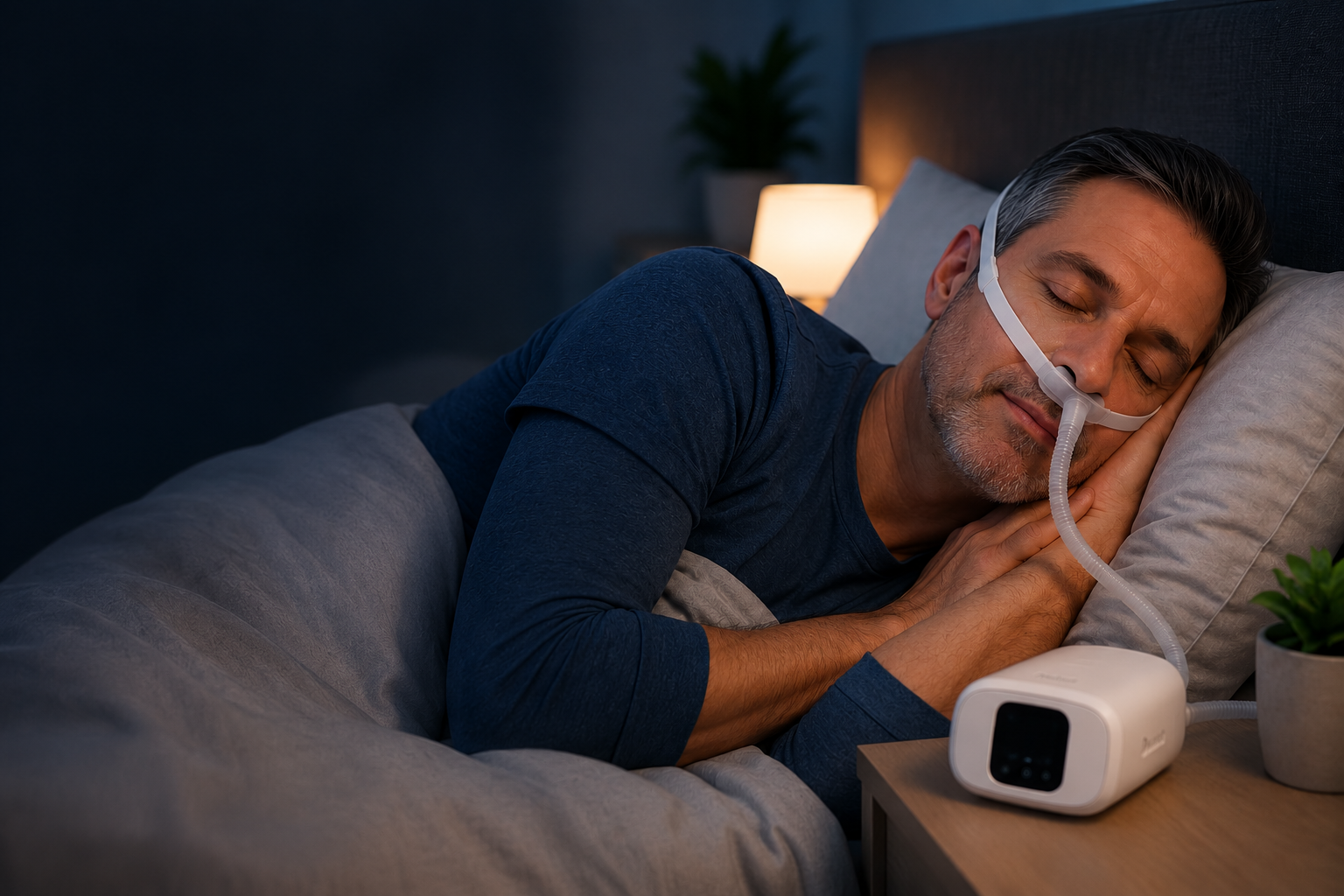
For a lot of people, the hardest part of sleep apnea therapy isn't the diagnosis it's the mask. Full face masks in particular can trigger a real sense of claustrophobia: something covering your nose and mouth, straps pulling snug around your head, and the feeling that you can't move freely while you sleep. Studies on CPAP non-adherence consistently point to claustrophobia and anxiety as major reasons patients give up on therapy in the first few months. If that's you, the goal isn't to tough it out it's to find an interface that doesn't trigger that response in the first place. As covered in The Link Between Sleep Apnea and Anxiety: What You Can Do Tonight, the relationship between anxiety and CPAP therapy runs both directions, and getting the equipment right is often the fastest path to breaking the cycle.
Why Full Face Masks Are the Biggest Trigger
Full face masks cover both the nose and mouth and typically need more headgear to hold that larger surface area in place. That combination of more coverage, more strap tension is exactly what tends to set off claustrophobic reactions, especially for people who are already anxious about sleep or new to therapy. The sensation of restricted breathing space, combined with a tight strap system around the skull, mimics exactly the kind of physical confinement that triggers claustrophobia, even though the mask itself isn't actually restricting airflow.
This mismatch between the physical reality of the mask and how the brain interprets it matters, because it explains why simply "getting used to it" often doesn't work. Claustrophobia is a learned threat response, and repeated exposure to a trigger without changing the trigger itself tends to reinforce the anxiety rather than resolve it.
What Actually Helps: Smaller Contact Points, Less Restriction
The most effective fix for claustrophobia isn't a "better" full face mask it's an interface with a fundamentally smaller footprint.
Nostril-only interfaces. BleepSleep's DreamPort® Sleep Solution sits at the nostrils only, with no mask body covering the mouth or face and no headgear encircling the head. For many claustrophobic users, removing the visual and physical sense of "something over my face" is the single biggest relief. See Best CPAP Masks for Claustrophobia: Minimal Contact Options for several minimal-contact designs side by side.
Headgear-free, magnetic-seal designs. Eclipse™ removes the strap system that often causes the trapped feeling in the first place, using a magnetic seal instead of tension across the skull.
Gradual desensitization with the right equipment. It helps to practice wearing the interface for short periods while awake reading or watching TV before relying on it overnight. This works far better with a low-profile design because there's simply less to get used to. See How to Overcome CPAP Claustrophobia: A Step-by-Step Plan for a night-by-night desensitization approach.
Understanding Where the Anxiety Actually Comes From
Claustrophobia around CPAP isn't really about the mask itself it's about the sensation of restriction and the fear of not being able to remove something quickly if panic sets in. Patients who successfully overcome it usually do two things at once: reduce the physical footprint of the equipment, and build confidence that they can remove the interface easily if needed. A nostril-only design supports both, since there's less material in contact with your face and no complex strap system to fumble with in the dark.
Claustrophobic reactions also tend to be strongest in the first few minutes after putting on an interface, before sleep onset, which is exactly when the brain is most alert and most likely to register confinement. A lower-profile interface reduces the intensity of that initial reaction, making it easier to actually fall asleep. See CPAP Anxiety: Why It Happens and How to Beat It for a deeper look at how CPAP-related anxiety shows up.
Questions to Ask Before Switching
-
Does this interface cover my mouth, or only my nostrils?
-
Is there headgear, and if so, how much surface area does it involve?
-
Can I still move my head freely and sleep on my side?
-
Is this compatible with my prescribed pressure setting?
-
How quickly and easily can I remove it if I feel a moment of panic?
A Note on Anxiety and Therapy
If claustrophobia around CPAP is severe, it's worth mentioning to your sleep physician directly sometimes a combination of the right interface and a brief course of guided desensitization makes the biggest difference. Plenty of patients who tried and failed with full face masks in the past have gone on to sustain long-term compliance once they switched to a lower-profile interface, as documented in Overcoming Claustrophobia from CPAP Masks with Simple Techniques.
What Long-Term Success Actually Looks Like
Patients who've worked through claustrophobia with the right equipment tend to describe a fairly consistent pattern: the first few nights still feel a little unfamiliar, but the anxiety fades much faster than it did with a full mask, usually within a week rather than months. Once the nervous system stops associating bedtime with confinement, therapy compliance tends to become automatic rather than something patients have to force themselves through every night.
The Bottom Line
Claustrophobic reactions to CPAP are common, valid, and solvable. The fix usually isn't more willpower it's less mask. Nostril-only, headgear-free interfaces like DreamPort and Eclipse were built around exactly this problem, giving patients a way to get consistent therapy without the sense of restriction that made a full mask unbearable in the first place.
If you've struggled with claustrophobia on CPAP before, reach out to the BleepSleep team we can talk through which interface fits your comfort needs and your prescribed therapy.
Frequently Asked Questions
What is the best CPAP alternative for people with claustrophobia?
Nostril-only interfaces like BleepSleep's DreamPort® and headgear-free designs like Eclipse™ are the most effective options for claustrophobic patients, since they remove full-face coverage and strap tension entirely.
Why does a CPAP mask trigger claustrophobia even though it doesn't block airflow?
Claustrophobia is a response to the sensation of physical confinement, not actual breathing restriction. A mask covering the nose and mouth with tight headgear can mimic that sensation even though air is flowing normally.
Is a nostril-only CPAP interface as effective as a full face mask for treating sleep apnea?
Yes, as long as it's matched to your prescribed pressure. Nostril-only interfaces deliver the same continuous positive airway pressure through a smaller, less restrictive contact point.
How long does it take to overcome CPAP claustrophobia with a smaller interface?
Most patients report meaningful comfort improvement within the first week, considerably faster than the adjustment period often needed with a full face mask.
Should I tell my sleep physician if I have claustrophobia with my CPAP mask?
Yes. Your physician can confirm that a smaller interface still matches your prescribed pressure and can recommend guided desensitization techniques if the anxiety is significant.


