

If you have been diagnosed with sleep apnea and also struggle with anxiety, you may have already discovered that traditional CPAP therapy creates a unique set of challenges. The straps, the headgear, the tight seal pressing against your face, for someone already prone to anxiety, these sensations can feel overwhelming rather than therapeutic.
You are not alone in this experience. Research shows that anxiety and claustrophobia are among the most common reasons people abandon CPAP therapy altogether, which ultimately leaves sleep apnea untreated and health risks unaddressed.
The good news is that mask design has advanced significantly in recent years. Understanding which type of CPAP interface is best suited to your needs, particularly if you experience anxiety or claustrophobia, can be the difference between successful therapy and giving up entirely.
Why CPAP Therapy and Anxiety Do Not Always Get Along
Sleep apnea and anxiety frequently coexist. Many patients who receive a CPAP prescription already deal with heightened sensitivity to physical sensations, a tendency to feel trapped or restricted, and a strong stress response when something feels uncomfortable or unfamiliar.
Traditional CPAP masks can activate all of these triggers. A full-face mask that covers your nose and mouth sits close to your face, requires headgear straps to hold it in place, and can create a sensation of being confined, even when the fit is technically correct. For an anxiety sufferer, that sensation alone can make falling asleep nearly impossible.
The scale of this problem is larger than many people realize. According to research by Sawyer et al. published in Heart & Lung: The Journal of Cardiopulmonary and Acute Care, approximately 63% of newly diagnosed adults with obstructive sleep apnea showed clinically significant claustrophobic tendencies. That same research found that people with claustrophobia were 5.53 times more likely to be non-adherent with CPAP therapy just one week into treatment.
This means that the design of your CPAP interface is not a minor comfort preference; it is a clinically significant factor in whether therapy succeeds or fails.
The Standard Mask Types and How They Affect Anxiety
Most CPAP users are presented with three traditional mask categories when they are first prescribed therapy. Each one interacts differently with anxiety and claustrophobia.
Full-Face Masks
Full-face masks cover both the nose and mouth and are secured with multiple headgear straps. They provide a reliable seal for mouth breathers but create the most coverage and the most physical contact with the face. For anxiety sufferers, this is typically the most difficult style to tolerate. The combination of facial coverage, strap tension, and the enclosed feeling around the nose and mouth activates claustrophobia triggers more than any other mask type.
Nasal Masks
Nasal masks cover only the nose, which reduces facial coverage compared to full-face options. They still require headgear straps that run across the forehead and cheeks, and some users find the combination of pressure and straps creates a restricted feeling, even though less of the face is covered. Nasal masks represent a meaningful improvement for anxiety sufferers over full-face designs, but the headgear remains a source of sensory friction.
Nasal Pillow Masks
Nasal pillow masks are the smallest traditional option. They deliver airflow through small cushions that sit just inside the nostrils and typically require less headgear than other mask styles. Many clinicians recommend nasal pillows as the starting point for anxiety-prone patients because of the minimal coverage.
Nasal pillows are genuinely better for many people with anxiety, but they are not without limitations. The headgear still attaches to both sides of the head, the tubing runs in front of the face, and high prescribed pressures can cause discomfort at the nostril interface. For some anxiety sufferers, the improvement is meaningful. For others, even the minimal strapping is enough to trigger discomfort. There is, however, a category of CPAP interface that most people with anxiety are never told about.
The Mask Type That Works Best for Anxiety: Headgear-Free Designs
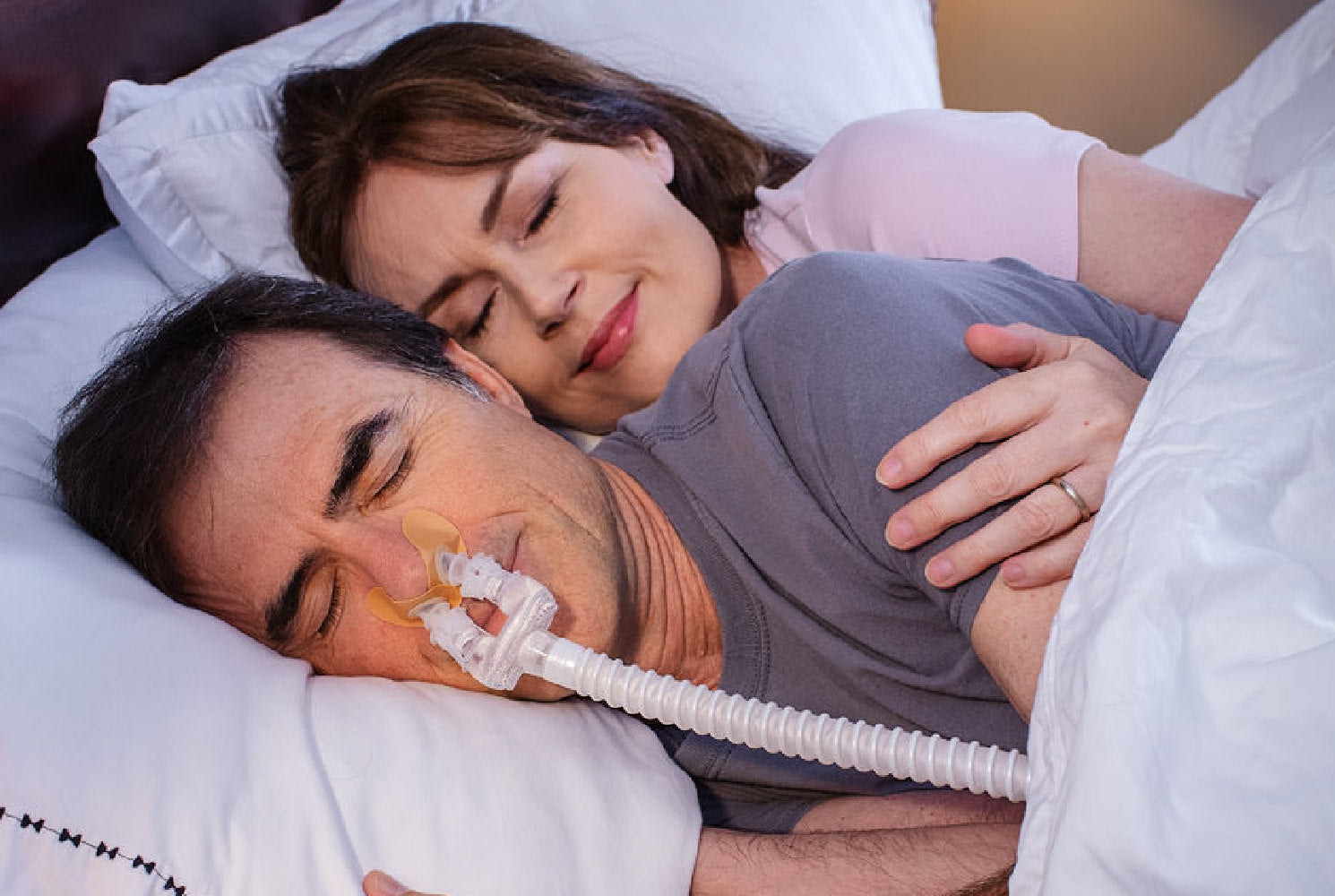
The most significant advancement for anxiety sufferers in CPAP therapy is the development of headgear-free adhesive interfaces. These systems eliminate the straps, the headgear structure, and the clamping sensation entirely.
Instead of relying on mechanical tension to hold a mask in place, adhesive interfaces use a medical-grade seal that adheres directly to the skin around the nostrils. Nothing is crossing the forehead. Nothing is pulling against the sides of the head. The tubing connects at the nose and can be routed upward or to the side, depending on your preference.
For anxiety sufferers, the difference is significant. When there is no headgear pulling against your head, no structure pressing into your temples or cheeks, and no sensation of being held in place, the entire experience of wearing CPAP changes. Many patients who have failed with traditional masks, including nasal pillows, report that the transition to a headgear-free interface finally allowed them to fall asleep with CPAP running.
The Eclipse™ CPAP Solution from BleepSleep uses this adhesive approach. Rather than wrapping straps around your head, Eclipse seals at the nose using a magnetic closure with no tension and no traditional headgear. The system pairs with Halos™ adhesive interfaces to create a secure, comfortable seal that does not require mechanical pressure to function.
For patients who prefer an even simpler interface, the DreamPort® Sleep Solution fits at the nostrils without any inserts, no straps, and no headgear of any kind. It represents one of the most minimal CPAP interfaces currently available for patients with obstructive sleep apnea, and its design is particularly well-suited to users whose anxiety is triggered by physical restraint during sleep.
Why Headgear Specifically Triggers Anxiety
Understanding why headgear creates anxiety can help you evaluate whether a headgear-free design makes sense for your situation.
The sensation of being held or restrained during sleep is a known anxiety trigger. Even when the physical pressure is mild, the constant awareness of straps pulling against the head can create a low-level stress response that interferes with sleep onset. For someone who already has a heightened startle response or difficulty relaxing, this background tension becomes an obstacle rather than a neutral sensation.
Headgear also makes spontaneous movement more difficult. When you wake during the night, which people with anxiety often do, the awareness of straps can accelerate the transition from relaxed to alert. Some patients report that simply putting on the headgear at the beginning of the night triggers an anxiety response before therapy even begins.
Removing headgear from the equation does not just make CPAP feel less uncomfortable; it removes a category of sensory input that specifically conflicts with the conditions anxiety sufferers need to fall and stay asleep. If you want to understand more about how adhesive interfaces compare to traditional CPAP setups, this comparison of adhesive versus traditional CPAP interfaces covers the practical differences in detail.
Additional Strategies to Support CPAP Adherence When You Have Anxiety
Switching to a headgear-free interface addresses the physical triggers, but there are additional steps that can help anxiety sufferers build a sustainable CPAP routine.
Desensitization is one effective approach. Before you attempt to sleep with CPAP running, try wearing the interface for short periods during the day, while reading, watching television, or doing something that occupies your attention. Gradually increasing your exposure to the sensation of wearing the interface during waking hours reduces the novelty of the experience by the time you attempt to sleep with it.
Pressure ramp settings can also help. Most CPAP machines allow therapy to start at a lower pressure and gradually increase to the prescribed level over a set period of time. Starting at a lower pressure reduces the sensation of resistance when you first put on the interface, which is often when anxiety peaks.
Practicing nasal breathing before sleep can improve comfort with nasal-only interfaces. Since headgear-free designs like Eclipse and DreamPort deliver airflow through the nose rather than the mouth, patients who tend toward mouth breathing may benefit from building the nasal breathing habit before switching interface types.
For additional guidance on using CPAP without the headgear-related frustrations, the article on sleeping without CPAP mask headgear explains the practical transition in detail.
Finding the Right Fit Makes Therapy Sustainable
Sleep apnea is a serious condition with significant health consequences when left untreated. Anxiety should not be the reason therapy fails, and in many cases, the right interface design removes the barriers that were preventing success.
If you have tried traditional masks and found the experience too uncomfortable to maintain, the issue is not your willingness to comply with therapy. The issue may simply be that conventional mask design activates sensory triggers that conflict with the conditions your nervous system needs to fall asleep.
Headgear-free adhesive interfaces offer a fundamentally different approach, one that was designed around the experience of wearing CPAP rather than simply delivering airflow. For anxiety sufferers, that distinction matters.
If you are ready to try a CPAP interface that removes the straps and headgear that have been making therapy difficult, explore the full range of BleepSleep headgear-free CPAP solutions designed specifically for patients who need a more comfortable path to consistent therapy.


