

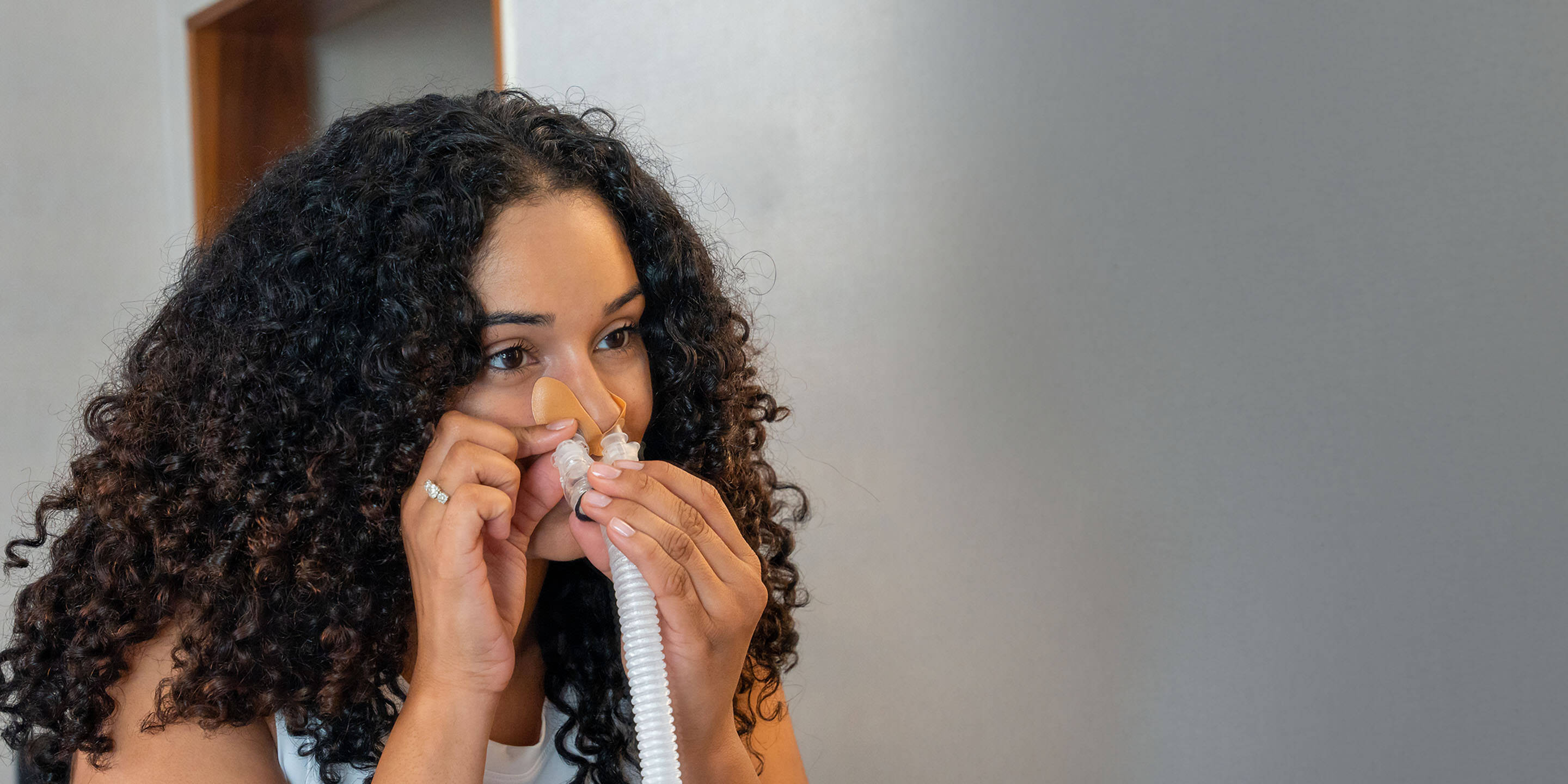
Starting CPAP therapy is a significant step toward better sleep and better health. For most people, the decision to begin treatment comes after months or years of poor sleep, daytime fatigue, and the concerning discovery that their breathing is stopping during the night. By the time a CPAP machine arrives at the door, there is often a combination of hope and apprehension about what the first night will actually feel like.
That uncertainty is completely normal. CPAP therapy introduces a new sensation, a new sound, and a new piece of equipment into an environment that your body associates with rest. Knowing what to expect before your first night can make an enormous difference in how that experience unfolds and whether you continue therapy long term.
Why the First Night Sets the Tone for Long-Term Success
The experience you have in the first few nights of CPAP therapy has a direct impact on whether you continue treatment. According to research by Budhiraja et al. published in the journal SLEEP, CPAP use during the first week of therapy is the strongest predictor of long-term adherence. Patients who establish consistent use patterns early are significantly more likely to maintain therapy at three months and one year compared to those who struggle through the initial period without guidance or preparation.
This is prepared before night one, more than just a comfort measure. It is a foundation for the entire trajectory of your treatment.
What Actually Happens to Your Body on the First Night
The first night of CPAP therapy is rarely the uninterrupted sleep you might hope for, and that is completely expected. Your body is adjusting to a continuous stream of pressurized air, a new sensation at the nostrils or face, and the sound of airflow through the machine and tubing. Most first-time users wake multiple times during the night simply because the experience is unfamiliar.
Some people feel a sense of resistance when they exhale against the pressurized airflow. This is normal. The machine is designed to maintain a set pressure to keep your airway open, which means exhaling takes slightly more effort than it does without the machine. Most CPAP devices include an exhalation relief setting that softens the pressure during exhales. If your device has this feature, activating it before your first night can significantly reduce that sensation.
You may also notice that your mouth feels dry when you wake. This is particularly common for patients whose mouths open during sleep, which allows pressurized air to escape and pulls moisture from the oral cavity. A heated humidifier, which comes built into most modern CPAP machines, reduces this effect by warming and moistening the air before it reaches your airway.
The Most Common First-Night Challenges and Why They Are Normal
Understanding the specific challenges most people encounter on their first night allows you to address them in advance rather than troubleshoot them in the middle of the night.
Mask Discomfort
The interface you wear is touching your face in a way that is entirely new to your body. Even a well-fitted mask may feel strange, tight, or intrusive during the first few nights simply because your face has no reference for what it is supposed to feel like. This does not mean the fit is wrong. It typically means your face and nervous system need several nights to adjust to the sensation.
Aerophagia
Some first-time users swallow air during the night, which causes bloating, gas, or discomfort in the morning. This happens when pressurized air travels down the esophagus instead of the airway. It is more common at higher prescribed pressures and typically improves as your body adjusts to therapy.
Feeling of Claustrophobia
Even patients who do not normally experience claustrophobia can feel a mild sense of confinement when wearing a CPAP mask for the first time. Traditional masks with headgear create a mechanical sensation of being held in place, which can activate discomfort during the relaxed state before sleep. This is one of the primary reasons headgear-free interfaces are worth considering for patients who are sensitive to physical restriction.
Removing the Mask During Sleep
Many first-time users wake to find they have pulled the mask off during the night without any memory of doing so. This is a subconscious response to discomfort and is extremely common. It does not mean CPAP therapy is not right for you. It typically indicates that the interface or the settings need adjustment.
How to Prepare Your Sleep Environment Before Night One
Your sleep environment directly affects how well your body adapts to CPAP therapy. A few deliberate changes before your first night can reduce the friction of adjustment.
Place the CPAP machine on a stable surface at or below the level of your head. The tubing should have enough slack to allow you to move freely during the night without pulling the interface off your face. Running the tubing under or beside your pillow, rather than across your body, reduces the likelihood of the tube pulling the mask out of position when you roll over.
Run the machine without wearing the interface for a few minutes before bed. Listening to the sound of the machine in your room while you are still awake helps normalize it before you attempt to sleep. The ambient sound of CPAP airflow can actually become a helpful sleep cue over time as your brain begins to associate it with the routine of going to bed.
If your machine has a ramp setting, use it. The ramp feature begins therapy at a lower pressure and gradually increases to your prescribed level over a set period, typically 20 to 45 minutes. Starting at a lower pressure reduces the sensation of resistance during the period when you are still awake and falling asleep, which makes the transition into sleep considerably smoother.
Choosing the Right Interface Before Night One Matters More Than You Think
The interface you wear on your first night shapes your entire initial experience of CPAP therapy. A mask that fits poorly, creates pressure points, or activates anxiety will make every other aspect of adjustment harder.
Traditional masks use headgear and mechanical tension to create a seal against the face. For some patients, this works well. For others, the combination of straps, pressure, and physical restraint creates a sensory experience that conflicts with relaxation and sleep onset.
Headgear-free adhesive interfaces represent a fundamentally different approach. By eliminating the straps and headgear structure entirely, they remove a significant category of physical sensation from the first-night experience. The Eclipse CPAP Solution from BleepSleep uses a magnetic closure and pairs with Halos adhesive interfaces to create a seal at the nose without any straps crossing the head. The result is an interface that feels substantially less intrusive than traditional options during those initial nights of adjustment.
The DreamPort Sleep Solution takes a similar approach, fitting at the nostrils with no inserts, no straps, and no headgear. For patients who are particularly sensitive to new sensations, starting therapy with the most minimal interface available reduces the number of variables you are adjusting to simultaneously, which makes that critical first week considerably more manageable.
If you are deciding between interface types before your first night, the article on how adhesive CPAP interfaces compare to traditional masks provides a detailed breakdown of the practical differences.
Making the First Week Work in Your Favor
Because the first week of therapy has such a strong influence on long-term outcomes, it is worth treating those nights as a deliberate adjustment phase rather than an immediate performance test.
Do not evaluate CPAP therapy based on the first night alone. Your brain and body need time to associate the machine, the sound, and the interface with the experience of sleep. Most sleep specialists consider a two-to-four-week adjustment period standard, and many patients find the experience improves noticeably between night three and night seven as the novelty of the sensation fades.
Keep a brief log of what you notice each morning. Note whether you removed the mask during the night, whether you experienced dryness, whether the fit felt comfortable, and how rested you felt. This information helps your sleep specialist or equipment provider make meaningful adjustments to your settings or interface during the critical first month.
For additional guidance on transitioning away from traditional headgear and toward a more comfortable interface setup, the article on sleeping without CPAP mask headgear outlines the process in practical terms.
Your First Night Is the Beginning, Not the Benchmark
CPAP therapy is one of the most effective treatments available for obstructive sleep apnea, but it requires an adjustment period that looks different for every patient. The discomfort, the interrupted sleep, and the unfamiliar sensations of the first night are not indicators of failure. They are the expected starting point of a process that, for the vast majority of patients, leads to substantially better sleep and long-term health outcomes.
Preparation reduces the adjustment period. Choosing the right interface from the start reduces it further. And understanding that the first night is simply the beginning of a learning curve makes it easier to stay committed through the early nights when everything still feels new.
Explore the full range of BleepSleep headgear-free CPAP solutions to find the interface that gives you the best possible start to your therapy.


