

Getting your CPAP mask and equipment covered by insurance is entirely achievable for most people with an obstructive sleep apnea diagnosis, but the process involves several steps that are easy to miss if no one has explained them clearly. Insurance companies treat CPAP equipment as durable medical equipment (DME), which means specific documentation, supplier requirements, and compliance rules apply before a claim will be approved.
This guide walks you through the full process for 2026, from getting the right documentation to choosing the interface type that gives you the best chance of meeting compliance requirements and keeping your coverage active.
What Most Insurance Plans Cover for CPAP in 2026
The majority of health insurance plans in the United States cover CPAP therapy as medically necessary treatment for obstructive sleep apnea. According to the National Heart, Lung, and Blood Institute, sleep apnea is one of the most common sleep disorders in the country, affecting a substantial portion of the adult population. The scale of the condition has led most major commercial insurers, employer-sponsored plans, and government programs to classify CPAP as a covered benefit when it is medically documented.
Under most plans, coverage typically includes the CPAP machine (usually as a rental during an initial period, then a purchase), the mask or interface, tubing, filters, and humidifier supplies. The exact replacement schedule and cost-sharing vary by plan, but the general structure is similar across most commercial insurers.
Step 1: Get the Right Diagnosis Documentation
Insurance coverage for CPAP begins with a qualifying sleep study. Most insurers require a polysomnogram (in-lab sleep study) or an approved home sleep apnea test showing objective evidence of obstructive sleep apnea. The results must show a minimum apnea-hypopnea index (AHI) threshold, which most plans set at 5 or above with symptoms, or 15 or above without documented symptoms.
The sleep study must be ordered by a licensed physician. Studies conducted without proper physician involvement will not satisfy the documentation requirements for most insurers. If you have already had a study, confirm with your physician that the documentation meets the criteria set by your specific insurer before proceeding.
Your physician will also need to write a letter of medical necessity along with a prescription for the CPAP device and interface. Some insurers have specific forms for this purpose. Confirm with your plan whether a standard prescription is sufficient or whether additional documentation is required before your supplier submits the prior authorization request.
Step 2: Understand the DME Benefits in Your Plan
Before ordering any equipment, contact your insurance plan and ask specifically about DME coverage.
The questions worth asking include:
-
What is the deductible for DME?
-
What percentage of the approved amount does the plan pay after the deductible is met?
-
Does the plan rent CPAP equipment first before purchasing, and if so, for how long?
-
Is there a compliance requirement to continue coverage?
-
Which DME suppliers are in-network?
Many plans cover 80% of the approved DME amount after the deductible, leaving you responsible for 20%. However, plans vary significantly. Some require a 13-month rental period before the machine becomes yours outright. Others purchase the equipment from the start. Knowing these terms before you order prevents unexpected bills later in the process.
Step 3: Find an In-Network DME Supplier
Using an in-network DME supplier is one of the most important steps in making sure your insurance claim goes through cleanly. An out-of-network supplier may still accept insurance, but your cost-sharing will typically be higher, and some plans will not cover out-of-network DME at all.
Your insurer can provide a list of in-network DME suppliers. When you contact a supplier, confirm that they accept your specific insurance plan and that they stock the interface type you are interested in. Not all suppliers carry every brand or design, and it is worth asking about headgear-free options specifically if that is what you prefer.
Step 4: Navigate Prior Authorization
Most insurance plans require prior authorization before they will cover CPAP equipment. This means your supplier or physician needs to submit your sleep study results, letter of medical necessity, and prescription to the insurer for approval before the equipment is ordered.
Prior authorization timelines vary by insurer. Some approvals come through within 48 to 72 hours. Others take up to two weeks. Starting the process as soon as your documentation is ready prevents delays in getting your equipment.
If your prior authorization is denied, do not assume the case is closed. Denials are often based on missing documentation or a coding issue rather than a determination that CPAP is not medically appropriate. Ask your physician or supplier to review the denial reason and resubmit with any missing information. Most denials at this stage are resolved through resubmission.
Step 5: Meet the Compliance Requirement to Keep Coverage
Most insurance plans include a compliance requirement as a condition of continued coverage. The standard requirement is using CPAP for at least four hours per night on at least 70% of nights within a defined period, typically the first 30 to 90 days of therapy.
If you do not meet the compliance threshold, your insurer may classify the equipment as not medically beneficial and discontinue coverage. This does not mean you must return the equipment in all cases, but it does mean you could be billed for equipment you believed was covered.
The most common reason people miss compliance thresholds is discomfort with the mask or interface. Patients who find their interface uncomfortable tend to remove it during the night or avoid putting it on altogether. Addressing interface fit and comfort issues early in the compliance period is the single most important thing you can do to protect your coverage.
How Your Choice of Interface Affects Compliance and Coverage
The interface you choose directly affects your ability to meet the compliance requirement that keeps your insurance coverage intact. A mask that creates discomfort, anxiety, or irritation will result in shorter nightly use and potentially missed nights. A mask that feels comfortable and unobtrusive is far easier to wear consistently through the critical first months of therapy.
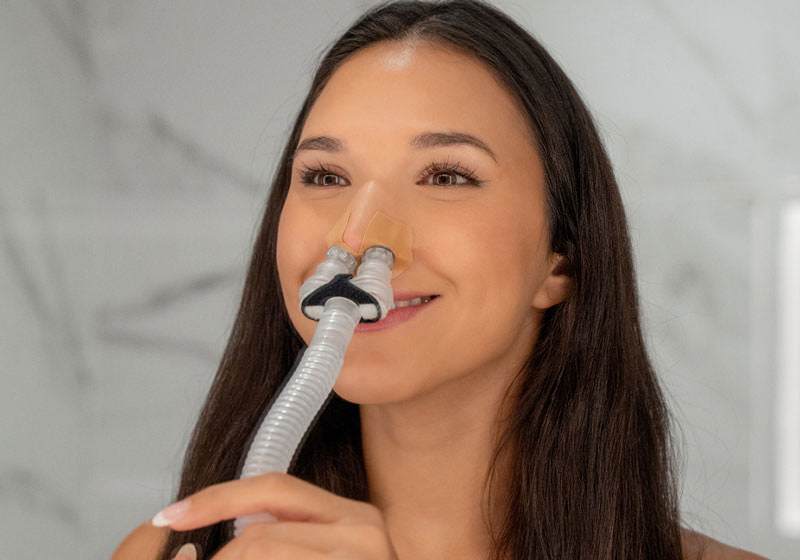
Headgear-free adhesive interfaces remove the straps, tension, and mechanical pressure that make traditional masks difficult for many users to tolerate. The Eclipse CPAP Solution from BleepSleep uses a magnetic adhesive seal at the nose with no headgear and no straps. For patients who have struggled to stay compliant with traditional masks, this type of design can meaningfully change the nightly experience of wearing CPAP.
The DreamPort Sleep Solution offers a similar approach with an even more minimal profile, fitting at the nostrils with no inserts and no headgear of any kind. For a detailed comparison of how these designs differ from traditional mask categories, the article on adhesive versus traditional CPAP interfaces is a useful starting point before you speak with your supplier.
If you are struggling to maintain compliance and are concerned about your coverage, the article on sleeping without CPAP mask headgear explains how patients have transitioned to more comfortable setups while protecting their nightly wear numbers.
What to Do If Your Insurance Claim Is Denied
A denial is not always the final word. Insurance companies are required to provide a reason for every denial, and many denials are successfully appealed. Common reasons include incomplete prior authorization documentation, a sleep study that does not meet the AHI threshold set by the insurer, a supplier that is not in-network, or a billing code error.
Request the denial explanation in writing. Share it with your physician and DME supplier so they can identify what is missing. Most plans allow at least one level of internal appeal, and many states require insurers to offer an external review process if the internal appeal is unsuccessful.
If the denial is based on a coverage policy you believe is unreasonable, your state insurance commissioner may be a resource for complaints related to improper denials for medically necessary equipment.
Frequently Asked Questions About Getting CPAP Covered by Insurance
Does insurance cover the CPAP mask separately from the machine?
Yes. Most insurance plans cover the mask or interface, tubing, filters, and other accessories as separate items from the CPAP machine itself. Each category of supply has its own replacement schedule and coverage terms. Confirm the specific replacement frequency for each item with your plan before ordering replacements.
Can I get a headgear-free or adhesive interface covered by insurance?
Coverage depends on how the product is classified under the DME billing codes your supplier uses. Headgear-free and adhesive interfaces that function as nasal masks or nasal pillow alternatives may be covered under the applicable billing code. Ask your DME supplier to confirm the HCPCS code that will be used before ordering.
What if I already own a CPAP machine and just need a new mask?
Replacement masks and supplies are covered independently of the machine. As long as you are within the replacement schedule for the mask category and you are actively using the device, your insurer should cover the replacement. Contact your DME supplier or insurer to confirm your last replacement date on file before placing an order.
How long does it take to get CPAP covered by insurance?
The timeline depends on how quickly your physician can provide documentation and how fast your insurer processes prior authorization. In straightforward cases with complete documentation, equipment can be in hand within one to two weeks. More complex situations or appeals can take four to six weeks or longer.
Do I need a new prescription every year to keep getting covered supplies?
Most insurers require an updated prescription from your physician periodically, typically every one to two years, to confirm that CPAP therapy remains medically necessary. Check the specific requirements of your plan, as some plans accept an indefinite prescription while others require periodic renewal.
What is the difference between in-network and out-of-network DME suppliers?
An in-network supplier has a contracted rate with your insurer, which means your cost-sharing is lower and the claims process is smoother. An out-of-network supplier may offer equipment your insurer covers, but at a higher out-of-pocket cost to you. Always confirm in-network status before ordering to avoid unexpected charges.
Explore the full range of BleepSleep headgear-free CPAP solutions to find the interface that gives you the best foundation for consistent, insurance-supported therapy.


