

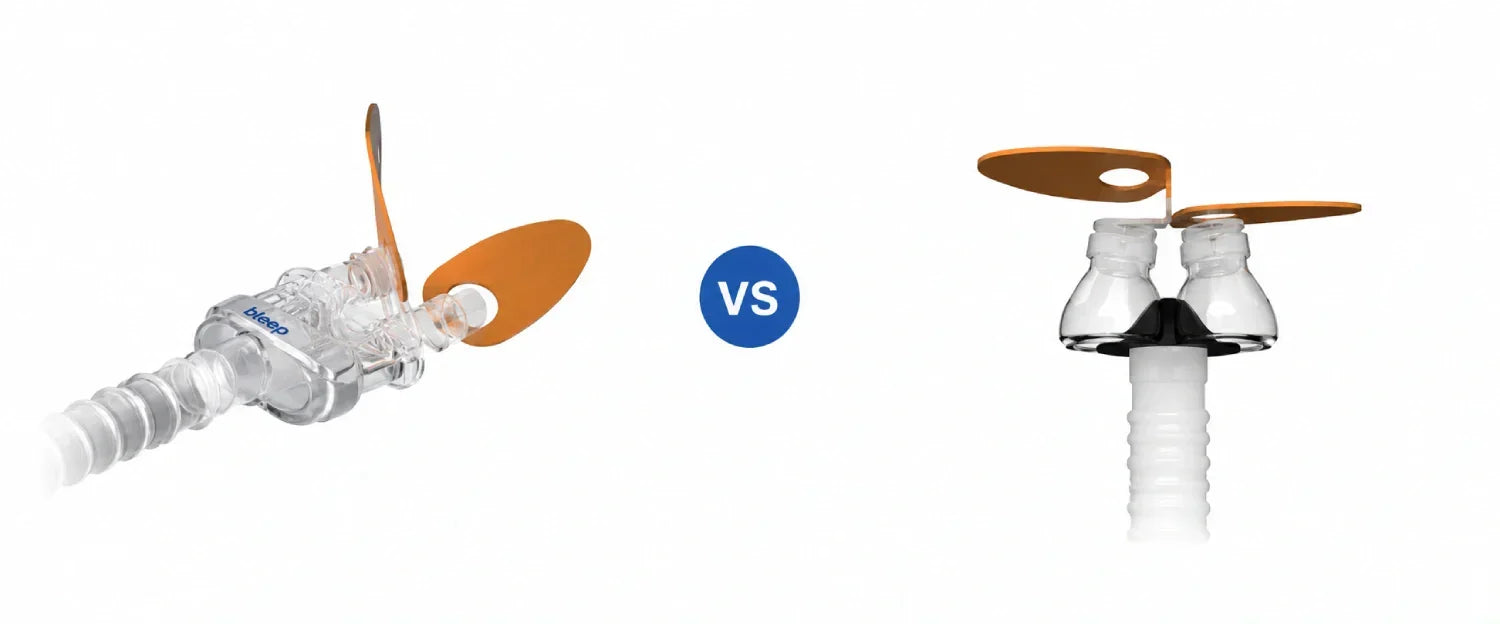
If you have been researching headgear-free CPAP options, you have probably come across two products from Bleep Sleep: the DreamPort Sleep Solution and the Eclipse CPAP Solution. Both were designed to solve the same core frustration of traditional CPAP therapy: masks that leak, chafe, and keep you awake with straps and restrictive headgear.
But they're not interchangeable. Each uses a different attachment method and suits a different type of user. This guide breaks down the real differences between both products so you can pick the one that genuinely fits your sleep habits, lifestyle, and physical needs.
You can compare both options directly on the Bleep Sleep products page before making your decision.
What Is the DreamPort Sleep Solution?
The DreamPort is an adhesive-based CPAP interface. Instead of straps or magnets, it uses a hypoallergenic surgical adhesive to create a seal directly against the skin around your nostrils. Nothing inserts into your nose, and there's no headgear involved at any stage of the process.
Each DreamPort is disposable and designed for single-night use. You peel the backing, apply it, connect your CPAP tubing, and you're set. Because there's no rigid hardware resting on your face beyond the thin adhesive interface, it's one of the quietest CPAP options available. Users on sleep apnea forums often note it produces less noise than pillow-style masks and generates less pull on the nose during the night.
The DreamPort works well if you sleep in multiple positions, tend to move around at night, or find that bulky hardware on your face is the main reason you've struggled to stay on CPAP therapy. If you're looking to make your CPAP experience easier overall, our guide on how to make CPAP easier to use covers the broader picture of what affects nightly compliance.
What Is the Eclipse CPAP Solution?
The Eclipse uses a different approach. Its MagSeal technology creates a secure seal through a magnetic closure system rather than skin adhesive alone. The interface snaps into place, which makes it faster to connect and disconnect throughout the night without fumbling in the dark.
The Eclipse is FDA cleared (K172335) and is designed to be over 35% smaller than the top-selling nasal pillow masks on the market. It sits compactly under the nose, reducing the visual profile and the amount of pressure you feel on your face while sleeping.
The Eclipse works with Halos adhesive interfaces, which provide the skin seal. The magnetic components are reusable, giving the Eclipse a slightly different ongoing cost structure compared to the all-in-one disposable DreamPort.
For people who have trouble with fine motor movements, arthritis, or reduced hand dexterity, real users consistently report that the Eclipse is easier to line up and apply correctly. The magnetic guide does much of the alignment work for you, which removes a significant source of frustration during nightly setup. Staying consistent with CPAP therapy matters for your long-term health, and you can read more about why at our post on how sleep apnea impacts heart health.
Key Differences Between DreamPort and Eclipse
How They Attach
The DreamPort relies entirely on surgical-grade skin adhesive. You apply it directly to the skin around your nostrils. This creates a clean, low-profile seal that doesn't depend on any external hardware beyond the adhesive interface itself.
The Eclipse uses MagSeal magnetic technology. The magnetic closure guides the interface into position and holds it there, which reduces the chance of misalignment during application. Both create reliable seals when applied correctly. The difference shows up in how long it takes to learn proper placement and how much tolerance you have for skin adhesive contact each night.
Ease of Application
This is where most users notice the biggest practical difference. The DreamPort requires you to position a thin adhesive interface precisely at your nostrils without a mechanical guide to help you align it. Done correctly, it's a fast process. But the learning curve over the first few nights is real, and applying it well consistently takes some practice.
The Eclipse's magnetic system snaps into position, which makes correct placement more forgiving from night one. If you have arthritis, limited hand dexterity, vision that isn't great without glasses, or simply prefer a product that guides itself into place, the Eclipse tends to be easier to use correctly and consistently.
Comfort and Feel During Sleep
Both interfaces are far lighter and less intrusive than traditional CPAP masks. But they feel different against your face.
The DreamPort sits almost invisibly against your face. Because it's adhesive-only, there's no rigid component resting under your nose. Users who switch from pillow-style masks often describe the DreamPort as feeling like almost nothing is there at all.
The Eclipse is slightly heavier by a small margin, though still far lighter than conventional masks. The compact magnetic housing sits under the nose. Some users don't notice it at all during sleep; others find it slightly more present. If you're a stomach sleeper or tend to press your face into the pillow, the DreamPort's ultra-flat profile may have a practical edge.
Noise Levels
The DreamPort consistently draws praise for its quiet operation. Because the adhesive creates a flush seal with no additional hardware components near the airways, it produces minimal exhalation noise.
The Eclipse is also quiet by any standard compared to traditional masks. Users report that both products are far less disruptive than conventional CPAP gear, though those who specifically prioritize the quietest possible setup tend to prefer the DreamPort in direct comparisons.
Cost Over Time
Because the DreamPort is fully disposable, your ongoing cost is tied to the per-unit price of each interface. You use one per night and discard it after.
The Eclipse uses reusable magnetic components paired with replaceable Halos adhesive interfaces. Depending on usage and replacement frequency, your long-term cost structure will differ from the DreamPort model. Review both product pages for current pricing to make a direct comparison based on your situation.
DreamPort vs Eclipse: Side-by-Side
|
Feature |
DreamPort |
Eclipse |
|
Attachment |
Surgical adhesive |
MagSeal magnetic closure |
|
Application |
Moderate learning curve |
Easy, magnetic guides alignment |
|
Noise Level |
Very quiet |
Quiet |
|
Profile |
Ultra-flat, minimal feel |
Compact, slightly more present |
|
Best For |
Stomach sleepers, minimal-feel preference |
Limited dexterity, easy application |
|
Headgear |
None |
None |
|
Standard CPAP Tubing |
Yes |
Yes |
Which Should You Choose?
Neither product is universally better. They're built for different users and different priorities. Here's the straightforward breakdown.
Choose the DreamPort if:
You want the most minimal, flat feel possible against your face. You're a stomach sleeper or move significantly during the night. Quiet operation is a top priority for you or your partner. You're comfortable spending a few nights dialing in the adhesive placement technique. You prefer a fully disposable, one-piece interface with no hardware components to manage.
Choose the Eclipse if:
You have arthritis, limited hand dexterity, or find precise adhesive placement difficult. You want a magnetic guide that snaps into position without trial and error. You prefer the convenience of a magnetic closure you can connect and disconnect quickly throughout the night. You're looking for a reusable magnetic system with replaceable Halos adhesive interfaces rather than a fully disposable product.
If you're still undecided after reading this comparison, both products are available on the Bleep Sleep products page where you can review detailed specifications side by side.
Frequently Asked Questions
Can I try both products before committing to one?
Yes. Both products are sold separately, so you can start with one and switch without a long-term commitment. Many users try one for a few weeks and then sample the other to make a direct comparison based on their own experience.
Are DreamPort and Eclipse compatible with my existing CPAP machine?
Both products work with standard CPAP tubing and are compatible with most CPAP machines on the market. Check the product specifications on each product page to confirm compatibility with your specific equipment before ordering.
Do these products work for people with facial hair?
A clean seal requires skin contact around the nostrils for both products. Light stubble is manageable for many users, but a full beard or heavy growth can interfere with adhesion. If facial hair is a factor, start with a small order to test the seal quality in your specific situation.
How long does it take to adjust to using either product?
Most users adapt within three to five nights. The Eclipse tends to feel natural almost immediately due to magnetic alignment. The DreamPort has a slightly steeper placement learning curve but becomes quick and easy once you've found the right positioning.
Are these covered by Medicare or insurance?
Coverage depends on your specific plan and provider. Both products function as CPAP interfaces replacing traditional masks, which fall into commonly covered supply categories. Contact your insurance provider or DME supplier with product details to verify your eligibility.
The Right Fit for Your Therapy
Both the DreamPort and Eclipse eliminate the straps, headgear, and chronic leaks that push people away from CPAP therapy. The right choice comes down to how you sleep and what matters most in your nightly routine.If you prioritize the flattest profile and quietest operation, the DreamPort is worth your attention. If you want a magnetic system that guides itself into position and suits users who need easier application, the Eclipse is the stronger fit. Both are available now on the Bleep Sleep products page with full product details and ordering information.


