

There is a specific kind of guilt that comes with leaving your CPAP machine on the nightstand, untouched, for the fifth night in a row. You know the machine works. Your doctor explained what untreated sleep apnea does to your heart, your blood pressure, and your energy. You understand the stakes. And you still cannot make yourself wear it.
If that describes where you are right now, or where yo u were before you gave up entirely, this is for you. Not the patient who loved CPAP from night one. Not the person who read the brochure and never looked back. This is for everyone who tried, quit, and is now wondering if there is actually a way through.
There is. But it probably is not what most CPAP guides will tell you.
Why Half of All CPAP Users Quit (And Why It Is Not a Willpower Problem)
The numbers on CPAP compliance are sobering. According to research by Weaver and Grunstein published in the Proceedings of the American Thoracic Society, adherence rates for CPAP therapy range from 30% to 60%, with some studies reporting that 46% to 83% of patients are nonadherent when adherence is defined as four or more hours per night. Nearly half of all users stop using the device within the first year.
Sleep clinicians have spent decades trying to solve this. They adjusted pressure settings, added humidifiers, developed cognitive behavioral therapy programs, and built apps to track compliance data. All of these things help. But the research consistently points to one root cause sitting above all the others: mask discomfort.
The straps. The frame. The silicone cushion pressed against your face. The way the headgear catches on your pillowcase when you roll over, breaking the seal, triggering your machine to ramp up pressure, waking you up at 3 a.m., and feeling like you are wearing a fighter jet helmet.
This is not a willpower problem. It is an equipment problem. That distinction changes everything.
What the First Weeks Actually Feel Like
When a sleep technician hands you a CPAP machine, they typically explain what the therapy does and how to use the device. What they often do not explain in enough detail is what the first two to four weeks feel like for most new patients.
It feels like wearing a scuba mask to bed. The headgear presses into your temples and cheeks. The cushion leaves marks on your face. You wake up with a dry mouth or with air blowing into your eyes from a seal that shifted while you were asleep. If you are a side sleeper, the frame digs into the pillow and the strap on the same side of your face pulls the mask off your nose.
None of this means CPAP is not working. It means you are in the adjustment period, and the adjustment period is genuinely hard. The problem is that most patients hit this wall without being told it is normal, so they conclude that CPAP is just not for them.
If you quit during this window, you are in good company. The majority of people who eventually become consistent CPAP users also went through a period of quitting or near-quitting first.
The Thing That Actually Changed the Equation
For a significant portion of CPAP quitters, the breakthrough comes not from better habits or stronger motivation. It comes from finding a mask design that removes the specific discomforts that drove them out in the first place.
Traditional CPAP masks rely on headgear tension to hold a seal against your face. The strap is what keeps the cushion in place. That system works, but it introduces every problem described above: pressure points, shifted seals, limited sleep positions, and the general claustrophobia of being strapped to a machine.
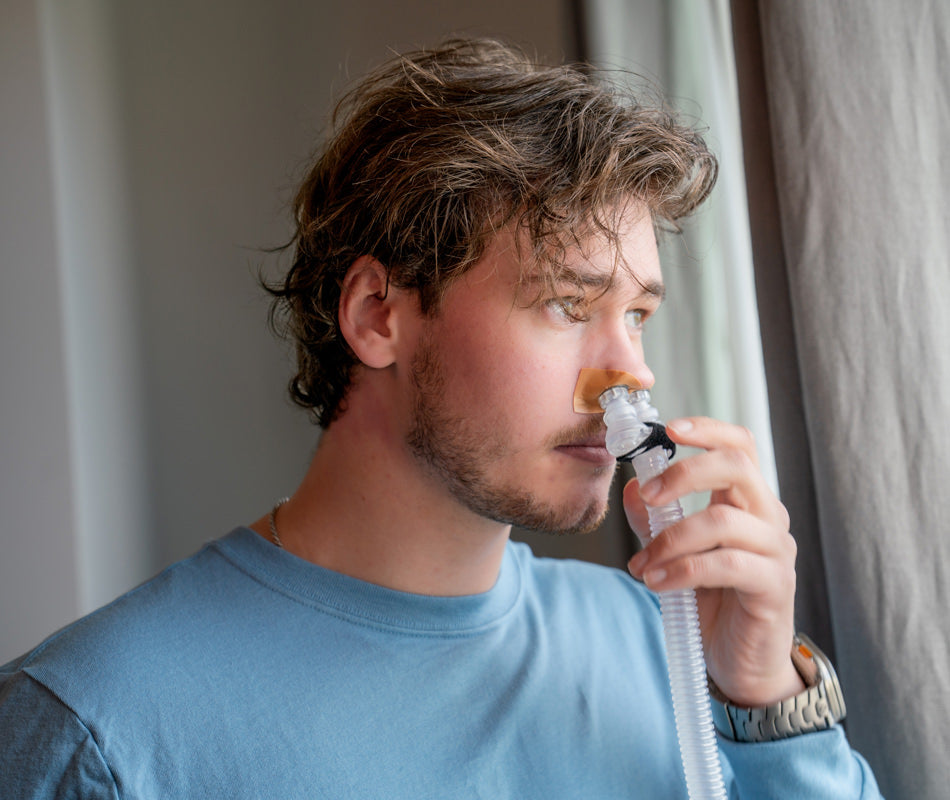
Headgear-free CPAP designs take a different approach. Instead of using tension, they create the seal at the point of skin contact directly, through adhesion or magnetic closure. There are no straps wrapping around your head. Nothing to catch on a pillow. No frame sitting on your face.
BleepSleep's DreamPort system uses disposable adhesive interfaces that attach directly at the nostrils. The seal is maintained by the adhesive itself, which means it holds through side sleeping, stomach sleeping, and any position you naturally fall into. The Eclipse CPAP solution takes a similar headgear-free approach using a magnetic MagSeal closure, keeping the interface compact and the contact point minimal.
If you have never tried an adhesive or headgear-free CPAP mask, this category is worth understanding before you conclude that CPAP simply is not compatible with how you sleep.
Four Strategies That Actually Help After You Find the Right Mask
Once the equipment fits your needs, the behavioral strategies that sleep clinicians recommend become much easier to actually follow.
Start with short daytime sessions
Spend 20 to 30 minutes wearing your mask while watching television or reading before you try sleeping in it. This is one of the most effective techniques sleep therapists recommend for new and returning CPAP users. Your brain stops associating the mask with the pressure of trying to fall asleep and starts treating it as neutral background noise. Within a week or two, most people find the mask barely registers.
Use the ramp feature
Every modern CPAP machine includes a ramp setting that starts at a lower pressure and gradually increases to your prescribed level over 15 to 45 minutes. If you feel like you are fighting the airflow when you first lie down, ramp mode resolves that. A starting pressure around 4 cmH2O with a 20-minute ramp gives most people enough time to fall asleep before the full pressure kicks in. Ask your sleep clinic about adjusting this setting at your next appointment.
Fix humidity first, not last
Dry air causes nosebleeds, cracked lips, a sore throat, and nasal congestion, all of which make you want to pull the mask off in the night. If your machine has a heated humidifier, use it from the start. If it has a heated hose, turn that on too. Finding the right humidity setting takes a night or two but makes a dramatic difference in how tolerable the first weeks feel.
Track short streaks, not long-term goals
Compliance is not built in months. It is built at night. Three nights in a row matter. A full week matters. Acknowledge each one. If you miss a night, start a new streak the next night. The goal is to remove all-or-nothing thinking from the equation and replace it with one decision at a time.
What You Are Protecting by Staying with It
On the nights when the mask feels like a chore, the health consequences of untreated sleep apnea are worth keeping in front of you.
Research links untreated obstructive sleep apnea to elevated blood pressure, increased cardiovascular risk, higher likelihood of type 2 diabetes, and persistent daytime fatigue that affects reaction time, cognitive function, and mood. According to the American Academy of Sleep Medicine, untreated sleep apnea affects an estimated 30 million people in the United States, the majority of whom remain undiagnosed or inadequately treated.
These risks do not disappear because compliance is difficult. They compound over time. Consistent CPAP use, on the other hand, has been shown to produce measurable improvements in blood pressure, daytime alertness, and cardiovascular markers within weeks of regular use.
The machine on your nightstand is not a burden. It is the thing standing between where you are now and significantly better health outcomes.
Finding the Setup That Works for Your Sleep Style
If you have tried and quit before, one thing is worth examining: was the mask you used the right type for how you sleep?
Side sleepers often struggle with traditional nasal and full-face masks because pillow pressure dislodges the seal. A CPAP pillow designed with mask cutouts can help, but a headgear-free design eliminates the issue more directly by reducing the contact points that interact with the pillow in the first place.
Patients who experienced claustrophobia with full-face or nasal masks often find that minimal-contact nasal interfaces feel completely different. The psychological effect of having less on your face, and nothing strapping around your head is significant for this group.
For a deeper look at how no-headgear CPAP masks work and who benefits most, that article covers the mechanics and patient profiles in full detail. The point is not that there is one solution for every person. The point is that if your previous experience involved a traditional strapped system, you have not yet tried the full range of what CPAP can be.
Frequently Asked Questions
How long does it take to adjust to CPAP?
Most sleep clinicians describe an adjustment period of two to four weeks for new CPAP users. During this time, the goal is consistency rather than comfort. Some patients adjust faster, particularly those who switch to lower-profile or headgear-free interfaces that reduce the foreign sensation of the equipment.
Is it normal to hate CPAP at first?
Yes. The first weeks of CPAP therapy are difficult for most patients. Mask discomfort, pressure adjustment, and disrupted sleep are all common. The fact that the early experience is hard does not mean long-term success is impossible, and it does not reflect anything about your ability to tolerate therapy.
What should I do if I keep pulling the mask off in my sleep?
This is often a sign of a discomfort issue rather than a habit problem. Check whether the mask fit is correct, whether the humidity is set high enough, and whether your mask type is compatible with your sleep position. Switching to a lower-profile or headgear-free mask often resolves unconscious removal for good.
Can Medicare or private insurance cover headgear-free CPAP supplies?
Many Medicare Advantage plans and private insurance plans cover CPAP supplies, including alternative mask types. Contact your insurer with the specific product information and your doctor's prescription to confirm coverage. BleepSleep's team can provide the product details and documentation you need to make that inquiry.
What is CPAP compliance, exactly?
Insurance companies and most sleep clinicians define CPAP compliance as using the device for at least four hours per night on at least 70% of nights within 30 days. Research consistently shows that more hours of use per night produce greater health benefits, with the strongest cardiovascular evidence coming from six or more hours nightly.
The Next Step
Giving up on CPAP once is not a prediction about whether you can succeed. Most consistent CPAP users failed at some point before they found the setup that worked for their sleep style and their face.
If mask discomfort was the thing that drove you away, exploring headgear-free CPAP options is worth doing before you write off therapy altogether. The technology has changed significantly, and the experience of wearing a mask-free, strap-free interface is genuinely different from what traditional CPAP felt like.
Your sleep apnea did not go away when you stopped treating it. But that also means there is still something meaningful to gain by finding a way back.
If you are ready to try again, explore the Eclipse CPAP solution and the DreamPort system at BleepSleep.com. Both are designed specifically for people who can not make traditional CPAP work. One of them might be exactly what you have been missing.


