

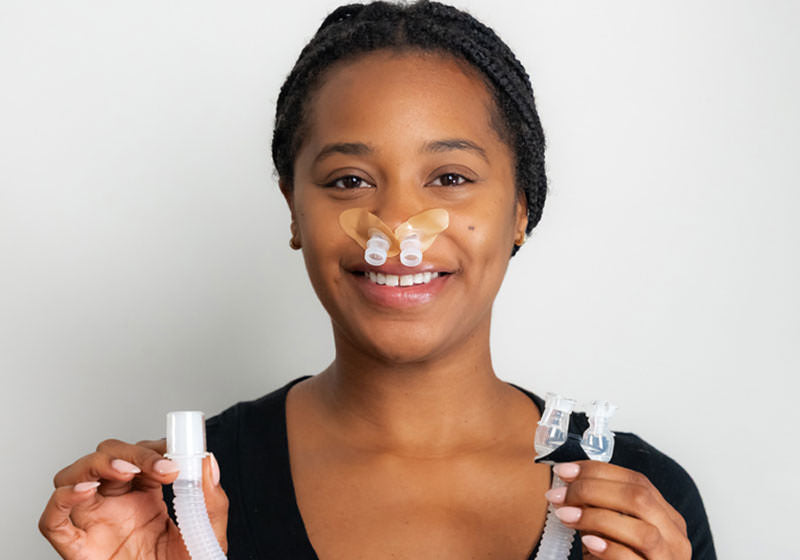
When people search for the smallest CPAP mask, they're usually looking for the same thing: something that takes up less space on their face, feels less intrusive, and makes it easier to actually sleep.
That's a reasonable goal. The size and weight of a CPAP mask has a direct effect on how well you can tolerate it night after night. A smaller mask means less material pressing against your face, a lower chance of claustrophobia, fewer adjustment points that can go wrong, and better compatibility with active sleep styles.
In 2026, the conversation about minimal CPAP masks has expanded. There are now options that go beyond the smallest conventional nasal pillow masks, headgear-free interfaces that weigh less than an ounce and make contact with only the outside of your nostrils. This guide covers the full picture, from the smallest traditional masks to what's now possible with newer designs.
What Makes a CPAP Mask "Small"?
Before comparing options, it helps to understand what "small" actually means in this context, because the word gets used loosely.
Size in CPAP masks involves several things: the physical footprint on your face (how much skin contact there is), the overall frame size (how much structure you're wearing), the weight, and whether or not the mask requires headgear. A mask that looks compact in photos might still have a large frame, bulky headgear, or require tight straps to hold it in place.
The truly minimal cpap mask reduces all of these factors at once, not just the cushion size, but the total system on your face and head.
The CPAP Mask Size Spectrum
Understanding where different mask types fall on the size scale helps narrow down what's right for you.
Full face masks are the largest category. They cover both the nose and mouth and require substantial headgear to hold them in position. They're the right choice for mouth breathers and high-pressure therapy, but they're the furthest thing from minimal.
Nasal masks cover the nose only. They're smaller than full face masks and require less headgear tension, but still involve a cushion that sits over the bridge of the nose and under it a meaningful amount of facial coverage.
Nasal pillow masks are the lightest and smallest conventional CPAP mask design. Two small silicone cushions sit at the entrance of the nostrils without covering the nose itself. Contact with the face is minimal many nasal pillow masks touch less than 10% of your face. Lightweight nasal pillow masks like the F&P Nova Micro weigh under 40 grams with headgear included.
Adhesive and magnetic interfaces represent the next step. These headgear-free designs attach directly to the outside of the nostrils using medical adhesive or magnetic closure, with no frame and no straps. The total weight is under one ounce. Nothing wraps around your head. There's no structure on your face beyond a small connection point at the nostrils.
The Case for Going Smaller
Mask size affects more than just comfort; it affects how consistently you use CPAP therapy. Smaller, lighter masks are easier to tolerate throughout the night, which matters more than any technical specification.
Side sleepers benefit directly from a smaller mask profile. When you turn onto your side, a large mask frame catches on the pillow, shifts position, and creates leaks. A nasal pillow mask or adhesive interface sits close enough to the face that it doesn't interfere with your sleeping position.
Stomach sleepers need the most minimal mask possible. Full face masks are essentially off the table for stomach sleeping. Even some nasal masks create enough bulk that they push against the pillow. The lightest, smallest interfaces, particularly adhesive and magnetic designs, are the only practical options for true stomach sleeping.
For people with claustrophobia or sensory sensitivity, the size and physical presence of the mask is a real clinical factors. The less material on and around the head, the easier the mask is to tolerate. Studies on CPAP non-adherence consistently identify claustrophobic discomfort as a primary reason people stop treatment.
Travel is another practical consideration. A compact, lightweight cpap mask without a large frame takes up minimal space in a bag and doesn't require special packaging.
Why Nasal Pillows Aren't Always the Final Answer
Nasal pillow masks are genuinely small, and for many people they're the right choice. But they still have limitations that prevent them from being the most minimal option for everyone.
They still require headgear. Even the lightest nasal pillow mask has a frame that connects to straps running around the back of the head. That headgear adds weight, adds a fitting variable, and adds points of contact with the scalp and hair that some people find uncomfortable or impractical.
The silicone pillows insert into the nostrils rather than sitting at the entrance. At higher pressure settings, this insertion can cause nasal dryness, soreness at the nostril opening, and discomfort that leads people to abandon the mask entirely.
They're not compatible with all facial structures. Nasal pillow masks depend on a specific nostril anatomy for the seal to work. People with narrow nostrils, septum deviations, or other structural differences sometimes can't get a consistent seal from the pillow design.
BleepSleep's Approach to Minimal: Eclipse™ and DreamPort®
BleepSleep designed its interfaces specifically around the question of how small and light a CPAP interface can be while still delivering reliable therapy. Both products are headgear-free, and both are lighter and less intrusive than any conventional nasal pillow mask.
The Eclipse™ with MagSeal™ Technology
The Eclipse™ uses a patented magnetic seal to attach at the entrance of the nostrils without inserting into them, without a frame over the nose, and without headgear straps. The MagSeal™ closure creates and maintains the seal through magnetic attraction between components, which means there's no strap tension to calibrate, and the interface stays in position whether you're on your back, side, or stomach.
Because there's nothing on your head and minimal material on your face, it's one of the most genuinely minimal CPAP interfaces available in 2026. The Eclipse™ is FDA cleared (clearance #K172335) and compatible with standard CPAP tubing.
The DreamPort® Sleep Solution
The DreamPort® is an adhesive-based interface that attaches to the outside of the nostrils using hypoallergenic surgical-grade adhesive, the same class of adhesive used in medical applications. It connects directly to CPAP tubing with no frame, no straps, and no structure on the face beyond the small adhesive tabs at the nostrils.
At under an ounce, DreamPort® is lighter than any headgear-based mask system. The adhesive tabs are replaced nightly, ensuring a fresh seal every time.
Both interfaces represent a different size category from conventional nasal pillow masks, not just smaller, but structurally different. You can explore both options on the Eclipse™ product page.
How to Choose the Smallest Mask for Your Needs
The right minimal mask depends on how you sleep, what you've tried before, and what specifically isn't working about your current setup.
If you're coming from a full face or nasal mask and want less facial coverage, a nasal pillow mask is a logical first step. It reduces contact significantly while staying within the conventional mask category most insurers and DMEs supply readily.
If nasal pillow masks haven't worked because of nostril discomfort, headgear issues, or leaks that won't resolve, an adhesive or magnetic interface is worth trying. These designs approach the seal from outside the nostril rather than inside, which eliminates the insertion discomfort that nasal pillows can cause at higher pressures.
If you sleep on your stomach or are an extremely active sleeper, the smallest meaningful option is one with no headgear at all. Any mask with straps introduces a leak risk when you're moving and pressing your face against a pillow. Adhesive and magnetic interfaces stay where they are regardless of position.
If you've stopped using CPAP before because the mask felt too overwhelming, start with the least intrusive option available, not a "compromise" small mask, but the actual smallest, which gives you the best chance of building a consistent habit.
For more on why consistent therapy matters beyond just feeling rested, this article on sleep apnea and heart health is worth reading.
Frequently Asked Questions
What is the lightest CPAP mask available in 2026?
Among conventional nasal pillow masks with headgear, the F&P Nova Micro (under 40 grams) is one of the lightest. Headgear-free adhesive interfaces like the BleepSleep DreamPort® are lighter still, under one ounce total, with no straps or frame adding to the weight.
Can a small CPAP mask still work at higher pressure settings?
Yes. Mask size and pressure compatibility are separate factors. The Eclipse™ with MagSeal™ technology is designed to maintain its seal at varying pressure levels, including the higher settings used for more significant apnea events. Always confirm pressure compatibility with your specific device and settings.
Is a smaller CPAP mask better for side sleepers?
Generally yes. Smaller masks with less frame bulk are less likely to shift, catch on pillows, or create leaks when you change position. Headgear-free designs are particularly well-suited for side and stomach sleeping because there's nothing around the head that can move.
Do small masks work for people with larger faces?
Nasal pillow masks and adhesive interfaces aren't sized by face size the same way nasal or full face masks are. DreamPort® is designed as a one-size-fits-most solution. The Eclipse™ is similarly designed to work across a range of facial structures. If fit is a concern, BleepSleep's support team can help you find the right configuration.
Does a smaller mask mean less effective therapy?
Not at all. Mask size doesn't determine therapy effectiveness; seal quality and appropriate pressure settings do. A small interface that maintains a consistent seal delivers just as effective therapy as a larger mask with the same seal quality.
Less Mask, Better Sleep
The smallest CPAP mask isn't about aesthetics. It's about removing the parts of the experience that get in the way of using the therapy consistently, the bulk, the straps, the facial coverage, the intrusive presence of equipment on your face during what should be the quietest hours of your day.
When the mask is less noticeable, you're more likely to keep it on. And keeping it on is the only thing that matters for CPAP therapy to work.
See the Eclipse™ and learn whether it's the right minimal interface for your sleep.


