

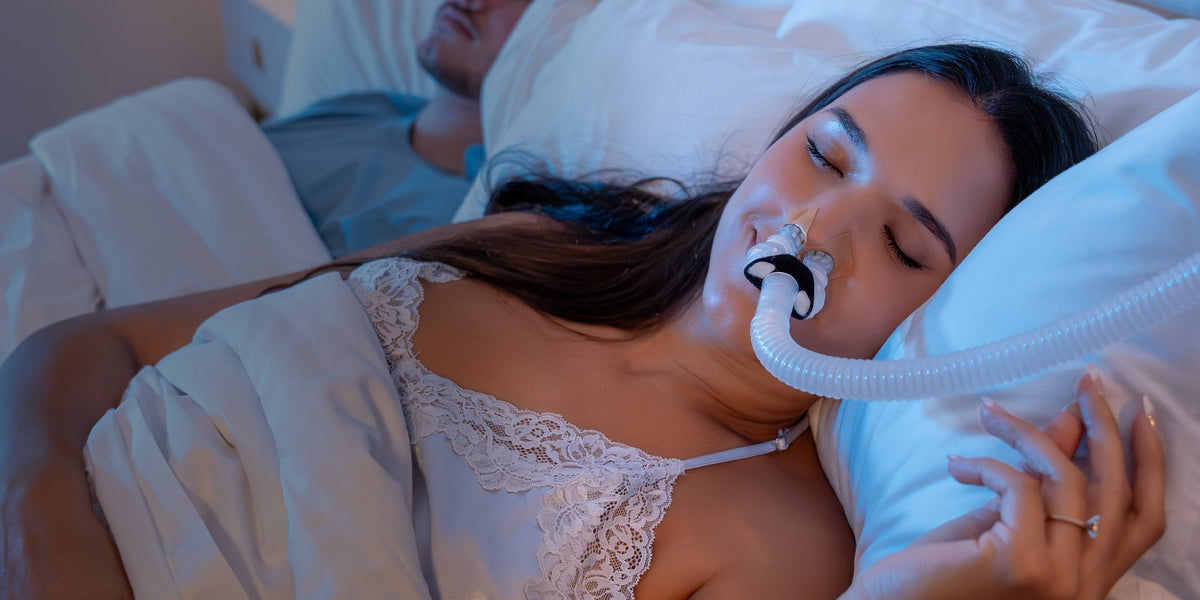
If you’ve ever woken up feeling like you swallowed half the night’s air supply, you might have a simple issue: your CPAP pressure is too high. Many sleep apnea patients don’t realize it at first — they think that “more air” means “better treatment.” But that’s not always the case. When your CPAP is blowing harder than your body needs, it can make you more uncomfortable than rested.
It’s a bit like trying to drink from a fire hose. The air keeps coming, but it’s just too much.
Let’s talk about how to recognize the signs and what you can do to make your therapy easier to live with.
When CPAP Pressure Feels Too Strong
The signs of CPAP pressure that’s too high can sneak up on you. It’s not always an obvious blast of air — sometimes it’s a slow buildup of small irritations that wear you down. You might notice:
- Your mouth or nose feels dry, no matter how much water you drink.
- You wake up bloated, with air in your stomach (a common issue called aerophagia).
- The mask starts hissing or lifting off your face in the middle of the night.
- You feel pressure in your chest or find it hard to breathe out.
- You’re still tired, even after a full night of therapy.
If any of this sounds familiar, your CPAP air pressure might be set higher than necessary.
Why CPAP Pressure Can Become a Problem
The whole point of CPAP therapy is to keep your airway open — not to blast air through it. But every person’s airway is different. What felt fine six months ago may now feel uncomfortable because your body or health has changed.
Too much air pressure can dry your nasal passages, irritate your throat, and even push air into your stomach. This leads to gas, discomfort, and restlessness. In some cases, the extra pressure can even cause your mask to lift slightly, creating CPAP mask leaks that ruin the therapy’s consistency.
The truth is, more pressure doesn’t equal better results. It’s about the right pressure.
Common Reasons Your CPAP Pressure Feels Too High
There’s not just one cause. Sometimes it’s your setup; sometimes it’s your body.
- Mask Fit: If your mask leaks, your machine might push harder to compensate.
- Health Changes: Losing or gaining weight, nasal blockage, or sinus problems can alter your pressure needs.
- Old Equipment: Worn cushions, stretched headgear, or outdated filters can affect airflow balance.
- Fixed Pressure Setting: If you use a standard CPAP instead of an Auto-CPAP (APAP), it might not adjust automatically to your nightly changes.
In short, even a well-calibrated machine can feel wrong over time.
Simple Fixes to Try Before Adjusting Your Settings
Before you change anything in your CPAP pressure settings, try these easy adjustments first:
- Use the ramp feature: This starts with a lower pressure and increases slowly, so you can fall asleep before full airflow begins.
- Check your mask seal: Clean the cushion daily. Refit the mask while lying down — not sitting up.
- Replace worn parts: Old tubing, filters, or cushions can distort airflow.
- Stay consistent: Regular cleaning and maintenance can make the air pressure feel smoother and more natural.
If you’ve tried all that and still struggle, talk to your sleep specialist. They can review your data and see if the CPAP pressure really is too high or if another issue — like leaks or humidity settings — is to blame.
Could Your CPAP Pressure Be Too Low Instead?
It’s worth noting that low CPAP pressure can be just as frustrating. If your airway isn’t staying open, you’ll still wake up tired or gasping. The sweet spot lies in the middle — just enough air to prevent apnea events without making you feel like you’re in a wind tunnel.
That’s where an Auto-Adjusting CPAP can be life-changing. It automatically changes air pressure through the night based on how you’re breathing.
Making CPAP Therapy Comfortable Again
The goal isn’t to “tough it out.” You shouldn’t have to fight your therapy to get a good night’s rest. A few changes can make a big difference:
- Use a heated humidifier to stop dryness.
- Keep your mask and tubing clean so airflow stays steady.
- Try a different mask style if your current one feels bulky or noisy.
- Explore headgear-free options like the Bleep DreamPort, which seals gently under your nose — no straps, no leaks, no marks.
Comfort builds consistency. The easier your therapy feels, the more likely you are to use it every night.

Bleep DreamPorts® Starter Bundle
Headgear-free, strap-free nasal interface — no pressure points, no leaks.
$79.00
Shop NowFinal Thoughts: Finding the Right Pressure for You
If you wake up feeling gassy, dry, or frustrated, don’t assume CPAP just “isn’t for you.” More often than not, your CPAP pressure is simply too high. Once that’s adjusted — and your setup fits your face, sleep habits, and comfort level — you’ll start to notice real rest again.
Work with your doctor or sleep technician to fine-tune your settings. A small tweak might be all it takes to turn your CPAP therapy from a chore into something that genuinely improves your life.
Good sleep shouldn’t feel like a fight with your machine. When your CPAP pressure is right, everything finally starts to feel easy again.
Frequently Asked Questions
Why does my CPAP feel like it's blowing too much air?
That sensation usually means your pressure is set higher than your airway needs, not that anything is broken. It often shows up as a strong hiss, air that seems to force its way out when you exhale, or a mask that keeps lifting off your face. Mask leaks can make it worse, since your machine pushes extra air to compensate for a lost seal. If it happens most nights, check your mask fit first, then talk to your sleep specialist about reviewing your pressure setting or switching to an Auto-CPAP that adjusts automatically.
What happens if your CPAP pressure is too high?
High CPAP pressure can dry out your nose and throat, push air into your stomach and cause bloating or gas (aerophagia), make your mask leak or lift off your face, and leave you feeling tired even after a full night of therapy. In some cases it can also cause chest tightness or discomfort that makes it harder to exhale. These effects don't mean CPAP isn't working for you — they usually mean the pressure needs to be reviewed and fine-tuned by your sleep specialist.
Why does my CPAP pressure increase during the night?
If you're using an Auto-CPAP (APAP), the pressure is designed to rise and fall automatically based on your breathing. It increases when the machine detects signs of an apnea, hypopnea, or snoring event, delivering just enough extra air to keep your airway open, then eases back down once your breathing stabilizes. This is normal and differs from a fixed-pressure CPAP, which stays at a single constant setting all night. If the increases feel excessive or wake you up often, it's worth having your sleep specialist review your settings.
Can I change the pressure on my CPAP machine myself?
Most CPAP machines lock the pressure setting to your prescribed range, so you can't freely adjust it the way you would a thermostat. This is intentional — pressure is set based on your sleep study and titrated by your doctor or sleep technician. What you can usually control is the ramp feature, which starts at a lower, more comfortable pressure and increases gradually as you fall asleep. If your prescribed pressure feels wrong, don't try to override it yourself; contact your sleep specialist or DME provider to have it reassessed.
Recommended Product
Eclipse™ Headgear-Free CPAP Mask
No straps. No headgear. MagSeal™ adhesive technology locks in place without pressure marks — no more mask-related pressure issues. Covered by Medicare. No prescription required.
Frequently Asked Questions
How do I know if my CPAP pressure is too high?
Signs of pressure that is too high include aerophagia (bloating from swallowed air), difficulty exhaling, waking with a dry mouth, central apnea events, and feeling more tired after using your machine than before.
Can high CPAP pressure cause air leaks in my mask?
Yes. Excess pressure can force air past cushion seals, particularly in older or worn masks, resulting in noisy leaks and reduced therapy effectiveness throughout the night.
Who should I contact to adjust my CPAP pressure?
Contact your prescribing sleep physician or a registered respiratory therapist. Never adjust your CPAP pressure settings without medical guidance, as improper settings can worsen sleep apnea.
What is the difference between fixed CPAP pressure and APAP?
Fixed CPAP delivers one set pressure all night. APAP (auto-adjusting CPAP) continuously changes pressure within a prescribed range to match your actual breathing needs, which can reduce discomfort from over-pressurization.
Does mask type affect how pressure feels during therapy?
Yes. A well-sealing mask-free interface like the BleepSleep DreamPort or Eclipse reduces pressure loss from leaks, meaning your machine can deliver effective therapy at lower settings with less discomfort.


