
Sleep Apnea and Diabetes: Why CPAP Compliance Could Help Your Blood Sugar
If you manage type 2 diabetes, your sleep may be affecting your blood sugar more than you realize. Obstructive sleep apnea, repeated collapses of the airway during sleep, shows up at much higher rates in people with type 2 diabetes than in the general population, and researchers have linked untreated sleep apnea to harder to control blood glucose.
November is American Diabetes Month, a useful moment to look at a connection many patients never hear about from their endocrinologist. The CPAP mask sitting unused in a nightstand drawer, set aside because it leaks or feels claustrophobic, may be part of why glucose numbers will not move.
This article looks at what the research shows about that connection, why CPAP compliance, not simply having a prescription, is the variable that matters for blood sugar, and what the evidence says about more comfortable, mask free CPAP interfaces as a way to support adherence.
1. The Sleep Apnea and Diabetes Connection: What the Research Shows
A 2018 research review published in Current Diabetes Reports and archived by the National Institutes of Health found that the prevalence of obstructive sleep apnea in people with type 2 diabetes varies widely depending on the study population and how sleep apnea was diagnosed, but it is consistently higher than in the general population. In the Sleep Heart Health Study, 23.8 percent of participants with diabetes had moderate or severe obstructive sleep apnea. A substudy of the Look AHEAD trial found that 86 percent of participants with type 2 diabetes had some degree of obstructive sleep apnea, with 53 percent falling into the moderate to severe range. A separate study of patients referred to a diabetes clinic found moderate to severe obstructive sleep apnea in 36 percent of patients.
The Centers for Disease Control and Prevention states that obstructive sleep apnea is very common in people with diabetes and may be directly linked to both diabetes risk and worse diabetes control. The exact percentage depends on who is studied and how sleep apnea is measured, but every dataset points in the same direction. If you have type 2 diabetes, your odds of also having undiagnosed sleep apnea are meaningfully higher than average, and it is worth asking your doctor about a sleep evaluation if you have not already had one.
Snoring, morning headaches, and daytime fatigue are common sleep apnea signs often dismissed as a normal part of living with diabetes. Ask your doctor whether a sleep study makes sense if any of this sounds familiar.
2. How Untreated Sleep Apnea Worsens Insulin Resistance
Each apnea event causes a brief drop in blood oxygen, known as intermittent hypoxia. The body responds to this the same way it responds to any physical stressor, by releasing cortisol and adrenaline type hormones. According to the NIH-archived review cited above, repeated hypoxia and the sleep fragmentation that comes with it are associated with impaired insulin signaling and reduced function of the beta cells in the pancreas that produce insulin.
Over months and years, untreated sleep apnea can translate into measurably higher fasting glucose and HbA1c for some patients. This does not mean sleep apnea causes type 2 diabetes on its own. It means untreated sleep apnea can make an existing diabetes diagnosis harder to manage, even for patients who are following their medication and diet plan correctly.
3. Why CPAP Compliance Is the Variable That Actually Matters
A frequently cited study published in Archives of Internal Medicine followed 25 patients with type 2 diabetes and sleep disordered breathing before and after starting CPAP therapy. Patients who used CPAP more than four hours a night saw their HbA1c improvement correlate directly with how many days they used the device. Patients who used CPAP four hours a night or less showed no such correlation.
This is the detail that matters most if you have struggled with a CPAP mask. The therapy only has a chance to help blood sugar control if it is actually being worn, consistently, for most of the night. A prescription that sits in a drawer, or a mask that comes off at two in the morning because it leaks or feels claustrophobic, cannot do anything for glucose levels.
Research on CPAP and glycemic control is still mixed, and no study positions CPAP as a cure or a guaranteed fix for diabetes. What the evidence does support is that consistent, nightly CPAP use is associated with better glucose and HbA1c outcomes in some patients with type 2 diabetes and sleep apnea, compared with inconsistent use. Compliance, not the brand of device, is the variable researchers keep coming back to.
Takeaway: CPAP is not a diabetes treatment on its own. Consistent nightly use, not the prescription alone, is what the research connects to better glucose numbers.
4. Why Mask Discomfort Is the Real Barrier to CPAP Compliance
Peer-reviewed research published in Nature and Science of Sleep and indexed by the National Institutes of Health found that CPAP adherence rates have remained in the 30 to 60 percent range for roughly two decades, with non-adherence persistently around 30 to 40 percent despite quieter machines and softer masks. Across multiple studies, mask discomfort, leaks, and a feeling of claustrophobia are consistently reported among the leading reasons patients cut nights short or stop therapy altogether.
For someone managing type 2 diabetes, this adherence gap is not just a comfort issue. If the research connecting CPAP compliance to blood sugar control is accurate, a mask too uncomfortable to wear consistently is also a mask that is not doing anything for glucose numbers.
5. A Headgear Free Option Built Around the Comfort Problem
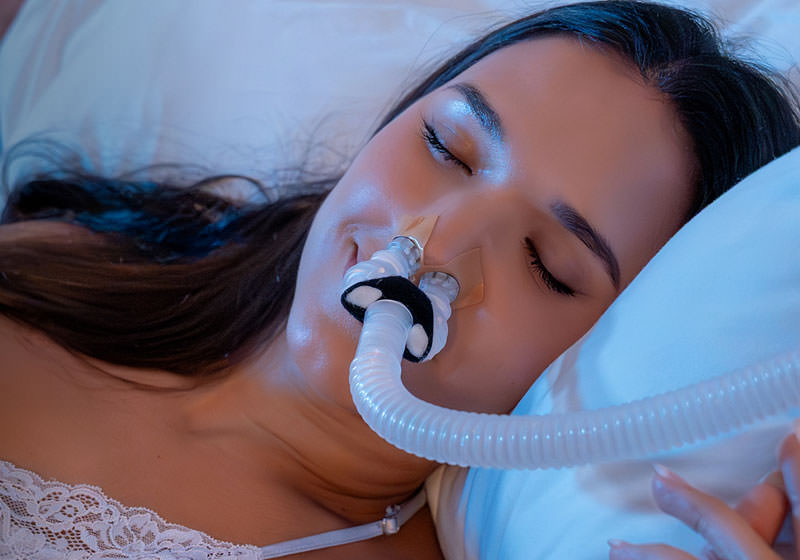
Traditional CPAP masks rely on straps and headgear to hold a seal, which is exactly the mechanism behind many of the comfort complaints tied to non-adherence: pressure marks, leaks when straps loosen overnight, and a feeling of being strapped down that triggers claustrophobia. Bleep Sleep's Eclipse and DreamPort interfaces remove headgear entirely, using either a magnetic seal (Eclipse) or a headgear free nasal fit (DreamPort) that stays in place through skin contact rather than strap tension.
Independent testing on SleepHQ ranked Bleep interfaces, including the Eclipse, first overall for leak stability, with a measured leak rate of 1.68 liters per minute. For patients who have struggled with headgear tension or strap related anxiety rather than hose interference, removing the headgear addresses the problem directly.
A more comfortable, leak free interface will not change the underlying biology of insulin resistance, but it removes one of the most documented reasons patients stop using CPAP. Both Eclipse and DreamPort are FDA cleared and covered by Medicare and most private insurance plans. If mask discomfort, rather than the therapy itself, has been your obstacle, a mask free interface is worth discussing with your sleep specialist or DME provider.
Frequently Asked Questions
Does treating sleep apnea with CPAP cure diabetes?
No. Research suggests consistent CPAP use is associated with improved glucose control in some patients with type 2 diabetes and sleep apnea, but it works alongside your existing diabetes care plan, not in place of it.
What percentage of people with type 2 diabetes have sleep apnea?
Estimates range from about 24 percent to 86 percent depending on the population and diagnostic method studied. Independent studies agree that sleep apnea is significantly more common in people with type 2 diabetes than in the general population.
How many hours a night do I need to use CPAP for it to help my blood sugar?
Research tying CPAP use to improved HbA1c found a correlation in patients using the device more than four hours a night, with no correlation at four hours or less.
Can poor sleep alone raise blood sugar, even without a sleep apnea diagnosis?
Fragmented or insufficient sleep is linked to higher insulin resistance independent of a formal diagnosis. If you have type 2 diabetes and consistently poor sleep, ask your doctor about a sleep evaluation even without obvious symptoms like loud snoring.
Why do so many people stop using CPAP within the first year?
Research reviews point to mask discomfort, leaks, and claustrophobia as leading reasons for non-adherence, with adherence rates stuck in the 30 to 60 percent range for roughly two decades.
Sleep apnea and type 2 diabetes show up together more often than most patients realize, and untreated sleep apnea appears to make blood sugar control harder for some people. CPAP is not a cure for diabetes, but the research consistently points to one modifiable factor: how reliably a patient actually wears the mask. If discomfort, leaks, or claustrophobia have kept you from using CPAP consistently, a headgear free interface may be worth exploring with your sleep specialist.
Find Your CPAP Solution: explore Bleep Sleep's Eclipse interface, or shop the full product line, to find a mask free option built for consistent, comfortable therapy.


