

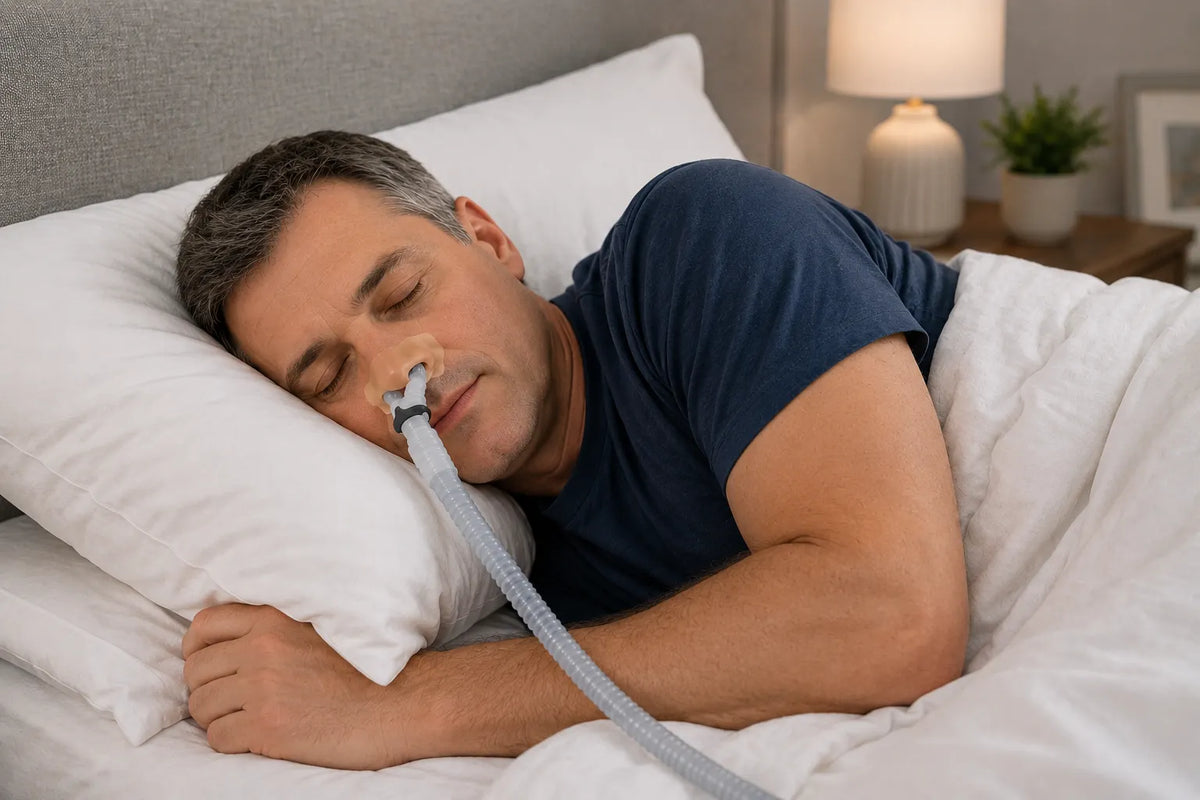
Why Headgear Is the Root Cause of Most P10 Complaints
Does removing headgear mean the mask will leak more than my P10?
No. Independent testing shows the opposite for Bleep interfaces, since the adhesive seal does not depend on tension that can loosen overnight the way headgear does. Movement during the night is far less likely to break the seal on a no headgear interface.
Is a no headgear CPAP interface covered by insurance the same way the AirFit P10 is?
Yes. Both the Eclipse and DreamPort are billed under standard nasal mask and nasal pillow HCPCS codes and are covered by Medicare and most private insurance plans, the same general category as the P10.
How do I know if I should choose the Eclipse or the DreamPort as my no headgear option?
Nostril shape is the main factor. The Eclipse tends to suit nostrils that sit more level to the ground, while the DreamPort tends to suit more angular noses with a steeper V shaped angle. Reach out to the Bleep team for fitting guidance if you are unsure.
Is it hard to learn how to apply an adhesive CPAP interface after years of using headgear?
Most users adjust within the first week. The main steps are cleaning the skin with a mild astringent, allowing it to dry fully, and applying the adhesive interface with the included instructions or video guide.
The Bottom Line
If the elastic headgear on your ResMed AirFit P10 has been the actual source of your leaks, strap marks, or discomfort, switching to a different headgear based mask will likely bring the same problems back eventually. A true no headgear interface removes the mechanical cause entirely. Both the Bleep Eclipse and Bleep DreamPort are built specifically for CPAP users who want to be done with straps for good.
Talk with your sleep physician about whether a headgear free interface matches your prescribed pressure, then explore the current Eclipse and DreamPort options and check your insurance eligibility directly through Bleep.


