

Active sleepers put CPAP masks through a workout that most designs were never built for. Rolling from your back to your side, tossing an arm over your head, or sleeping stomach down for part of the night all put mechanical stress on a mask in ways a stationary back sleeper never experiences. If you have tried a standard nasal pillow mask and woken up with the hose wrapped around your neck or the seal broken from a middle of the night roll, you already understand the problem.
The ResMed AirFit P30i was built specifically to address this with a top of head hose connection. The Bleep DreamPort takes a different route entirely, removing headgear and hose bulk from the equation altogether. Both are genuinely good options for restless sleepers, but they solve the same problem in very different ways, and knowing the difference matters before you commit to a 90 day supply.
What the DreamPort Sleep Solution Is and How It Works
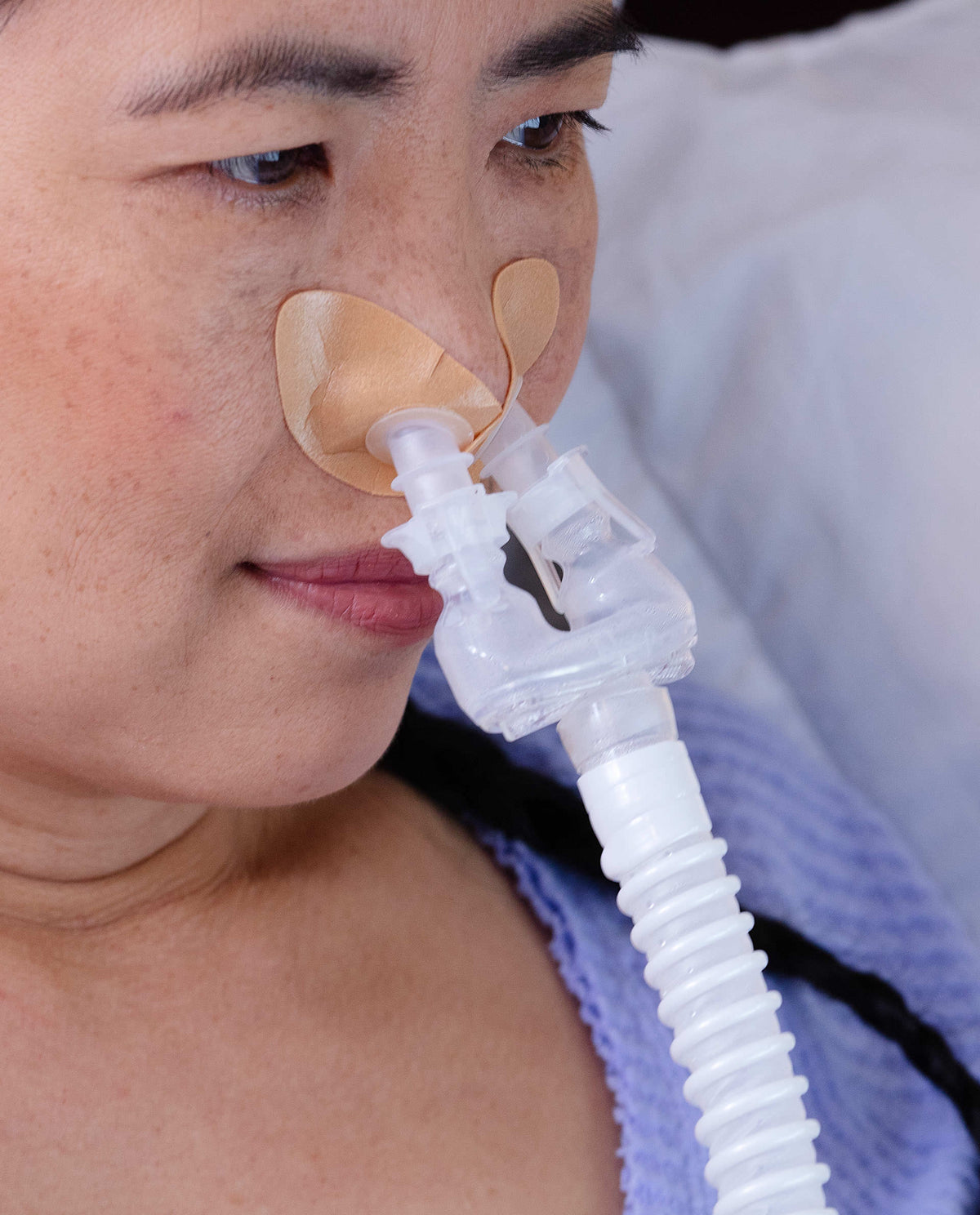
The DreamPort is a mask less, headgear free CPAP interface that fits directly at the nostril opening using medical grade adhesive strips, without inserting into the nostrils the way nasal pillows do. There is no headgear, no elastic strap, and no cushion body resting against your face. The interface connects to a short, flexible tube that runs to your CPAP machine, and Bleep includes a 10 inch connecting tube compatible with standard CPAP machines.
According to independent SleepHQ testing, Bleep interfaces including the DreamPort ranked number one overall for leak stability among tested CPAP masks, with a recorded leak rate of 1.68 liters per minute. The DreamPort is FDA cleared under 510(k) number K172335 and is covered by Medicare and most private insurance plans.
What the ResMed AirFit P30i Is and How It Works
The AirFit P30i is a nasal pillow mask built around a top of head tubing connection instead of the traditional side or front hose routing. The hollow frame headgear connects the hose over the crown of the head rather than out to the side, which reduces the chance of the tube catching on a pillow or getting pulled sideways when you turn.
The mask uses a soft, flexible SpringFit frame designed to stretch and move with you, along with dual wall nasal pillow cushions that slide into the nostrils for a secure seal. ResMed markets the P30i as one of its quieter masks, at roughly 21 decibels, using QuietAir vent technology to disperse exhaled air away from your face and your partner.
Hose Routing: Top of Head vs No Hose Bulk at All
This is the core design philosophy difference between the two masks. The P30i solves hose interference by routing the tube up and over the top of your head with a 360 degree swivel connector, which does genuinely reduce tangling and pulling for many active sleepers compared to a side mounted hose.
The DreamPort solves the same problem differently, by using a much shorter, lighter tube and removing the headgear that the hose would otherwise be anchored to. Without a strap system holding the mask in place, there is simply less hardware on your head for the tube to catch or drag against in the first place. Both approaches reduce tube interference, but the DreamPort removes an entire layer of hardware that the P30i still relies on.
Headgear Stability During Movement
The P30i uses hollow frame headgear with a SpringFit design intended to flex and adapt as you move, which is a real improvement over older, more rigid headgear designs. Still, it is headgear, and headgear depends on tension. If you are a heavy mover, especially someone who changes position multiple times a night, tension based systems eventually loosen or shift.
The DreamPort removes headgear entirely. Bleep states the interface fits the exact shape of your nose using adhesive rather than tension, so a roll from your back to your side does not pull a strap out of alignment the way it can with a headgear based system. Bleep specifically lists side and stomach sleepers, along with patients who have abandoned CPAP due to discomfort, as ideal candidates for the DreamPort.
Leak Performance for Restless Sleepers
Leaks are especially common among active sleepers because movement is the number one cause of seal displacement in headgear based masks. The P30i dual wall pillow cushions are designed to hold a seal more reliably through movement than older single wall designs, and the top of head hose routing reduces one common cause of displacement, tube pull.
The DreamPort approaches the same problem from the seal itself rather than the hose. Because the adhesive interface holds its position independent of tension or hose angle, the SleepHQ leak rate data referenced above reflects a highly stable seal that does not depend on the mask staying centered under strap pressure. For sleepers who move constantly through the night, this is a meaningful practical difference, not just a specification on paper.
Comfort and Facial Contact
The P30i nasal pillow cushions sit inside the nostril opening, which some active sleepers find can shift slightly with heavy movement, though the dual wall design is meant to minimize this. The headgear, while soft, still makes contact with the scalp and can leave light pressure marks after a full night, particularly for side sleepers whose head rests directly on the strap.
The DreamPort sits at the nostril opening rather than inserting into it, and Bleep notes it does not enter the nostrils the way traditional nasal pillows do. Combined with the absence of headgear, most users report no pressure marks, no strap indentations, and no hair breakage from elastic bands, since there is no elastic in contact with the scalp at all.
Which Interface Handles Active Sleep Better
Both masks were designed with movement in mind, but they take opposite approaches. The P30i keeps headgear but relocates the hose to reduce interference. The DreamPort removes headgear and hose bulk from the equation almost entirely.
If you move moderately at night and mainly need a hose that will not tangle, the AirFit P30i top of head design is a genuine solution and a well engineered mask. If you are a heavy mover, a committed side or stomach sleeper, or someone who has tried strap based masks repeatedly and still wakes up with a broken seal, the DreamPort Sleep Solution removes the mechanical cause of the problem rather than working around it. You can review current DreamPort kits and accessories directly through Bleep, and compare fit guidance against the Eclipse if you are unsure which nostril angle suits you better.
Cost and Insurance Coverage
Both interfaces are typically covered under Medicare and most private insurance plans when prescribed for a documented obstructive sleep apnea diagnosis. The AirFit P30i follows a standard nasal pillow replacement schedule for cushions and headgear set by Medicare. The DreamPort interface is billed under HCPCS codes A7034 for nasal mask and A7033 for nasal pillow cushions, with the reusable DreamWay frame typically replaced every 90 days and the adhesive DreamPort strips used nightly. You can check your specific insurance coverage before switching interfaces.
Frequently Asked Questions
Is the DreamPort really better for active sleepers than a top of head hose design?
It depends on what is causing your problem. If tube interference is your main issue, the top of head routing on the P30i genuinely helps. If the headgear itself is shifting or loosening from movement, the DreamPort removes that variable entirely by using an adhesive seal instead of tension.
Can I use the DreamPort if I sleep on my stomach most of the night?
Yes. Bleep specifically designed the DreamPort for stomach and side sleepers, since there is no headgear body or strap system pressing into a pillow when you turn face down.
Does the DreamPort fit my existing CPAP machine?
Yes. The DreamPort includes a 10 inch connecting tube compatible with standard CPAP machines. If you use a ResMed mini or travel device, confirm connector compatibility with your supplier before ordering.
Will I still feel the hose pulling with the DreamPort the way I did with a side mounted tube?
Most users report significantly less pulling sensation, since the tube is shorter and there is no headgear anchoring point for it to drag against. Some active sleepers still prefer a tube management clip for extra security.
Is the AirFit P30i a bad choice for restless sleepers?
No. It is a well engineered mask built specifically to reduce hose tangling through its top of head connection and flexible SpringFit frame. It remains a solid option for sleepers whose main issue is tube interference rather than headgear stability.
How do I know if my nostril shape works better with the DreamPort or the Eclipse?
Bleep notes the DreamPort tends to suit more angular noses with a pronounced V shaped nostril angle, while the Eclipse suits nostrils that sit more level to the ground. If you are unsure, reach out to the Bleep team for fitting guidance before ordering.
The Bottom Line
Active sleepers do not have to choose between comfort and a stable seal. If tube tangling has been your main complaint, the ResMed AirFit P30i top of head design solves that specific problem well. If your real issue has been a headgear system that will not stay put through a full night of movement, the Bleep DreamPort removes the headgear entirely rather than trying to reinforce it.
Talk with your sleep physician about which interface matches your prescribed pressure, and explore the current DreamPort lineup to check insurance eligibility before you switch.
Written by Stuart Heatherington, founder of Bleep Sleep. Stuart works directly with the Bleep product and clinical team to help active sleepers find CPAP interfaces built for how they actually move at night.
Frequently Asked Questions
What is the main difference between the DreamPort and ResMed AirFit P30i?
The DreamPort by BleepSleep is a headgear-free adhesive nasal interface with no inserts or straps, while the ResMed AirFit P30i is an under-the-nose nasal pillow mask with a top-of-head tube connection and traditional headgear.
Which mask is better for active sleepers who move a lot at night?
The DreamPort uses an adhesive that stays fixed to the skin regardless of position changes, making it less likely to dislodge during movement compared to headgear-based masks that can shift when turning.
Does the ResMed AirFit P30i require a prescription?
Yes. Like all CPAP masks, the AirFit P30i requires a valid CPAP prescription. The DreamPort from BleepSleep also requires a prescription for use with your CPAP or APAP device.
Which option has less facial contact for sensitive skin users?
The DreamPort has no frame, headgear, or straps touching the face beyond the nasal seal area, making it the lower-contact option for users with skin sensitivity or those prone to pressure marks.
Can I try the DreamPort if the AirFit P30i is not working for me?
Yes. Many users switch to the BleepSleep DreamPort after experiencing leaks, skin irritation, or discomfort with nasal pillow masks. BleepSleep offers resources to help you determine fit before purchasing.


