

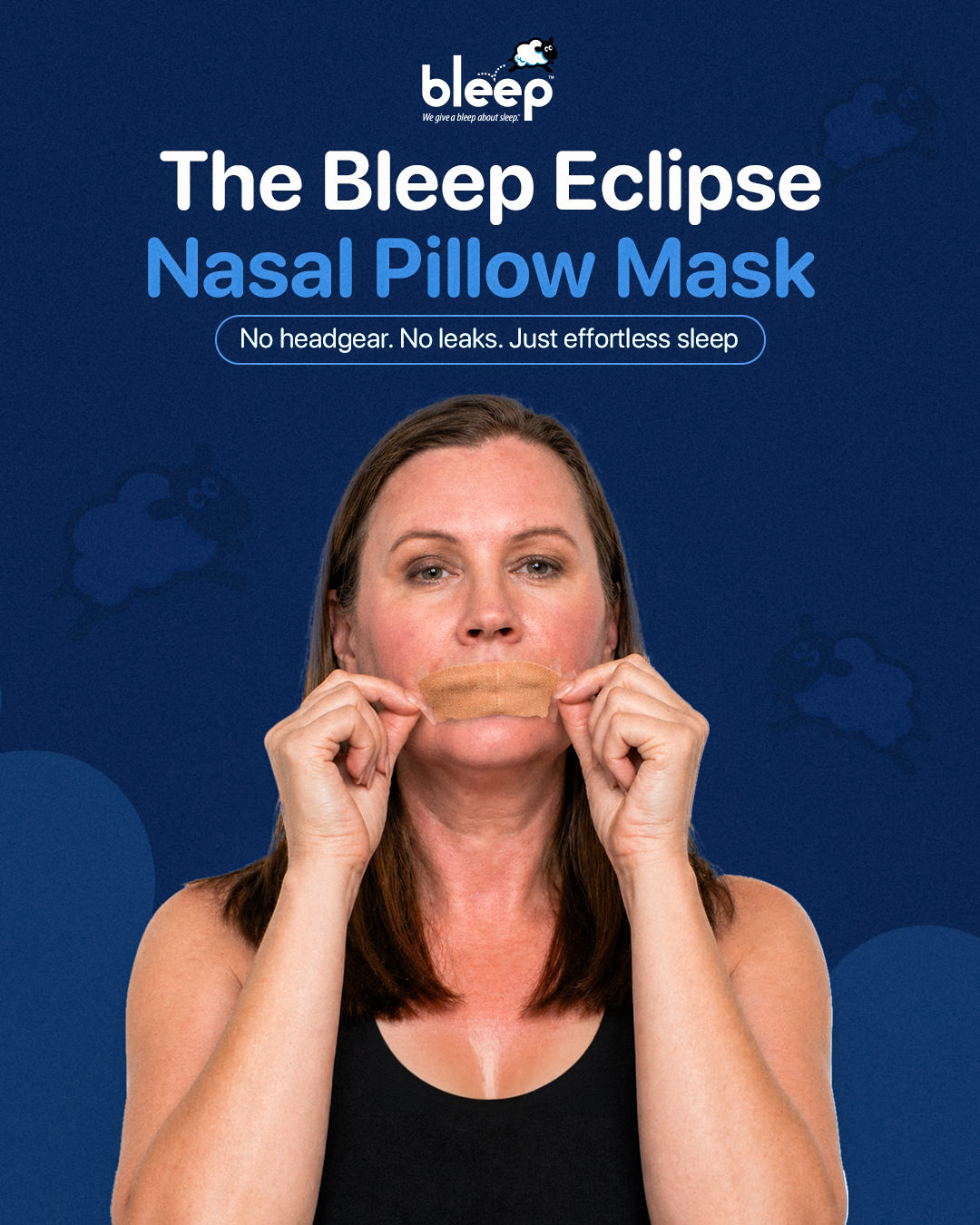
Both the Bleep Eclipse and the Philips DreamWear are marketed as low profile, comfort focused CPAP interfaces, and both mention reduced headgear contact in their product pages. But only one of them is actually headgear free. The DreamWear still uses a full headgear system, just repositioned so the tubing connects at the top of the head instead of the front. The Eclipse removes headgear entirely.
That distinction matters more than it might sound like on paper. If you have chosen a mask specifically because you want no straps at all, understanding the real difference between under the nose tubing and true headgear free design will save you from ordering the wrong product. Here is how the two actually compare.
What the Bleep Eclipse Is and How It Works
The Eclipse is a headgear free nasal interface developed with a grant from the National Institutes of Health. It uses MagSeal technology, a magnetic connector that clicks a lightweight frame onto a disposable adhesive interface called Halos in under a second. There is no elastic band around your head, no strap running along your cheeks, and no headgear clip to adjust in the dark.
Independent testing on SleepHQ ranked Bleep interfaces including the Eclipse number one overall for leak stability, with a measured leak rate of 1.68 liters per minute. The Eclipse is FDA cleared under 510(k) number K172335, is over 35 percent smaller than other leading nasal pillow and nasal mask designs, and is covered by Medicare and most private insurance plans.
What the Philips DreamWear Is and How It Works
The DreamWear line uses an under the nose or nasal pillow cushion connected to a soft silicone frame that channels air through the frame itself rather than through a standard front facing tube. The signature feature is that the hose connects at the top of the head instead of the front of the face, which keeps the tubing out of your direct line of sight and allows you to wear glasses, read, or watch television before falling asleep.
The DreamWear still requires full headgear, a stretchy strap system with four points of adjustment that wraps around the back and sides of the head. Philips added magnetic headgear clips on some versions, which make it faster to put on and take off, but the mask still relies on strap tension to hold the seal, just like a traditional CPAP mask.
True Headgear Free vs Repositioned Headgear
This is the central point of comparison, and it is easy to miss if you are only skimming product photos. The DreamWear reduces facial coverage and repositions the tubing, which are genuine comfort improvements over older full face and nasal mask designs. But it is still a headgear based system. The strap still needs to be tightened correctly, still applies tension across your scalp, and can still loosen or shift overnight the same way any elastic headgear can.
The Eclipse has no headgear at all. The Halos adhesive holds the seal in place through direct skin contact rather than tension, which removes the entire category of problems that come with straps: loosening, tension headaches, strap marks, and the mask sliding out of position when you move.
Leak Performance and Seal Stability
Leaks in the DreamWear typically stem from the same source as any headgear based mask: tension loss over the course of the night, or the cushion shifting slightly out of position during movement. The magnetic headgear clips help with quick removal but do not change how the seal itself is maintained.
The Eclipse addresses seal stability differently, since the Halos adhesive conforms directly to the skin rather than depending on consistent strap pressure. The SleepHQ leak rate data reflects that stability. Because the interface does not rely on tension at all, movement during the night is far less likely to break the seal compared to a headgear dependent design like the DreamWear.
Comfort, Skin Marks, and Facial Hair
The DreamWear headgear is genuinely soft and comfortable compared to older rigid headgear designs, and the magnetic clips reduce fumbling in the dark. Still, users with sensitive skin, facial hair, or a history of strap related pressure marks may continue to experience some of those same issues, since the mask still makes contact with the scalp and sides of the head through its strap system.
The Eclipse uses hypoallergenic, surgical grade, latex free adhesive, and Bleep specifically lists patients with facial hair, sensitive skin, or nasal bridge breakdown as good candidates for the interface. Without headgear making repeated contact with the scalp, there is no elastic to cause hair breakage or pressure indentation.
Line of Sight and Wearing Glasses
The DreamWear top of head tubing was specifically designed to keep the hose out of your field of vision, which is a real benefit if you like to read or watch television with your mask on before falling asleep. This is one area where the DreamWear design goal is genuinely well executed.
The Eclipse, with its low profile under the nose interface and short connecting tube, also keeps your field of vision largely clear. Both designs are considerable improvements over a traditional front mounted full face mask tube for anyone who wears glasses or watches television before sleep.
Which Interface Actually Delivers Headgear Free Comfort
If what you want is reduced bulk and an improved line of sight while still using a conventional strap system, the Philips DreamWear is a well designed option that delivers on those specific goals. If what you actually want is no headgear whatsoever, the Bleep Eclipse is the interface that matches that description literally, not just in marketing language.
For users who have tried the DreamWear and still experienced strap related discomfort, leak issues from tension loss, or skin irritation from the headgear itself, switching to a true headgear free design like the Eclipse addresses the root mechanical cause rather than a repositioned version of the same system. You can also compare the DreamPort Sleep Solution, the other headgear free option from Bleep, if your nostril shape is better suited to a slightly different fit.
Cost and Insurance Coverage
Both interfaces are typically covered by Medicare and most private insurance plans when prescribed for diagnosed obstructive sleep apnea. You can verify your specific coverage directly with Bleep before switching interfaces.
Frequently Asked Questions
Is the Philips DreamWear actually headgear free?
No. The DreamWear repositions the tubing to the top of the head and uses a soft, sometimes magnetic clip headgear system, but it still requires full headgear with strap tension to hold the seal in place.
What makes the Bleep Eclipse different from headgear free marketing on other masks?
The Eclipse uses an adhesive interface called Halos combined with a magnetic frame connector, with no elastic strap of any kind. This is a functional difference from masks that reduce headgear bulk but still rely on strap tension.
Will the Eclipse work if I currently use a DreamWear with my CPAP machine?
Yes. The Eclipse comes with a universal 16 inch connecting tube compatible with standard CPAP machines.
Does removing headgear affect how well the mask seals compared to the DreamWear?
No. Independent SleepHQ testing measured the Eclipse leak rate at 1.68 liters per minute, among the lowest recorded for a nasal interface.
Can I use the Eclipse if I have facial hair, which caused problems with my DreamWear headgear?
Yes. Bleep specifically lists facial hair as one of the conditions the Eclipse is designed to accommodate, since there is no strap making repeated contact with the sides of the face or head.
Is the Eclipse covered by insurance the same way the DreamWear is?
Yes. The Eclipse is billed under standard nasal mask and nasal pillow HCPCS codes and is covered by Medicare and most private insurance plans.
The Bottom Line
The Philips DreamWear improves on older headgear designs by repositioning the tube and softening the strap system, but it is still a headgear based mask at its core. The Bleep Eclipse removes headgear from the equation entirely, using an adhesive seal instead of strap tension. If true headgear free comfort is what you are after, the Eclipse is built specifically for that goal.
Talk with your sleep physician about whether a headgear free interface matches your prescribed pressure, then explore the Eclipse product line and check your insurance eligibility before making the switch.
Written by Stuart Heatherington, founder of Bleep Sleep. Stuart works directly with the Bleep product and clinical team to help CPAP users find interfaces that deliver genuine headgear free comfort.
Frequently Asked Questions
What makes the Bleep Eclipse different from the Philips DreamWear?
The Bleep Eclipse eliminates all headgear and uses a magnetic adhesive nasal seal, while the Philips DreamWear routes tubing through a top-of-head connection and uses a flexible headgear frame that still contacts the face.
Which mask has less facial contact - the Eclipse or the DreamWear?
The Eclipse has no frame resting on the face at all. The DreamWear frame rests under the nose and along the cheeks, so the Eclipse is the lower-contact option for users with sensitive skin.
Is the Philips DreamWear still available after the Philips CPAP recall?
Some Philips DreamWear masks were part of supply disruptions related to the broader Philips recall situation. Check with your supplier or insurance provider for current availability in your region.
Can I switch from the Philips DreamWear to the Bleep Eclipse?
Yes. Both connect to standard CPAP tubing via a 22mm connector. Transitioning requires a valid CPAP prescription, and your settings remain the same - only the interface at the nostrils changes.
Which is easier to travel with - the Eclipse or the DreamWear?
The Eclipse with Halos disposable interfaces is extremely compact for travel since there is no headgear, frame, or cushion to pack. A supply of Halos and the Eclipse base connector fits in a small case.


