

You started CPAP therapy to breathe better at night. But if you wake up with a dry, raw throat, a mouth that feels like sandpaper, or a CPAP humidifier that runs dry by 3 a.m., your mouth is probably working against you while you sleep. Mouth breathing during CPAP therapy is one of the most common and least discussed problems in sleep apnea care, and it quietly undermines everything your device is trying to do.
When pressurized air escapes through your mouth instead of staying in your airway, your therapy pressure drops, your AHI rises, and your CPAP data looks worse than it should. The usual fix, switching to a full face mask, solves one problem by creating several others: more contact area, more strap tension, more leaks, and more reasons to pull the mask off at 2 a.m.
SomnoSeal is a different approach. It is a nasal breathing trainer designed to keep your mouth gently closed during sleep so your CPAP therapy can actually do its job, without forcing you into a full face mask you find uncomfortable. This article explains what it does, who it helps, and how it fits into a broader CPAP setup.
1. Why Mouth Breathing Breaks CPAP Therapy
CPAP therapy works by delivering a continuous stream of pressurized air through your nasal passage to keep your airway open. The system is designed around nasal breathing. When your mouth falls open during sleep, that pressurized air escapes rather than doing its job, and the result is called a mouth leak.
Mouth leaks cause several problems at once. Your effective therapy pressure drops below the prescribed level. Your CPAP machine may respond by ramping up pressure to compensate, which can feel uncomfortable and wake you. The dry, high-velocity air flowing out of your mouth dries out your throat, tongue, and gums, sometimes badly enough to cause soreness that lingers through the day.
According to the American Academy of Sleep Medicine, poor CPAP adherence and comfort issues are among the leading reasons patients discontinue therapy. Mouth leaks, dry mouth, and the discomfort that follows are frequently cited in that context. If your CPAP data shows elevated leak rates on nights you know you slept well, mouth breathing is often the cause.
2. What SomnoSeal Is and How It Works
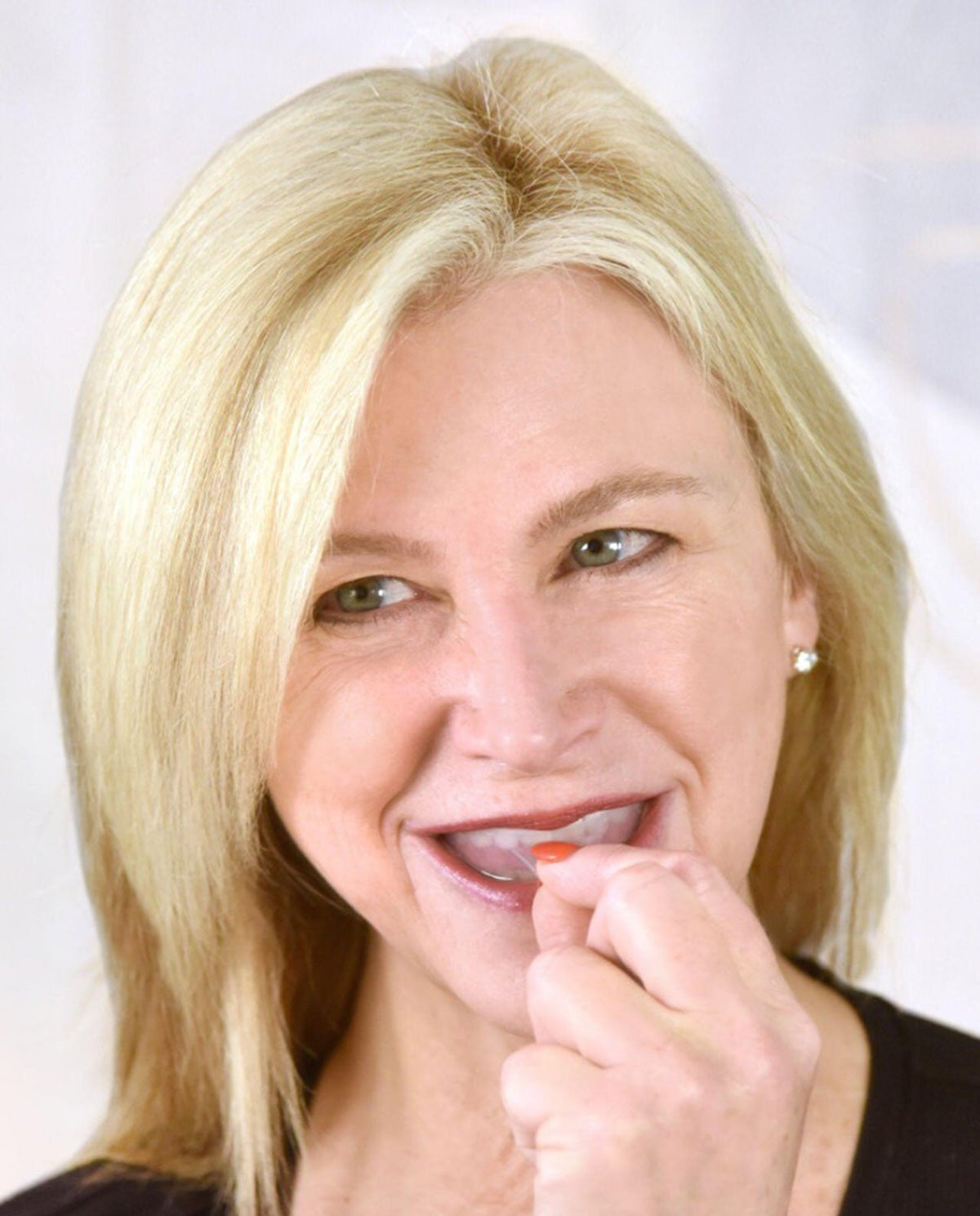
SomnoSeal is a soft, flexible mouthpiece made from medical-grade materials. It sits in front of your teeth, between your lips and gums, creating a gentle barrier that encourages your mouth to stay closed during sleep. It does not lock your jaw, restrict your movement, or require any straps or adhesives to stay in place.
The device was developed by Kimberly Hutchison, MD, FAASM, a board-certified sleep medicine physician who spent more than two decades watching patients struggle with mouth leaks. The design came directly from patient feedback: chin straps were uncomfortable and fell off, full face masks triggered claustrophobia, and nothing on the market addressed the problem at its source, which is the mouth itself.
SomnoSeal works alongside any nasal or nasal pillow CPAP interface, including BleepSleep's DreamPort Sleep Solution and Eclipse CPAP Solution. If you currently use a nasal mask and struggle with mouth leaks, SomnoSeal is designed to let you keep that mask rather than switching to a less comfortable full face design.
It is also used by patients on oral appliance therapy and by people who snore without a formal sleep apnea diagnosis but want to train themselves toward nasal breathing during sleep.
3. Who SomnoSeal Is For
CPAP users with nasal or nasal pillow masks
If you prefer a nasal interface over a full face mask but your mouth falls open during sleep, SomnoSeal bridges the gap. You get the comfort and low profile of a nasal design with the mouth-closed benefit that your therapy actually requires. This combination lets you stay on the mask type you find most comfortable rather than being pushed toward a bulkier alternative.
CPAP users whose data shows persistent mouth leaks
Most modern CPAP machines log leak data automatically. If your compliance report consistently flags high leak rates and your mask fit seems correct, mouth leaks are the likely culprit. SomnoSeal addresses the source of those leaks directly rather than trying to compensate for them with more strap pressure or a different mask cushion.
People who wake with dry mouth or sore throat from CPAP
Dry mouth and sore throat after CPAP use are hallmark signs of mouth breathing. If your humidifier chamber runs dry overnight or your throat is raw when you wake up, your mouth is almost certainly opening during sleep. Closing that escape route with SomnoSeal keeps the humidified air from your CPAP where it belongs, in your nasal passage and airway, not evaporating into the room through your open mouth.
Patients who find chin straps uncomfortable
Chin straps are the other common fix for mouth breathing, but they work by compressing the jaw shut from the outside, which many patients find uncomfortable, especially if they have dental work, jaw tension, or TMJ sensitivity. SomnoSeal works from inside the mouth with much lighter contact and no external pressure on the jaw or face.
4. How SomnoSeal Fits Into Your CPAP Setup
SomnoSeal is not a replacement for your CPAP interface. It is an add-on that works alongside it. You put on your nasal mask or nasal pillow interface as normal, then place SomnoSeal in your mouth before sleep. The two work together: your CPAP delivers pressurized air through your nose, and SomnoSeal keeps your mouth from leaking that pressure away.
For patients using BleepSleep products, this pairing is particularly effective. The Eclipse CPAP Solution uses a magnetic adhesive seal at the nostrils with no headgear or straps. The DreamPort Sleep Solution fits directly at the nostrils without inserts. Both are nasal interfaces that deliver therapy entirely through the nose, which means any mouth breathing directly undermines them. SomnoSeal closes that gap.
If you want to explore headgear-free nasal interfaces that pair well with SomnoSeal, the Eclipse and DreamPort product pages on bleepsleep.com describe how each interface delivers therapy and who each is designed for. Your sleep specialist can confirm which combination matches your prescribed pressure and therapy needs.
5. What to Expect When You First Use It
Most new users notice that SomnoSeal feels unfamiliar for the first few nights. That is normal. Your mouth and jaw have been used to falling open during sleep, and any device that changes that pattern takes a short adjustment period to feel natural.
Starting with short practice sessions while awake helps. Put SomnoSeal in for 10 to 15 minutes while reading or watching something before bed. This lets your mouth and tongue get used to the sensation before you try to sleep with it. Most users report that the adjustment period is shorter than they expected, typically a few nights rather than weeks.
Signs that SomnoSeal is working include a drier CPAP humidifier chamber in the morning (because humidified air is staying in your airway), reduced dry mouth when you wake, and lower leak rates on your CPAP compliance report. If your machine shows lower leak numbers within the first week, that is a direct indicator that the mouth seal is holding.
Frequently Asked Questions
What is SomnoSeal and what does it do?
SomnoSeal is a soft, flexible nasal breathing trainer that sits in front of your teeth to keep your mouth gently closed during sleep. It is designed for CPAP users who mouth breathe, helping prevent the pressure leaks and dry mouth that come from an open mouth during nasal CPAP therapy.
Is SomnoSeal the same as a chin strap?
No. A chin strap wraps around the outside of your head and holds the jaw closed through external compression. SomnoSeal sits inside the mouth between the lips and gums, creating an internal barrier with much lighter contact and no external pressure on the jaw or face. Many patients who found chin straps uncomfortable adapt to SomnoSeal more easily.
Can I use SomnoSeal with a nasal pillow mask or a headgear-free interface?
Yes. SomnoSeal is designed to work alongside any nasal or nasal pillow interface, including headgear-free designs like BleepSleep's Eclipse CPAP Solution and DreamPort Sleep Solution. It is placed inside the mouth separately from the nasal interface, so the two do not interfere with each other.
How do I know if mouth breathing is causing my CPAP problems?
The clearest signs are a dry or sore throat when you wake, a humidifier chamber that runs dry overnight, elevated leak rates on your CPAP compliance report, and persistent dry mouth despite using a humidifier. If your mask fit seems correct but your leak numbers are still high, mouth breathing is one of the first things worth ruling out.
Does SomnoSeal work for people who snore but do not have a CPAP machine?
SomnoSeal can be used independently of CPAP. It was originally developed for CPAP users but has also shown benefit for patients using oral appliance therapy and for people who snore due to mouth breathing without a formal sleep apnea diagnosis. If you are using it outside of CPAP therapy, discuss it with your sleep specialist to make sure it fits your overall care plan.
Is SomnoSeal available through insurance?
SomnoSeal is currently available as a direct-purchase item. Coverage varies by plan. For questions about insurance coverage for CPAP-related accessories, the BleepSleep insurance and DME page at bleepsleep.com/pages/insurance-dme-va covers how coverage works for CPAP products and can help you understand what to ask your insurer.
The Bottom Line
Mouth breathing during CPAP therapy is a fixable problem, and SomnoSeal gives you a way to fix it without abandoning the nasal interface you prefer or adding the bulk of a full face mask. If dry mouth, sore throat, or persistently high leak rates have been part of your CPAP experience, the source may be simpler than you think.
BleepSleep carries SomnoSeal alongside the Eclipse CPAP Solution and DreamPort Sleep Solution, so if you are building or improving a headgear-free CPAP setup, you can find everything in one place. Visit bleepsleep.com to browse the full range and find out which combination matches your therapy needs.
About the Author
Stuart Heatherington is the Founder, Executive Chairman, and Head of R&D/Product Design at Bleep Sleep and the inventor of the DreamPort Sleep Solution. With more than 30 years in the sleep industry and approximately 15 sleep apnea product patents, Stuart is a certified sleep technician, researcher, and long-time sleep apnea patient. He earned a B.A. in American History from the University of North Carolina at Charlotte.
Frequently Asked Questions
What is SomnoSeal and how does it work?
SomnoSeal is a nasal breathing trainer worn inside the mouth that gently holds the lips together during sleep, training users to breathe through their nose rather than their mouth during CPAP therapy.
Who is SomnoSeal designed for?
SomnoSeal is designed for CPAP users who mouth breathe during sleep, which can cause dry mouth, throat irritation, and pressure leaks that reduce the effectiveness of nasal CPAP therapy.
Is SomnoSeal a replacement for a CPAP mask?
No. SomnoSeal is a supplemental device used alongside a nasal CPAP interface, not a standalone therapy. It helps nasal CPAP masks work more effectively by preventing mouth breathing leaks.
How is SomnoSeal different from a chin strap?
A chin strap holds the jaw closed externally, which can feel restrictive and may not suit all face shapes. SomnoSeal works from inside the mouth and is less intrusive for many users.
Can SomnoSeal be used with BleepSleep products?
Yes. SomnoSeal can be used alongside the BleepSleep DreamPort or Eclipse interfaces to further enhance comfort and prevent mouth breathing leaks for users transitioning to nasal-only CPAP therapy.


