

If you have ever been woken up by the hissing sound of air escaping your CPAP mask, you already know how frustrating cpap mask leaks can be. You tighten the headgear, adjust the cushion, maybe try sleeping in a different position and a few nights later, the leak is back.
That hiss isn't just annoying. It means your therapy isn't working the way it should. And if you're losing sleep over a mask that won't seal properly, the whole point of CPAP treatment starts to unravel.
The good news is there's a reason traditional masks leak and it's built into their design. Once you understand that, the solution becomes clear.
Why CPAP Mask Leaks Are More Serious Than You Think
A leak sounds like a minor inconvenience, but the research says otherwise. According to a real-world study published in Respiratory Research, 75.4% of long-term CPAP users report leak-related side effects as their most prevalent complaint. The same study found that these side effects are independently linked to therapy non-adherence.
In plain terms: if your mask leaks, you're more likely to stop using your CPAP altogether.
Leaks reduce the air pressure reaching your airway, which means your therapy is less effective at preventing apnea events, even if the machine is running all night. You might feel like you're doing everything right and still wake up tired, congested, or with a dry mouth. The mask is the weakest link.
The Root Causes of CPAP Mask Leaks
Most CPAP users blame themselves when their mask leaks. They assume they didn't fit it properly, or that their face shape is the problem. But the real cause usually comes down to how traditional masks are designed.
Straps that shift during sleep
Headgear holds the mask in place by applying tension across your face. The problem is that tension changes throughout the night. As you move, the straps shift. Pressure that was perfectly calibrated when you fell asleep is different by 3 am. The result: gaps form between the cushion and your skin, and air escapes.
Cushions that wear out
CPAP cushions are made from silicone or foam that conforms to your face. Over time and sometimes within weeks, that material loses its elasticity. A worn cushion can't create the same seal it did when it was new. Most manufacturers recommend replacing cushions every one to three months, but that's a recurring cost and a recurring problem.
Skin oils and moisture
Natural skin oils break down the seal between the mask cushion and your face over the course of the night. Even a freshly fitted mask can start leaking by the early hours because of this gradual degradation. Washing your face before bed helps, but it doesn't eliminate the issue.
Pressure adjustments
When your CPAP machine auto-adjusts pressure (as APAP machines do), sudden pressure increases can break an otherwise stable seal. A mask that holds at lower pressures may leak noticeably when the machine ramps up to treat a more significant apnea event.
Why Traditional Fixes Don't Last
The standard advice for cpap mask leaks is to tighten straps, replace cushions, try a different mask style, or switch from a full face mask to a nasal mask. These fixes can help in the short term. But they address the symptom, not the cause.
The underlying problem is that traditional CPAP masks depend on mechanical tension and compressible materials to hold a seal. Both of those things degrade, shift, and fail over time. Every time you get the fit right, you're just resetting the clock until the next leak.
For people with active sleep styles, facial hair, or specific facial structures, even a "perfect fit" can fall apart within a single night. The conventional mask design, straps, frame, and cushion were never built to handle all of that reliably.
What Is MagSeal™ Technology?
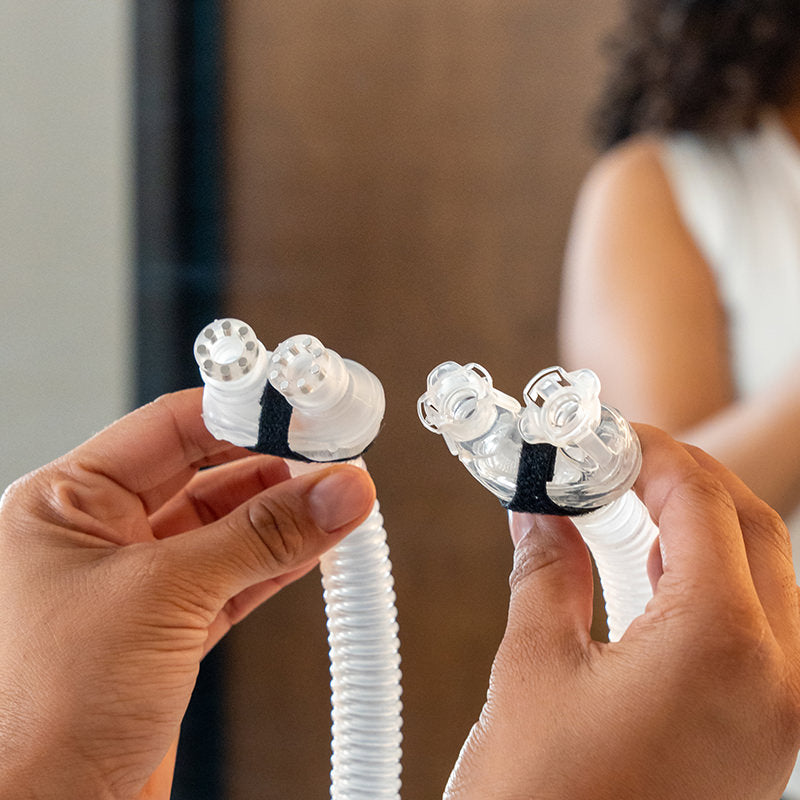
MagSeal™ is the sealing system used in the BleepSleep Eclipse™. Instead of relying on headgear straps to press a cushion against your face, MagSeal™ uses a magnetic closure to create and maintain the seal.
The Eclipse™ sits at the entrance of your nostrils and uses magnetic force to hold it in position without straps, frames, or cushions that need to compress into your skin. Because the seal is formed by magnetic attraction rather than mechanical pressure, it doesn't depend on you tightening anything correctly, or on materials that wear down over time.
The Eclipse™ is FDA cleared (clearance #K172335) and designed to work with standard CPAP equipment, including existing tubing and machines.
How MagSeal™ Works Differently
The fundamental difference is that MagSeal™ removes the variables that cause leaks in the first place.
Traditional masks create a seal by pressing soft material against your face hard enough to block airflow. That pressure has to be dialed in just right, too loose and you get leaks, too tight and you get sores, red marks, and discomfort that pushes people to abandon therapy altogether.
MagSeal™ doesn't rely on compression. The magnetic closure holds the interface in a consistent position regardless of how you move during the night. There's no headgear shifting, no cushion slowly losing its shape, and no need to re-tighten anything in the morning only to have it wrong again tomorrow.
For people who experience leaks specifically because of movement during sleep, this changes everything. The seal stays where it needs to be whether you're on your back, your side, or shifting positions throughout the night.
If you're dealing with the broader frustrations of CPAP therapy beyond leaks, this post on making CPAP easier to use covers other common barriers worth knowing about.
Eclipse™ and the End of Constant Troubleshooting
One of the most underappreciated costs of traditional CPAP masks is the time and energy spent managing them. Adjusting straps, ordering replacement cushions, troubleshooting new leaks after every equipment change, it adds up, and it makes CPAP therapy feel like a maintenance project rather than a medical tool.
The Eclipse™ with MagSeal™ eliminates most of that. Because the seal mechanism doesn't degrade the same way traditional cushions do, and because there's no headgear to readjust, day-to-day use becomes significantly simpler. You put it on, and it works.
Effective sleep apnea treatment matters beyond just feeling rested. Research shows that untreated sleep apnea has serious impacts on heart health, making consistent, effective therapy one of the most important things you can do for your long-term wellbeing.
Frequently Asked Questions
Can MagSeal™ work with any CPAP machine?
Yes. The Eclipse™ with MagSeal™ technology is compatible with standard CPAP machines and uses existing tubing connections. You don't need to replace your machine or any other equipment.
Is MagSeal™ safe for people with medical implants?
If you have any metallic medical implants, including pacemakers or cochlear implants, you should consult your doctor before using a device with magnetic components. BleepSleep recommends this precaution for anyone with implanted medical devices.
How does the Eclipse™ handle higher CPAP pressures?
The MagSeal™ closure is designed to maintain its seal even as pressure increases. Unlike traditional cushion-based masks that can be displaced by pressure surges during auto-adjusting therapy, the magnetic interface holds its position consistently.
Do you still need to clean the Eclipse™?
Yes, regular cleaning is important for hygiene and for maintaining the interface. However, because the seal mechanism doesn't rely on a compressible cushion that degrades, you won't need to replace the sealing component as frequently as with traditional masks.
Is the Eclipse™ covered by insurance or Medicare?
Coverage varies depending on your plan and provider. BleepSleep products are available direct-to-consumer, and the team can help guide you on coverage questions.
Stop Managing Leaks - Eliminate Them
CPAP mask leaks aren't a fitting problem you need to solve every few weeks. For most people, they're a design problem that no amount of strap adjusting will permanently fix.
MagSeal™ technology in the Eclipse™ rethinks how a CPAP interface holds a seal, using magnetic closure instead of mechanical compression, and removing the components that cause leaks to return. If you've spent months troubleshooting the same issue, it may be time to try a different kind of solution.


