

CPAP claustrophobia isn't a personality trait or a sign that therapy won't work for you. It's a physiological response, and like most physiological responses, it can be reconditioned. The research on this is clear. A clinical approach called CPAP desensitization, reviewed in a study published in the journal Sleep and Breathing, has been shown to improve adherence rates in patients who previously could not tolerate CPAP therapy due to anxiety and claustrophobic responses.
The plan is straightforward: start with low-stakes exposure, build tolerance gradually, manage the triggers you can control structurally, and give your nervous system enough repetitions to stop treating the mask as a threat. This guide walks through the process step by step, from your first session with the interface to sustainable nightly use.
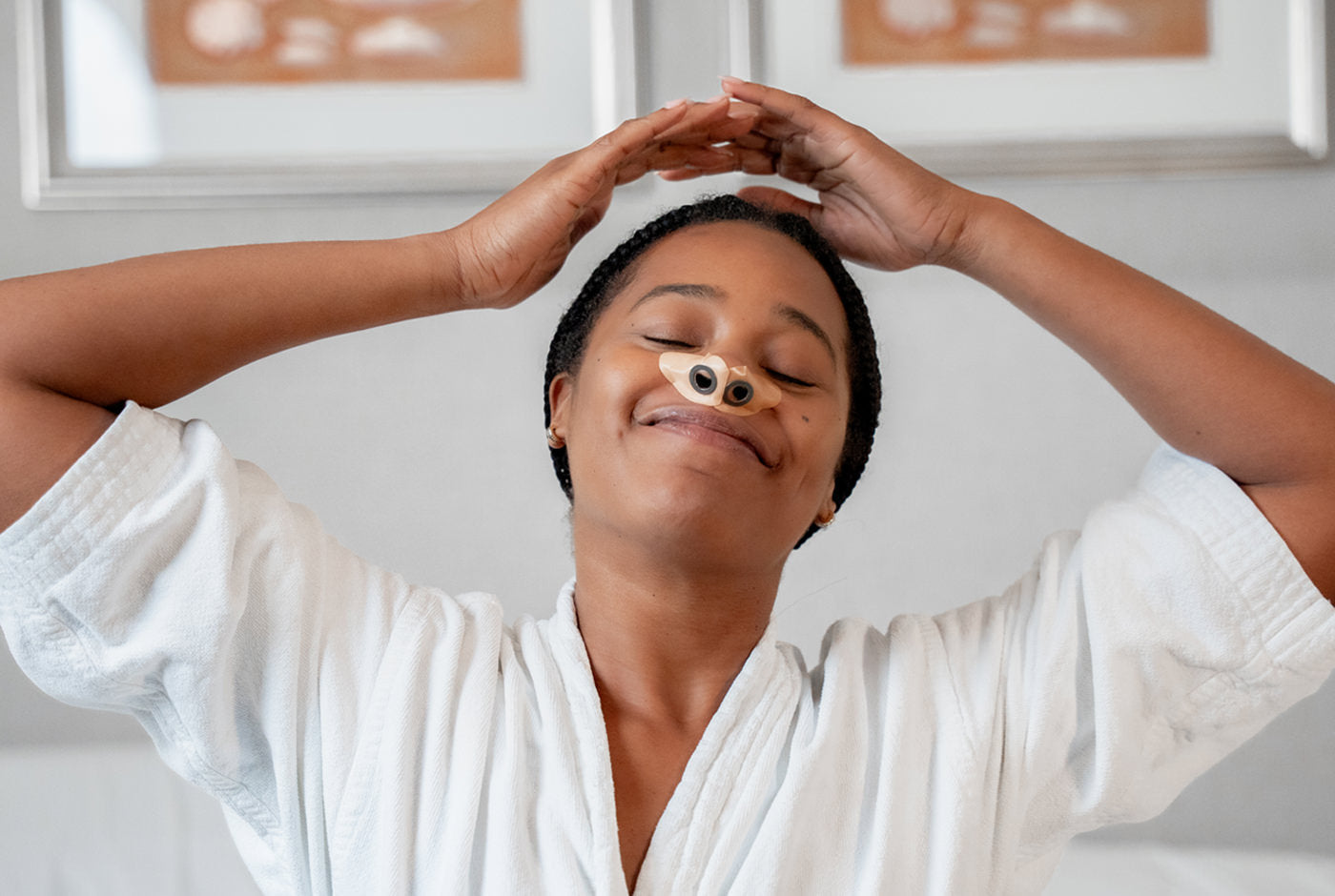
One important note before starting: the single most effective structural change you can make is using the most minimal-contact interface available. Desensitization works faster and sticks more reliably when the thing you're adapting to is as low-stimulus as possible. A full face mask with headgear asks your nervous system to habituate to a large, confining stimulus. A strap-free adhesive or magnetic interface at the nostrils asks it to habituate to almost nothing.
Step 1: Start with the Right Interface
Before working through any behavioral protocol, get the mask contact area as small as possible. The desensitization plan below works for any CPAP interface, but it works fastest and with the least discomfort when the interface itself generates the fewest claustrophobic triggers.
The progression from most to least stimulating runs: full face mask with headgear, nasal mask with headgear, nasal pillow mask with minimal headgear, and finally headgear-free adhesive or magnetic interfaces. If you've already tried nasal pillow masks and still find the straps triggering, a strap-free interface is the logical next step before concluding that CPAP won't work for you.
The Eclipse CPAP Solution uses a magnetic seal at the nostrils with no straps of any kind. For users whose claustrophobia is driven by the sensation of being held or restrained, eliminating the headgear entirely often removes the primary trigger. Learn more about how the Eclipse CPAP Solution works before starting the desensitization plan, particularly if previous mask attempts have failed.
Step 2: Daytime Familiarization (Days 1 to 3)
The first phase doesn't involve your CPAP machine at all. Its purpose is to separate the sensation of wearing an interface from the emotional context of trying to fall asleep. When you first encounter a new CPAP mask in bed at night, you're simultaneously managing the interface, managing your anxiety about whether therapy will work, and trying to sleep. That's too many variables. Daytime practice eliminates most of them.
What to do
Sit or lie comfortably during the day, ideally while doing something you enjoy: watching television, listening to a podcast, or reading. Apply the CPAP interface without connecting it to the machine. Keep it on for ten minutes. Do nothing else to manage the experience. Just let it be on your face while you're engaged with something else.
If ten minutes produces strong anxiety, start with five. The duration doesn't matter. What matters is finishing the session without removing the interface in a panic. A calm removal after a planned period teaches your nervous system that you are in control of the interface, not the other way around.
What to expect
Day one is usually the most uncomfortable. Day two is noticeably easier. By day three, most users report that simply wearing the interface during the day feels fairly neutral. That shift is the goal of Phase 1. You're not trying to be comfortable yet. You're trying to get from acute anxiety to mild awareness.
Step 3: Add Air Flow at Low Pressure (Days 3 to 5)
Once wearing the interface without the machine feels manageable during the day, add airflow. Connect the tubing and turn the machine on, but use the ramp setting so pressure starts low. Most CPAP machines have a ramp feature in their settings that starts therapy at the minimum pressure (typically 4 to 6 cm H2O) and gradually increases over fifteen to forty-five minutes.
Continue the daytime sessions from Phase 1 but now with the machine running at ramp pressure. Fifteen to twenty minutes per session. Stay engaged with a screen or audio. The low pressure period feels much closer to normal breathing than your full prescribed pressure does, which reduces the sense of airflow resistance that contributes to the feeling of breathing difficulty.
If your machine doesn't have a visible ramp setting, check the device manual or ask your equipment provider. On most ResMed and Philips Respironics machines, ramp settings are found in the general settings menu. The goal is to experience airflow without jumping straight to full therapeutic pressure.
Step 4: Move Practice to the Pre-Sleep Window (Days 5 to 7)
By day five, the interface and low-pressure airflow should feel significantly less alarming than on day one. The next step is to shift practice sessions into the pre-sleep context without yet requiring yourself to fall asleep with the mask on.
Put the interface on thirty minutes before your intended sleep time. Lie in bed, run the machine at ramp pressure, and read or watch something. When you're genuinely ready to sleep, you can either leave the mask on and attempt sleep, or remove it deliberately if you're not ready. The critical point is that removal should be your decision, not a panic response.
For many users, the transition from pre-sleep use to actually sleeping through the night happens naturally during this phase. The daytime familiarity from Phases 1 and 2 carries over. The pre-sleep sessions simply reinforce that the mask in bed is the same neutral experience as the mask during the day.
Staying consistent with CPAP matters beyond comfort. If you want context on the long-term health stakes, our article on how sleep apnea impacts heart health explains what untreated apnea does to cardiovascular risk over time.
Step 5: Full Nights with the Ramp Feature Active (Week 2)
The final phase is attempting full nights. Keep the ramp feature active so you fall asleep at low pressure and pressure increases only after your machine detects you're asleep. This is the most important machine setting for claustrophobic users: it prevents the discomfort of falling asleep under full therapy pressure, which is when the false suffocation alarm is most likely to trigger.
In the first week of full nights, it's normal to remove the mask once or twice during the night as you shift positions or partially wake. This is not failure. It's a normal part of the adaptation process. What you're looking for over the week is a gradual increase in the number of hours you wear the mask per night. Most users see their consistent wear time extend from two to three hours in the first few nights to six or seven hours by the end of the second week.
Your CPAP machine's data tracking (via app or device display) shows hours of use per night and mask leak events. Review this data every few days. Seeing your wear time increase is concrete evidence that the process is working, which itself reduces anxiety. Progress you can measure is progress that motivates continued effort.
Managing a Panic Response Mid-Session
Even with a careful desensitization protocol, you may experience moments during the process where anxiety spikes quickly. When this happens, the worst thing you can do is rip the mask off in a panic. That action reinforces the neural pathway that says the mask is a threat and removal is the solution. Instead, try the following in order.
Slow your exhale
CPAP supports your inhale, which can make exhaling feel like it requires more effort than normal. A long, deliberate exhalation activates the parasympathetic nervous system and reduces acute anxiety faster than any other technique you can use in the moment. Breathe in normally, then exhale slowly for four to six seconds. Do this three to four times before deciding to remove the mask.
Ground yourself physically
Press your feet flat against the bed or mattress. Notice the sensation of the surface under you. Shifting attention to a non-threatening physical sensation interrupts the escalating anxiety loop. This is a standard technique from anxiety management used in other phobia desensitization contexts and translates directly to CPAP claustrophobia.
Remove deliberately if needed
If anxiety continues to build and you need to remove the mask, do it slowly and intentionally rather than pulling it off urgently. This preserves the message to your nervous system that you are in control. Take five minutes without the mask, then attempt to put it back on. Each time you re-engage after an anxious moment, you're building tolerance rather than reinforcing avoidance.
Additional Tools That Support the Process
Humidification
Dry CPAP airflow can cause nasal dryness and irritation that makes the mask feel more uncomfortable and harder to breathe through. A heated humidifier, built into most modern CPAP machines, significantly reduces this problem. If your machine has a humidifier, run it at a medium setting from the start.
White noise or audio
Having something to listen to while wearing the mask during sessions reduces the amount of attention going to the sensation of the interface. Audiobooks, podcasts, or white noise work well. The auditory engagement doesn't need to be absorbing. It just needs to occupy enough cognitive bandwidth that the mask isn't the primary focus.
Nasal congestion management
If your nose is congested, breathing through a CPAP interface feels significantly more difficult, which exacerbates the claustrophobic sensation of restricted airflow. Saline rinse or a nasal decongestant spray before sessions makes the breathing experience more comfortable and removes one variable that can derail early adaptation.
For a broader set of strategies on making CPAP sustainable night after night, our guide on how to make CPAP easier to use covers what affects compliance beyond claustrophobia specifically.
Frequently Asked Questions
How long does it take to overcome CPAP claustrophobia?
Most users following a structured desensitization plan see significant improvement within seven to fourteen days. The first three days of daytime practice typically produce the most rapid change. Full adaptation to sleeping through the night with a mask takes an average of two weeks, though some users adapt faster and others need three to four weeks.
Should I tell my doctor that I'm experiencing CPAP claustrophobia?
Yes. Your sleep physician or equipment provider can adjust machine settings, recommend specific interfaces, and in some cases refer you to a sleep therapist who specializes in CPAP adherence. Clinical CPAP desensitization programs have strong evidence behind them. You don't have to work through this entirely on your own.
What if I've already tried and given up on CPAP because of claustrophobia?
A previous failed attempt doesn't predict a future outcome, especially if the interface or the approach was different. Many patients who abandoned therapy with a traditional full face mask succeed with a minimal-contact or strap-free interface when they try again. It's worth attempting with a different interface before concluding that therapy isn't possible for you.
Can anxiety medication help with CPAP claustrophobia?
Some sleep physicians prescribe a short course of anxiolytic medication during the CPAP initiation period. This isn't a standalone solution, but it can lower the baseline anxiety level enough to allow the desensitization process to work more quickly. This is a clinical decision that should be made with your prescribing doctor.
Is CPAP claustrophobia worse for some people than others?
Yes. Research shows that people with pre-existing anxiety disorders or trait claustrophobia tend to experience stronger CPAP-related anxiety and may take longer to adapt. However, the desensitization approach is effective across this spectrum. It may simply require more patience and more sessions for people with higher baseline anxiety.
The Process Works When You Work the Process
Overcoming CPAP claustrophobia is almost always possible with the right interface and a structured exposure plan. The two elements reinforce each other: a minimal-contact interface reduces the volume of the stimulus, and graded exposure reduces your nervous system's response to whatever stimulus remains.
Start with the smallest interface available to you. Work through the four phases over two weeks. Manage panic with exhalation and grounding rather than immediate removal. Track your wear time and notice the progress.
If you haven't yet tried a headgear-free option, see what the Eclipse CPAP Solution offers. Removing the straps removes one of the most common claustrophobic triggers entirely, and many users find it makes the rest of the process considerably more manageable.


