

If you are a Medicare beneficiary who has been diagnosed with obstructive sleep apnea, you may be entitled to significant help with the cost of your CPAP equipment. The rules around what is covered, how much Medicare pays, and what qualifies you for benefits are not always easy to navigate.
This guide breaks down everything you need to know about Medicare CPAP coverage in plain terms, including the criteria you need to meet, what the cost-sharing looks like, and how coverage applies to newer headgear-free interface designs.
What Medicare Covers When It Comes to CPAP
Medicare Part B covers CPAP therapy and related supplies under its durable medical equipment (DME) benefit. This means that if you have a valid prescription from a physician and meet the qualifying criteria, Medicare will help pay for the CPAP machine itself, the mask or interface, tubing, headgear, filters, and humidifier supplies.
According to the Centers for Medicare and Medicaid Services, Medicare covers CPAP devices and related accessories for beneficiaries who meet specific criteria based on results from a qualifying sleep study. Understanding those criteria before you purchase equipment is the most important step in ensuring your costs are covered.
Coverage falls under Medicare Part B, not Part A. This distinction matters because Part B applies to outpatient services and durable medical equipment. If you have a Medicare Advantage plan, your CPAP coverage may differ from standard Part B coverage, and it is worth confirming your specific benefits directly with your plan before ordering equipment.
The Qualifying Criteria: What You Need to Get Coverage
Medicare does not automatically cover CPAP for every sleep apnea diagnosis. To qualify for coverage, you must meet specific medical criteria that are determined by your sleep study results.
Medicare requires a diagnosis of obstructive sleep apnea documented by a sleep test. The test must show either an apnea-hypopnea index (AHI) of 15 or more events per hour, or an AHI between 5 and 14 events per hour combined with documented symptoms such as excessive daytime sleepiness, impaired cognition, mood disorders, insomnia, or high blood pressure.
The sleep study itself must be conducted or interpreted by a treating physician. Medicare accepts results from both in-lab polysomnography and home sleep apnea testing, provided the test is ordered by your physician.
Your equipment must also be ordered through a Medicare-enrolled durable medical equipment supplier. Using a supplier that is not enrolled in Medicare means your equipment will not be covered regardless of whether you otherwise qualify.
What the 80/20 Cost Split Means for Your Actual Expenses
Once you qualify, Medicare Part B pays 80% of the Medicare-approved amount for your CPAP equipment and supplies after your annual Part B deductible is met. You are responsible for the remaining 20%.
If you have a Medicare supplement (Medigap) policy, that plan may cover all or part of your 20% share depending on the plan type you carry. If you are enrolled in a Medicare Advantage plan, your cost-sharing structure may differ significantly from standard Part B, and your plan may have its own network of preferred DME suppliers.
The Medicare-approved amount is not necessarily the retail price of the equipment. Medicare sets its own payment rates for DME, which means the 80% that Medicare pays is calculated based on that approved amount rather than whatever the supplier charges. In most cases, suppliers who participate in Medicare are required to accept the approved amount as payment in full, which prevents you from being billed for the difference.
Which CPAP Supplies Does Medicare Cover and How Often
Medicare covers not just the initial CPAP machine but also the ongoing supplies needed to maintain therapy. Coverage for replacement supplies follows a defined schedule based on product category.
A new CPAP machine is covered once every five years. Cushions or nasal pillow inserts are typically covered twice per month. Mask frames or interface shells are covered once every three months. Headgear and chinstraps are covered once every six months. Tubing is covered once every three months. Filters are covered once or twice per month depending on filter type.
To receive replacement supplies at these intervals, you must be actively using the therapy. Medicare may audit claims to confirm that the equipment is being used, and suppliers may contact you to verify use before shipping replacement items. Keeping a record of your nightly use is a practical way to protect your coverage in the event of an audit.
Does Medicare Cover Newer Headgear-Free Interface Designs
This is a question that many CPAP users have as they become aware of adhesive and headgear-free interface options. The answer depends on how the product is classified and coded within the Medicare DME billing system.
Medicare categorizes CPAP masks and interfaces using Healthcare Common Procedure Coding System (HCPCS) codes. Coverage is determined by product category rather than brand or design. A headgear-free adhesive interface that functions as a nasal mask or nasal pillow interface may be eligible for coverage under the applicable code, but it is essential to confirm the specific coding with your DME supplier before ordering.
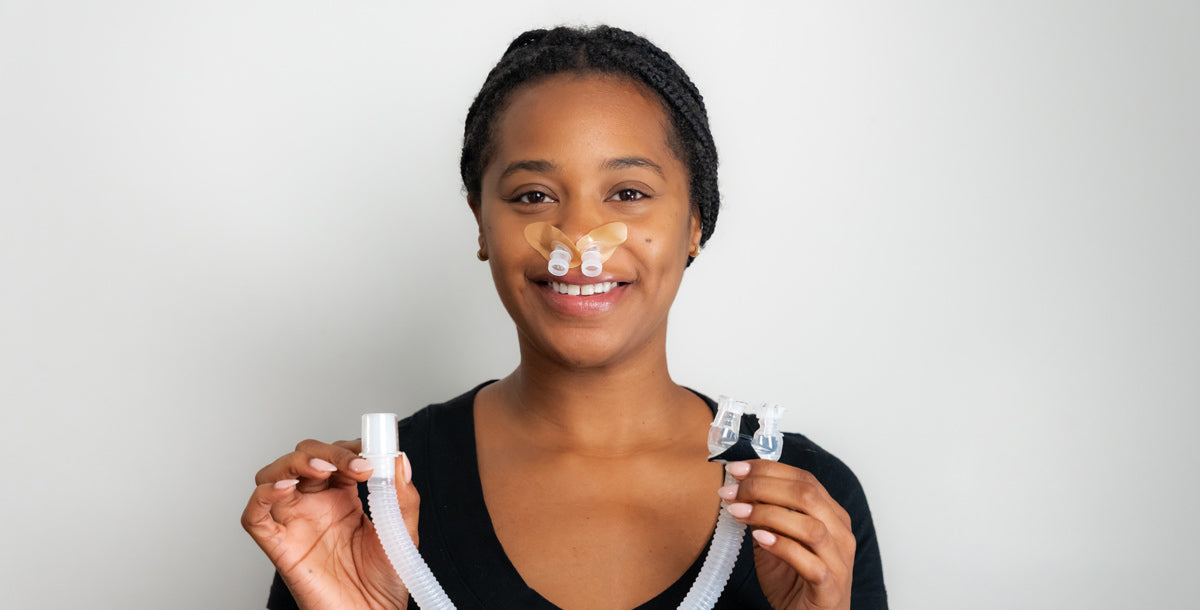
The Eclipse CPAP Solution from BleepSleep is a headgear-free interface that uses an adhesive seal rather than traditional straps. If you are interested in whether this type of interface is covered under your specific Medicare or Medicare Advantage plan, speaking directly with a Medicare-enrolled DME supplier who carries the product and understands the applicable HCPCS coding is the most reliable way to get a definitive answer before placing an order.
The DreamPort Sleep Solution is another headgear-free option worth discussing with your supplier. For a clear breakdown of how adhesive interfaces differ from traditional mask designs, the article on adhesive versus traditional CPAP interfaces provides useful context before you speak with your supplier about coverage.
How to Make Sure Your Coverage Does Not Lapse
One of the most common reasons Medicare CPAP coverage lapses is a failure to meet the compliance verification requirement. During the first three months of CPAP therapy, Medicare requires documentation that you are actually using the device.
Specifically, you must use CPAP for a minimum average of four hours per night on at least 70% of nights during any 30-consecutive-day period within the first three months of therapy. If you do not meet this usage threshold, Medicare may determine that therapy is not beneficial and discontinue coverage.
This is not a punitive rule but a clinical one intended to ensure that continued equipment costs are supported by demonstrated use. However, the practical effect is significant: if you are struggling to wear your mask long enough each night because it is uncomfortable, your compliance numbers suffer and your coverage is at risk.
If your current interface is making it difficult to stay compliant, switching to a more comfortable option before the compliance window closes is worth prioritizing. The article on sleeping without CPAP mask headgear explains how patients have successfully transitioned to a more comfortable setup and what that change means for nightly wear time.
Getting the Most Out of Your Medicare CPAP Benefits
Understanding your Medicare CPAP benefits fully before you begin therapy puts you in a much stronger position to maintain coverage and minimize out-of-pocket costs.
Confirm that your prescribing physician is familiar with the Medicare qualifying criteria and can document the required diagnosis and prescription information accurately. Confirm that your DME supplier is Medicare-enrolled and participates in competitive bidding if applicable in your area. Request itemized documentation of every supply order so you can cross-reference it against the Medicare replacement schedule.
If you have questions about whether a specific interface design is covered, ask your supplier to provide the HCPCS code that will be used for billing before the order is placed. This prevents surprises after equipment has shipped.
CPAP therapy is an investment in your health, and Medicare coverage is there to help make that investment manageable. Taking the time to understand the rules before you start means that coverage works in your favor from the very beginning.
Frequently Asked Questions About Medicare and CPAP Coverage
Does Medicare cover the CPAP mask separately from the machine?
Yes. Medicare Part B covers both the CPAP machine and related supplies as separate line items under the DME benefit. Masks, cushions, tubing, filters, and headgear are all covered at their own replacement frequencies, independently of the machine rental.
What happens if I do not meet the 70% compliance requirement in the first three months?
If you do not demonstrate sufficient use within the first three months, Medicare may discontinue coverage for your CPAP equipment. Your physician will need to confirm that continued therapy is medically necessary, and in some cases you may need to work with your supplier to adjust your interface or machine settings to improve comfort and nightly wear time before the compliance window closes.
Can I switch to a different CPAP mask after Medicare has already approved my equipment?
Yes. You can switch mask types within the covered replacement schedule. If your current mask is causing discomfort and affecting your compliance, speaking with your DME supplier about a different interface type is recommended. The replacement frequency applies to the product category, so a new mask frame is covered once every three months regardless of the style you choose.
Does Medicare cover CPAP if I have a Medicare Advantage plan instead of original Medicare?
Medicare Advantage plans are required to cover at least the same benefits as original Medicare, which includes CPAP as DME. However, your specific cost-sharing, supplier network, and prior authorization requirements may differ from standard Part B. Always confirm CPAP coverage details directly with your Advantage plan before ordering equipment.
Do I need a new sleep study every year to keep my CPAP coverage?
No. Once you have qualified with an initial sleep study and met the compliance requirement in the first three months, Medicare does not require you to repeat a sleep study to continue receiving covered supplies. Your coverage continues as long as your physician confirms ongoing medical necessity.
Can I use my Medicare CPAP coverage for a travel CPAP machine?
Medicare covers one CPAP machine per five-year period. A second machine for travel purposes is not separately covered under the standard DME benefit. Some Medicare Advantage plans may have different provisions, so it is worth checking with your plan directly if a travel machine is important to you.
Explore the full range of BleepSleep headgear-free CPAP solutions to find the interface that gives you the most comfortable foundation for consistent, Medicare-supported therapy.


