

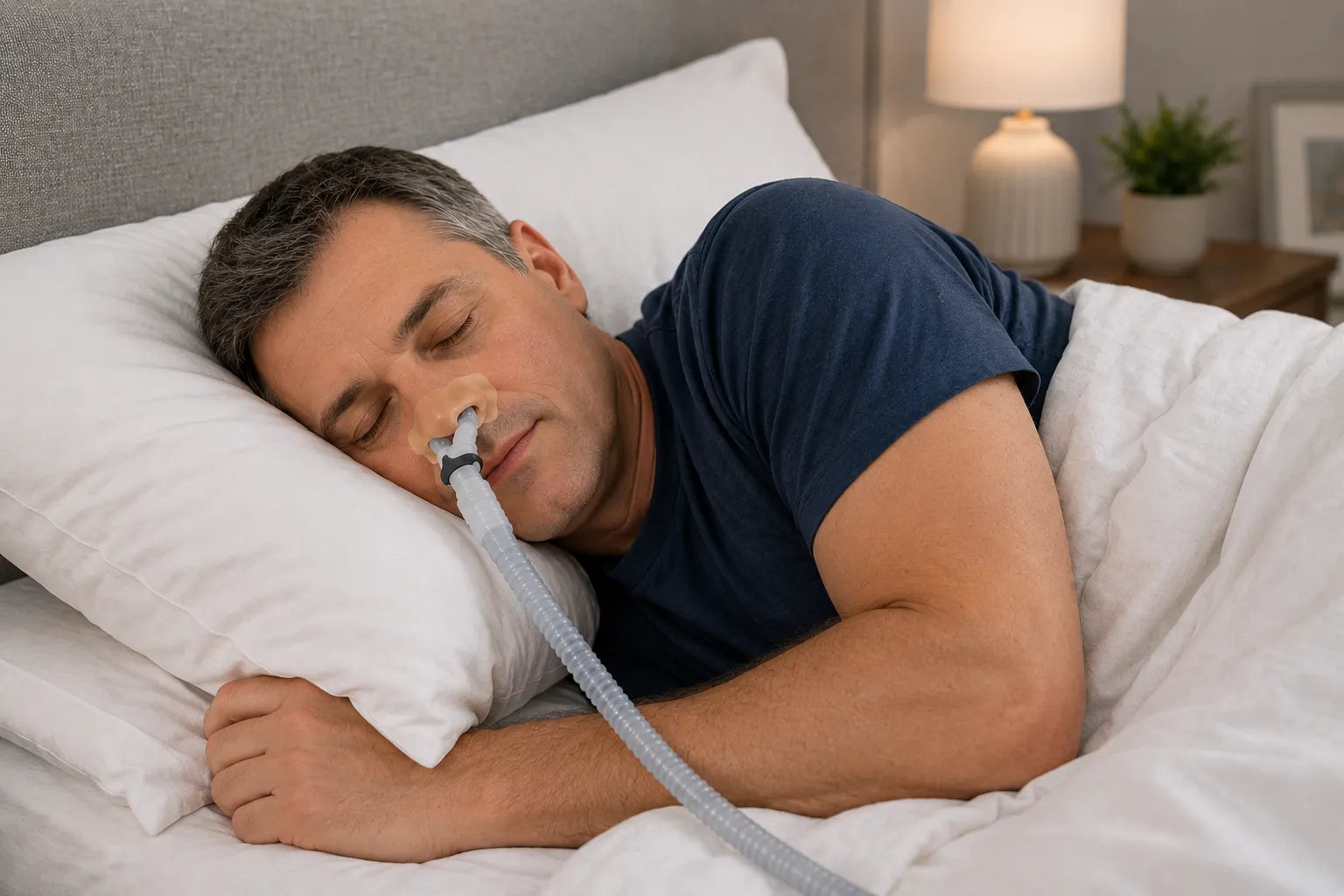
If you have ever woken up to a CPAP mask hanging off your face, strap marks pressed into your cheek, or a partner who refuses to sleep next to you because of the headgear, you already know the problem. CPAP therapy is one of the most effective treatments for obstructive sleep apnea. The mask and headgear system that comes with it, however, is one of the leading reasons people stop using their machine entirely.
No-headgear CPAP masks are changing that. By removing the strap system entirely, these designs address the specific discomforts that push patients away from therapy. This article explains what a no-headgear CPAP mask is, how it works, who it helps most, and why it matters for your long-term health.
Why So Many People Struggle with Traditional CPAP Headgear
The standard CPAP setup involves a mask cushion, a frame, and a web of straps that wrap around your head to hold everything in place. It works. But for many patients, it works just well enough to create a whole new set of problems.
According to research published in the journal Chest by Weaver and Grunstein, CPAP adherence rates generally range from 30% to 60%, with some studies reporting that 46% to 83% of patients are nonadherent when adherence is defined as using the device for more than four hours per night. The headgear system is a significant contributor to this. A separate study found that 23% of patients who discontinued therapy cited mask interface issues and leakages as the primary reason for quitting.
Traditional headgear causes specific, predictable problems:
-
Pressure points and skin marks: Straps press against the same areas of your face and scalp every night, leaving indentations and irritation.
-
Air leaks from shifting straps: As you move during sleep, straps shift. When the mask seal breaks, your machine increases pressure, which can wake you up.
-
Claustrophobia: A frame secured tightly to your face can feel restrictive, especially for new patients still adjusting to therapy.
-
Sleep position limits: Rolling over on a pillow with a full headgear system is genuinely difficult. The straps catch on pillowcases, and the frame can press uncomfortably into your face.
If any of these sound familiar, you are far from alone. The hidden struggles of CPAP users often trace back to equipment comfort, not the therapy itself.
What a No-Headgear CPAP Mask Actually Is
A no-headgear CPAP mask eliminates the strap system entirely. Instead of using tension and compression to hold the mask in place, these designs rely on adhesion, magnetic sealing, or a self-sealing interface at the point of contact with your skin.
There are a few different approaches in this category:
Adhesive nasal interfaces: Small adhesive ports attach directly to your nostrils. No straps are pulling at your head. The seal forms at your skin, not against it. The DreamPort system from BleepSleep works this way, with disposable adhesive interfaces that sit at the base of the nostrils and connect directly to your CPAP hose.
Magnetic-seal designs: Rather than headgear, these masks use a magnetic closure system to create and maintain the seal. The Eclipse CPAP solution from BleepSleep uses this approach, combining a compact interface with a magnetic connection that holds securely without wrapping anything around your head.
Minimal-contact nasal pillows with clip systems: Some designs have been adapted to reduce or eliminate full headgear, using a clip at the back of the neck or a thin connector strip instead of a traditional strap harness.
It is worth noting that not all masks marketed as "low-profile" or "minimal" are truly headgear-free. If you see any strap that wraps around your head or behind your ears, it still involves headgear. A true no-headgear CPAP mask removes that component entirely.
How No-Headgear Designs Keep a Secure Seal
One of the first questions people have about headgear-free CPAP masks is whether they can actually hold a seal through a full night of sleep. It is a fair concern. Traditional CPAP relies on tension from headgear to press the cushion against your face. What replaces that?
Adhesive-based systems like the DreamPort create a seal by bonding directly to the skin around the nasal passage. This is the same principle used in medical adhesive dressings, which stay put through movement, sweat, and pressure. The seal is maintained by the adhesive itself, not by external compression.
Magnetic systems like the Eclipse use precision-fitted interfaces that lock into position with minimal force required. The magnetic closure creates a stable, repeatable connection that does not shift the way a silicone cushion can when a strap loosens.
Both approaches are designed to stay in place through normal sleep movement, including rolling from side to side. For side sleepers in particular, this is a significant improvement over traditional full-face or nasal masks, which can be dislodged by pillow pressure on the strap or frame.
Who Benefits Most from a No-Headgear CPAP Mask
No-headgear CPAP is not just an alternative for people who hate masks. It is particularly well-suited to specific groups of patients:
Side sleepers: If you sleep on your side, traditional CPAP headgear creates ongoing problems. Straps press into your temple and cheek, and the frame can be forced out of position by your pillow. A headgear-free design removes those contact points entirely.
Patients with skin sensitivity: Strap pressure over time can cause contact dermatitis, pressure sores, and recurring irritation. Removing the strap system eliminates a major source of skin contact.
People who have quit CPAP before: If you abandoned therapy due to mask discomfort, a no-headgear design changes the variable that caused the problem. Research shows that the decision to continue or abandon CPAP is often made in the first few days of treatment, which means getting the interface right early matters significantly for long-term compliance.
Recommended Product
Eclipse™ Headgear-Free CPAP Mask
No straps. No headgear. MagSeal™ adhesive technology locks in place without pressure marks — no more mask-related pressure issues. Covered by Medicare. No prescription required.
Claustrophobia sufferers: The psychological weight of a strapped-on mask at night is real. A design with no frame around your face and no straps on your head is genuinely less restrictive, both physically and psychologically.
Couples where one partner wears CPAP: Headgear can make the CPAP wearer feel self-conscious and can disrupt a partner who rolls into strap hardware during the night. A minimal-contact design reduces that friction.
What Headgear-Free CPAP Does for Long-Term Therapy Adherence
CPAP only works if you use it. That sounds obvious, but it is the central challenge in sleep apnea treatment. Equipment that patients find tolerable to wear actually gets worn. Equipment that causes nightly frustration gets taken off in the middle of the night and eventually stops being used at all.
Removing the headgear does not just make the experience more comfortable in the moment. It removes recurring friction points that accumulate over time. Fewer strap adjustments, fewer morning marks, fewer disrupted nights from mask shifting. These incremental improvements add up across months of therapy.
The connection between mask comfort and therapy outcomes is well-established in the research. A study published in Respiratory Research found that mask side effects in long-term CPAP patients directly impact adherence and reported sleepiness. Designs that reduce those side effects are not a cosmetic upgrade. They are a clinical one.
What to Look for When Choosing a No-Headgear CPAP Option
If you are considering making the switch, here are specific things to evaluate:
Adhesive quality and skin compatibility: For adhesive-based systems, check how often interfaces need to be replaced and whether the adhesive is appropriate for your skin type. Systems like the DreamPort use disposable adhesive ports that are designed for nightly replacement, which keeps hygiene consistent.
Seal reliability at your pressure setting: Not all headgear-free systems work equally well at high-pressure settings. Check the specified pressure range for any mask you are considering and confirm it matches your prescribed setting.
CPAP hose connection angle: Some headgear-free designs route the hose directly from the nasal interface rather than from a frame. Confirm the connection direction works with your sleeping position.
Insurance and DME coverage: Many CPAP supplies, including mask interfaces, are covered under Medicare, private insurance, and VA benefits. Check with your provider before purchasing out of pocket.
If you are ready to explore headgear-free options, the Eclipse CPAP solution and the DreamPort system are designed specifically around this approach. Both are covered by Medicare and eligible for insurance reimbursement.
Frequently Asked Questions
Can a no-headgear CPAP mask work at higher pressure settings?
It depends on the specific design. Adhesive and magnetic-seal systems are engineered to maintain a seal across a range of pressures, but it is important to verify that the system you choose is rated for your prescribed pressure level. Your sleep therapist or DME supplier can confirm compatibility.
How do I clean a headgear-free CPAP mask?
Most no-headgear designs have fewer components than traditional masks, which makes cleaning simpler. For adhesive-based systems like the DreamPort, the interface ports are replaced nightly, so there is no cushion to wash daily. The connectors and tubing follow standard CPAP cleaning practices.
Will insurance cover a headgear-free CPAP mask?
Many headgear-free CPAP interfaces are eligible for coverage under Medicare Part B, private insurance, and VA benefits as durable medical equipment. Coverage varies by plan, so contact your insurance provider or a DME supplier directly to confirm what is covered for your specific equipment.
Is a no-headgear CPAP mask suitable for stomach sleepers?
Traditional masks are generally not designed for stomach sleeping, and neither are most headgear-free systems. However, minimal-contact designs significantly reduce the facial obstruction that makes stomach sleeping difficult with full-face masks. If you tend to sleep face-down, discuss your position with your sleep specialist before switching equipment.
What is the difference between the Eclipse and DreamPort systems?
Both are headgear-free CPAP interfaces from BleepSleep, but they work differently. The DreamPort uses adhesive ports that attach directly to the nostrils and connect to a standard nasal CPAP hose. The Eclipse uses a magnetic-seal interface that requires no adhesive. The right choice depends on your skin sensitivity, sleeping position, and personal preference.
The Bottom Line
The problem with traditional CPAP headgear is not that it does not work. It is that for millions of patients, it works just well enough to be tolerable until it is not. No-headgear CPAP masks remove the mechanical discomforts that lead to poor adherence: no strap marks, no positional leaks, no clunky frame on your face.
If you have struggled with CPAP comfort or given up on the therapy before, the interface technology has genuinely changed. The Eclipse and DreamPort from BleepSleep are two headgear-free options backed by Medicare and designed around the specific problems that make traditional masks difficult to live with. Take a look at what is available and talk to your sleep specialist about whether a headgear-free design is right for you.
Frequently Asked Questions
Why are no-headgear CPAP masks becoming more popular?
No-headgear CPAP masks remove the straps, frames, and pressure points that cause discomfort, skin irritation, and mask marks, making it easier for users to stay consistent with nightly therapy.
Do headgear-free CPAP masks stay in place while sleeping?
Yes. Designs that use adhesive or magnetic seals maintain a secure fit throughout the night without requiring tightened straps, reducing leaks caused by shifting during sleep.
Are headgear-free options available for all CPAP machine brands?
Most headgear-free nasal interfaces connect via a standard 22mm hose fitting, making them compatible with CPAP, APAP, and BiPAP machines from ResMed, Philips, Fisher and Paykel, and others.
Can headgear-free masks help with CPAP therapy adherence?
Studies show that mask discomfort is the leading reason people abandon CPAP therapy. Removing headgear friction and pressure often leads to higher nightly usage and better therapy outcomes.
What BleepSleep products offer a headgear-free CPAP experience?
The BleepSleep DreamPort and Eclipse with Halos adhesive interfaces both eliminate all headgear and connect directly at the nostrils, offering a comfortable alternative to traditional mask systems.


